 ARCHIVE
Aldi Ireland Turns Back to School Into a Summer Permission Slip
How Aldi Ireland's 2024 Back to School Campaign Reframes a Seasonal Retail Moment Aldi Ireland's...
Instacart Reframes Back to School as a Parenting Moment
Instacart's "We've Got Your Back (to School)" is a nine-week omnichannel narrative campaign launched on July 15, 2024, in the United States, built around two hero films that reframe grocery delivery as emotional support for parents navigating formative family milestones rather than a transactional shopping service.
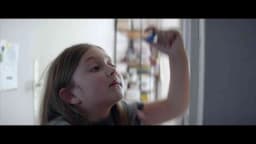
The campaign centres on two films produced by Instacart's internal Creative Studio. "Bunny Ears" is a 60-second spot following a mother and young son who use the time Instacart reclaims to focus on learning to tie his shoes before the new school year. "Pink Razor" tracks a father and his tween daughter through an intimate coming-of-age moment: shaving her legs for the first time. Neither film shows a shopping cart, a checkout screen, or a delivery bag as its emotional centrepiece. The product is present as the enabler, not the hero.
In the United States, the campaign reached families at scale across linear television, OTT and streaming platforms, streaming audio and podcasts, programmatic display, paid and organic social, YouTube, CRM channels, the App Store, and within the Instacart app itself. The breadth of distribution reflects Instacart's ambition to meet parents wherever they consume media during a high-consideration seasonal window. The campaign also marked Instacart's first appearance during the Olympic Games broadcast, extending its reach into one of the summer's largest live-television audiences.
The creative proposition is straightforward: Instacart handles the logistics of back-to-school grocery and household restocking so that parents can be physically and emotionally present for the moments that define childhood. That positioning moves Instacart out of the crowded category conversation about speed and price and into a more durable emotional territory centred on parenthood and presence. The campaign earned a Clapboard Score of 66 out of 100.
Instacart built this campaign on a single consumer truth: back to school is stressful and emotionally charged for families, not just logistically demanding. Rather than compete on the functional axis of speed or assortment — where rivals can match or exceed any claim — the brand chose to occupy the emotional space that grocery and delivery advertising almost never enters.
In the United States, Instacart operates in a fiercely contested eCommerce delivery market. Walmart and Amazon, two of its principal competitors according to gain.ai, maintain vast fulfilment infrastructure and aggressive pricing, making feature-for-feature advertising a losing proposition for a challenger brand. DoorDash, a third major competitor, has similarly invested in broad consumer awareness campaigns tied to convenience. Instacart's decision to anchor its back-to-school narrative in parenting emotion rather than product capability is a deliberate act of differentiation in this environment.
The strategic timing is equally considered. The campaign launched on July 15, 2024, as families begin the anxiety-laden transition out of summer vacation, and ran for nine weeks to sustain presence through the full back-to-school purchasing cycle. The decision to include the Olympic Games as a media placement extended reach into a national live-viewing moment that skews toward family audiences — precisely the demographic Instacart needs to convert.
Instacart CMO Laura Jones has been central to the company's shift toward brand-led marketing. According to Company Instacart, Jones took Instacart from zero brand marketing investment to a Super Bowl presence across approximately four years, establishing the organisational capability to produce emotionally resonant work at scale. The 2024 back-to-school campaign represents that capability applied to one of the retail calendar's most competitive seasonal windows.
Instacart's internal Creative Studio produced both hero films, making this a rare example of a major seasonal campaign executed entirely without a disclosed external agency. The creative approach relies on intimate domestic observation rather than aspirational imagery or comedic exaggeration — a deliberate tonal choice that separates the work from the category's default register.
"Bunny Ears" earns its emotional weight through restraint. The 60-second runtime is generous by digital standards, and the film uses that space to let a simple physical task — a child learning to tie his shoes — carry the full narrative and thematic load. The mother's patience and the boy's concentration become the visual language of what Instacart's service actually delivers: unhurried time. No voice-over explains the metaphor. The product message arrives through implication rather than declaration.
"Pink Razor" operates on similar principles but navigates more delicate territory. A father helping his tween daughter shave her legs for the first time is an unconventional creative choice for a grocery delivery brand, and its inclusion signals genuine creative confidence from the internal studio. The scene is tender rather than awkward, which is the precise tonal calibration that makes it land. As Ad Age journalist Erika Wheless noted in a review published on July 15, 2024, the campaign is notable precisely because it does not show school supplies — a structural observation that confirms the deliberateness of the creative decision. According to Ad Age, the headline of Wheless's piece read: "Why Instacart's back-to-school ads don't show any school supplies."
Production credits beyond the Instacart Creative Studio designation are not publicly documented for this campaign. The omnichannel execution — spanning film, audio, social, and in-app formats — required the creative concept to flex across dramatically different contexts while maintaining tonal consistency, which the studio appears to have achieved.
No independently verified third-party performance data for the "We've Got Your Back (to School)" campaign is publicly available beyond viewership figures associated with the "Bunny Ears" film, which recorded 12,666 views and 120 likes on its primary hosted platform. These figures reflect a single distribution point and do not account for the campaign's reach across linear television, OTT, streaming audio, YouTube, or programmatic channels.
The campaign earned a Clapboard Score of 66 out of 100, reflecting solid creative and strategic execution with room for measurable impact verification. Structurally, the campaign demonstrates several effectiveness drivers that research consistently associates with strong long-term brand performance. The emotional narrative approach — prioritising parenting milestones over product features — is the creative strategy most associated with durable brand equity building, particularly in commodity-adjacent categories where functional differentiation erodes quickly.
The nine-week campaign window, reported by instacart.com, was long enough to generate meaningful frequency across the back-to-school consideration cycle rather than producing a single awareness spike. The Olympic Games placement, also confirmed by instacart.com, provided a high-attention live-television environment at a moment when family viewing peaks seasonally. The integration of CRM and in-app channels alongside broadcast and digital means the campaign could move the same audience from emotional awareness to direct purchase consideration within a single media ecosystem. That full-funnel coherence is structurally rare and represents a meaningful execution advantage over campaigns that treat brand and performance media as separate workstreams.
Instacart's "We've Got Your Back (to School)" is a nine-week omnichannel campaign launched in the United States on July 15, 2024. It features two hero films — "Bunny Ears" and "Pink Razor" — that position Instacart as a service enabling parents to be present for meaningful family milestones rather than managing grocery logistics during the back-to-school season.
Instacart's internal Creative Studio produced the 2024 back-to-school campaign. No external advertising agency is credited. The studio developed both hero films and the broader omnichannel assets spanning television, streaming, audio, social, and in-app placements across the United States without a disclosed production partner.
The two films are "Bunny Ears" and "Pink Razor." "Bunny Ears" is a 60-second spot about a mother and son practising shoe-tying before school starts. "Pink Razor" follows a father helping his tween daughter shave her legs for the first time, representing a candid coming-of-age moment enabled by time Instacart creates for families.
Instacart's 2024 campaign ran across linear television, OTT and streaming platforms, streaming audio, podcasts, programmatic display, paid and organic social, YouTube, CRM, the App Store, and within the Instacart app itself in the United States. The campaign also marked Instacart's first appearance during Olympic Games broadcasts, reaching a broad national family audience.
Instacart deliberately omitted school supplies to reframe its value as time and presence rather than product delivery. As Ad Age journalist Erika Wheless observed on July 15, 2024, this structural choice distinguishes the campaign from category norms, positioning Instacart as an emotional enabler of parenting moments rather than a transactional grocery or retail service.
Instacart's "We've Got Your Back (to School)" campaign received a Clapboard Score of 66 out of 100. The score reflects strong emotional narrative craft and strategic differentiation within the competitive United States eCommerce delivery market, alongside an acknowledgement that independently verified performance metrics for the campaign are not publicly available.
.webp)
Creative Collaboration Platform: The Backbone of Modern Creative WorkWhat is a creative collaboration platform?Clapboard defines a creative collaboration platform as the operational core for today’s distributed creative teams. This is not a collection of digital collaboration tools stitched together; Clapboard’s system


Understanding the Creative Production MarketplaceWhat is a Creative Production Marketplace?Clapboard defines a creative production marketplace as a structured ecosystem where brands, agencies, and production talent converge to execute video, advertising, and branded content at scale. Unlike the legacy agency or freelanREAD FULL ARTICLE

The Urgent Need for a Creative Production Operating SystemWhy Traditional Creative Production Models Break DownClapboard sees the creative production landscape shifting under pressure. Content velocity is no longer a buzzword—it’s a mandate. Modern advertising demands relentless output across dozens of channels, each wREAD FULL ARTICLE