Société de l'assurance automobile du Québec's 'Shaving' film, created by Lg2 in 2018, won a Bronze Lion at Cannes by depicting distracted driving consequences

How SAAQ and Lg2 Made Shaving a Statement on Distracted Driving
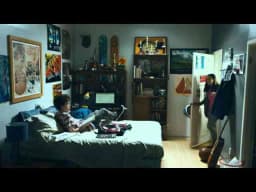
Société de l'assurance automobile du Québec's 'Shaving' is a 30-second public service film, published in Canada in August 2018, that depicts a young man performing his morning grooming routine from a powered wheelchair, with a razor secured to his hand — a single, still image of permanent physical consequence linking the act of distracted driving to the rest of a life.
The film was created by Quebec-based agency Lg2 for SAAQ, the provincial automobile insurance authority responsible for road safety communication across Quebec. Rather than reconstruct the moment of collision — the approach that had defined much of the category for decades — the campaign chose to begin where most road safety advertising ends: in the ordinary, unglamorous aftermath. A young man shaves. The razor is strapped to his hand because his grip can no longer hold it unaided. Nothing else needs to be said. The connection to texting while driving is made through context and restraint alone.
In Canada, SAAQ occupies a singular institutional role, functioning simultaneously as a public insurer and a road safety communications body. That dual mandate gives the organisation both the authority and the obligation to address driver behaviour in Quebec with campaigns that carry genuine public consequence. 'Shaving' represents a deliberate evolution in how that mandate is expressed — moving away from dramatic collision sequences toward the depiction of long-term, everyday consequences that persist long after the accident report has been filed. The campaign was classified under the Public Interest industry and submitted as a Film medium execution, comprising a single media asset.
SAAQ and Lg2 made a specific creative and strategic decision with 'Shaving': they shifted from depicting collisions to depicting consequences. This is not a minor tonal adjustment. It represents a fundamental rethinking of where distracted driving fear appeals break down and where they can be rebuilt on more durable emotional ground.
Collision-centred road safety advertising has been a staple of public service communication in Canada and internationally for decades. Campaigns from organisations including Transport Canada and provincial counterparts have consistently relied on impact footage, emergency response sequences, and grief narratives. The implicit assumption is that showing the worst moment will deter the behaviour. What SAAQ and Lg2 recognised — and what 'Shaving' enacts — is that audiences in 2018 had developed significant resistance to that format. The crash had become, for many viewers, a known genre beat rather than a genuine shock.
The strategic pivot toward ordinary consequence serves a different psychological function. It does not ask the viewer to imagine a catastrophic moment; it asks them to imagine a Tuesday morning, years later. That is a more sustained and personal form of discomfort. According to thecreativesroom.com, the campaign was directly associated with texting while driving, positioning it within a segment of road safety communication that had grown increasingly urgent as smartphone penetration deepened across the Canadian population. In Quebec specifically, the auto insurance environment had tightened considerably: according to Gaa Qc Ca, the average private-passenger auto insurance premium in Quebec reached C$564 in 2017, up from C$532 in 2015, reflecting ongoing upward pressure from claims and operating costs. Against that backdrop, behaviour-change communication carried heightened institutional priority for SAAQ.
Director Maxime Giroux helmed 'Shaving' for production company Les Enfants, according to thecreativesroom.com. Giroux's approach treats the 30-second format as something closer to documentary observation than conventional advertising construction. There is no voiceover driving interpretation, no title card explaining the backstory, and no collision flashback anchoring the scene in cause. The viewer arrives mid-life, watching a routine that has been permanently and invisibly altered.
The craft decision that carries the most weight is the choice of the razor. The implement is strapped to the young man's hand — a prosthetic adaptation so mundane that its presence registers slowly. It is not presented as tragic or dramatic. It simply is. That restraint is the film's central creative achievement, and it demands considerable discipline from a director working within a half-minute runtime. According to thecreativesroom.com, client contacts Patrice Letendre and Mélanie Grenier oversaw the production on behalf of SAAQ, with Lg2 serving as the lead creative agency throughout.
The social experiment framing — presenting a consequence without its cause, and trusting the audience to complete the connection — functions as a form of documentary realism embedded within a Public Service film structure. In Canada, this mode of execution has precedent in socially oriented film work, but its application to distracted driving as a category is notably precise here. Production credits, as reported by thecreativesroom.com, place the film with Les Enfants, a production company with a reputation for character-led, observational work. The campaign's single media asset status — one film, no supporting print or digital variants documented publicly — reinforces the confidence Lg2 and SAAQ placed in the power of a single, unadorned image to carry the full weight of the message.
'Shaving' won a Bronze Lion at the 2018 Cannes Lions Festival of Creativity. According to thecreativesroom.com, the award was presented in the Film Lions category under Corporate Social Responsibility, with the result reported on June 22, 2018. The campaign also appeared on the Communication Arts 2018 Advertising Shortlist in the Public Service category, as noted by thecreativesroom.com, confirming recognition across two significant industry evaluation frameworks within the same calendar year.
No verified effectiveness data — including reach figures, behaviour-change metrics, or recall scores — for the 'Shaving' campaign is publicly available. The absence of published performance data is common for institutional public service campaigns of this kind in Canada, where evaluation frameworks are not routinely disclosed externally. What the award record does confirm is the campaign's standing within the creative and strategic community as an exemplary execution of consequence-based public interest communication.
Clapboard rates 'Shaving' at 64 out of 100. That score reflects a campaign that executes its core creative idea with real precision and earns its industry recognition, while remaining limited in documented reach, media scale, and measurable behavioural impact. The single-asset format, though creatively coherent, constrains the structural breadth that higher scores typically require. For SAAQ and Lg2, 'Shaving' stands as a case study in how restraint — applied with genuine craft and strategic clarity — can produce work that travels beyond its original Quebec market context and registers internationally.
SAAQ's 'Shaving' is a 2018 public service film created by Lg2 in Canada. It depicts a young man shaving from a powered wheelchair, with a razor strapped to his hand, illustrating the permanent physical consequences of distracted driving without ever showing the collision itself. The film targets texting while driving behaviour.
Maxime Giroux directed the 'Shaving' film, according to thecreativesroom.com. Production was handled by Canadian company Les Enfants. Giroux's observational, documentary-influenced approach gives the 30-second film its defining restraint, allowing a single image of adapted daily routine to communicate lasting consequence without dramatic reconstruction or explanatory narration.
'Shaving' won a Bronze Lion at the 2018 Cannes Lions Festival of Creativity. According to thecreativesroom.com, the award was given in the Film Lions category under Corporate Social Responsibility. The campaign also appeared on the Communication Arts 2018 Advertising Shortlist in the Public Service category, confirming recognition across two major creative industry programmes.
The film communicates the long-term physical consequences of texting while driving, according to thecreativesroom.com. Rather than depicting a crash, it shows a young man performing an ordinary grooming task from a powered wheelchair. The campaign reflects SAAQ and Lg2's strategic shift from collision imagery toward depicting the quiet, permanent realities of life after a serious road accident.
Clapboard rates 'Shaving' at 64 out of 100. The score reflects strong creative precision and validated industry recognition, including a Cannes Bronze Lion. It is constrained by the campaign's single-asset format and the absence of publicly documented reach or behavioural effectiveness data, which limits assessment of its broader measurable impact in the Canadian market.
According to thecreativesroom.com and Clapboard's editorial assessment, 'Shaving' represents a documented strategic shift for SAAQ and Lg2 away from collision depiction toward everyday consequence storytelling. Published in Canada in August 2018, the campaign marks a move to show life after injury rather than the injury event itself, reflecting an evolution in how public interest road safety campaigns engage Quebec audiences.
.webp)
Creative Collaboration Platform: The Backbone of Modern Creative WorkWhat is a creative collaboration platform?Clapboard defines a creative collaboration platform as the operational core for today’s distributed creative teams. This is not a collection of digital collaboration tools stitched together; Clapboard’s system


Understanding the Creative Production MarketplaceWhat is a Creative Production Marketplace?Clapboard defines a creative production marketplace as a structured ecosystem where brands, agencies, and production talent converge to execute video, advertising, and branded content at scale. Unlike the legacy agency or freelanREAD FULL ARTICLE

The Urgent Need for a Creative Production Operating SystemWhy Traditional Creative Production Models Break DownClapboard sees the creative production landscape shifting under pressure. Content velocity is no longer a buzzword—it’s a mandate. Modern advertising demands relentless output across dozens of channels, each wREAD FULL ARTICLE