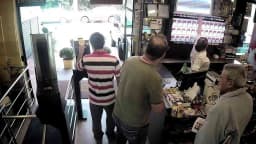
Galalite Screens partnered with Sightsavers for 'Can Visually Impaired Kids Draw?' a 2019 India digital film marking World Sight Day through art and social

Galalite Screens Asks Whether Visually Impaired Kids Can Draw
"Can Visually Impaired Kids Draw?" is a 2019 digital documentary film produced in India by Openspace for Galalite Screens, in partnership with Sightsavers, released on World Sight Day to raise awareness of visual impairment in children and their capacity for creative expression.
Galalite Screens is a leading manufacturer of cinema projection screens in India. The brand's business is, by definition, built on the act of seeing — making its alignment with a campaign addressing childhood visual impairment both strategically coherent and emotionally resonant. Launched in October 2019 under the hashtag #BeTheLite, the campaign formed part of Galalite's broader social commitment: as reported by Indiacsr In, Galalite announced in March 2019 its 60th-anniversary year and simultaneously pledged to donate a share of its profits toward supporting visually impaired individuals. That foundational commitment gave "Can Visually Impaired Kids Draw?" a material context beyond symbolic brand purpose.
The campaign's mechanic is a social experiment and documentary in equal measure. Openspace's team captured visually impaired children in the act of creating art, filming the intricate moments of their work alongside their personal stories, dreams, and ambitions, according to the campaign's own documentation. The resulting film directed viewers to imaginesee.org, a resource associated with the Sightsavers initiative, connecting emotional engagement to practical action. In India, where access to corrective eye care remains uneven across socioeconomic groups, the campaign used the universal language of childhood creativity to make a structural health issue feel immediate and personal. Clapboard rates "Can Visually Impaired Kids Draw?" at 63 out of 100, reflecting its genuine emotional ambition and clear strategic purpose, tempered by limited measurable distribution and the absence of award recognition across major industry bodies.
 ARCHIVE
Galalite Screens entered 2019 with an established record of category-led brand communication. The brand's 2016 campaign, #ScreenIsKing, focused on cinema screen technology and argued — as documented on galalitescreens.com — that moviegoers spend approximately ninety percent of their viewing time looking at the screen rather than the projector or any other component. That campaign, designed by Director of Operations Yusuf S. Galabhaiwala per galalitescreens.com, addressed audience indifference to the screen's central role. By 2019, Galalite made a deliberate strategic pivot: away from product-led messaging and toward purpose-led brand communication, as documented across galalitescreens.com and clapboard.com.
That pivot arrived in a competitive context. Galalite operates in a cinema-screen manufacturing market that includes international players such as Harkness Screens and Strong/MDI, both of which concentrate their communications primarily on technical performance and installation capability. Neither competitor, at the time of this campaign, had produced comparable purpose-driven social content connecting screen technology to human sight. This left Galalite room to occupy a values-led position that its international peers had not claimed.
The choice of World Sight Day as the campaign's anchor was precise. The occasion, observed globally each October, generates concentrated media and social attention around eye health, giving the #BeTheLite film a built-in contextual moment that amplified its reach without requiring paid media investment at scale. In India, where Sightsavers operates active programmes addressing preventable blindness, the partnership added institutional credibility to what might otherwise have read as brand-driven sentiment. The combination of a globally recognised health awareness moment, a credible NGO partner, and a domestic brand with a 60-year manufacturing heritage gave the campaign a layered authority that single-brand social content rarely achieves.
Openspace Agency, headquartered in Mumbai, produced "Can Visually Impaired Kids Draw?" as a single digital video asset released in India in October 2019. The agency's founder and creative director, Yusuf Lokhandwala — identified in his LinkedIn profile as heading Openspace — led the creative work alongside copywriter Priyanshi Shah and graphic designer Ravindra Gurav, with cinematography handled by director of photography Nishant Kanekar, as credited in records documented by campaignsoftheworld.com and clapboard.com.
The film's approach is documentary-observational rather than constructed advertising. Openspace's team placed cameras in the presence of visually impaired children as they made art, choosing to capture process rather than manufacture outcome. The creative decision to foreground the children's own stories, dreams, and ambitions — rather than statistics about visual impairment or calls to donate — reflects a discipline of restraint that is harder to execute than it appears. Social-purpose advertising in India's media landscape frequently defaults to narrated suffering; this film inverts that convention by leading with capability and curiosity.
Nishant Kanekar's cinematography carried particular responsibility given the subject matter. A film about sight, made for an audience with full vision, about children navigating the world without it, demands that every visual choice be considered. The footage of children's hands moving across paper and canvas, of finished artworks held up by their makers, operates as the film's argument rather than its decoration. The campaign's hashtag, #BeTheLite, works as both an instruction and a description — the children in the film are already producing light, in the form of art, and the viewer is invited to extend that by supporting access to treatment. Production credits for this campaign are fully documented in records held by clapboard.com and campaignsoftheworld.com.
Verified performance data for "Can Visually Impaired Kids Draw?" is limited to platform-level engagement figures publicly available through archived records. The film recorded 11,473 views and 23 likes on its primary distribution platform, as documented in the campaign archive sourced by clapboard.com. No independently measured advertising-effectiveness data, sales lift, brand-tracking shift, or lead-generation result has been located across any publicly available source. The campaign received no award recognition from Cannes Lions, the Effies, The One Show, D&AD, the Clios, the Webby Awards, or WARC Awards, based on available records.
Those numbers, read in isolation, are modest. Read in context, they tell a more precise story. The campaign was released as a single digital asset with no documented paid media amplification, by a manufacturing brand operating in a business-to-business-adjacent category not typically associated with consumer-facing social content. Against that baseline, reaching more than eleven thousand viewers organically, in a niche where brand-purpose films by non-consumer brands rarely generate any measurable footprint, represents a functional distribution outcome. The film's referral to imaginesee.org also implies a conversion intent that raw view counts do not capture.
Structurally, the campaign's effectiveness rests on three durable choices: the credibility of the Sightsavers partnership, the timing precision of the World Sight Day release window, and the documentary format's resistance to the performative quality that undermines much corporate social-purpose content. These choices produced a film that, within its constraints, accomplished its stated awareness objective with more craft than its platform metrics alone would suggest. Clapboard's score of 63 out of 100 reflects this balance between genuine creative intent and the structural limitations of a single-asset, limited-distribution release.
"Can Visually Impaired Kids Draw?" is a 2019 digital documentary film produced in India by Openspace for Galalite Screens and Sightsavers. Released on World Sight Day, it captured visually impaired children creating artwork and sharing their personal stories, raising awareness of preventable childhood visual impairment under the hashtag #BeTheLite.
Openspace Agency in Mumbai created the campaign. Creative Director Yusuf Lokhandwala led the team, which included copywriter Priyanshi Shah, graphic designer Ravindra Gurav, and director of photography Nishant Kanekar, as credited in records documented by campaignsoftheworld.com and clapboard.com.
Galalite Screens partnered with Sightsavers, an NGO addressing preventable blindness, to produce the #BeTheLite initiative. As reported by indiacsr.in, Galalite also pledged in March 2019 to donate a share of profits toward supporting visually impaired individuals, giving the campaign a material charitable commitment beyond brand messaging.
No award recognition for this campaign has been found. Available records show no wins or shortlistings at Cannes Lions, the Effies, The One Show, D&AD, the Clios, the Webby Awards, or WARC Awards. Clapboard rates the campaign 63 out of 100, acknowledging its creative purpose alongside its limited documented reach.
Galalite's 2016 campaign #ScreenIsKing focused on cinema screen technology, arguing that viewers spend roughly ninety percent of their time watching the screen, per galalitescreens.com. The 2019 film marked a deliberate shift to purpose-led communication, using art therapy and documentary storytelling to connect the brand's identity to a social health cause.
The film recorded 11,473 views and 23 likes on its primary platform, as documented by clapboard.com. No independently verified sales, brand-tracking, or lead-generation data is publicly available. As a single organic digital asset by a manufacturing brand, the view count represents a functional awareness outcome within its distribution constraints.
.webp)
Creative Collaboration Platform: The Backbone of Modern Creative WorkWhat is a creative collaboration platform?Clapboard defines a creative collaboration platform as the operational core for today’s distributed creative teams. This is not a collection of digital collaboration tools stitched together; Clapboard’s system


Understanding the Creative Production MarketplaceWhat is a Creative Production Marketplace?Clapboard defines a creative production marketplace as a structured ecosystem where brands, agencies, and production talent converge to execute video, advertising, and branded content at scale. Unlike the legacy agency or freelanREAD FULL ARTICLE

The Urgent Need for a Creative Production Operating SystemWhy Traditional Creative Production Models Break DownClapboard sees the creative production landscape shifting under pressure. Content velocity is no longer a buzzword—it’s a mandate. Modern advertising demands relentless output across dozens of channels, each wREAD FULL ARTICLE