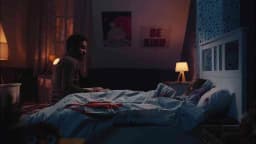
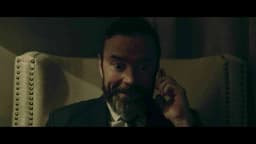
Fibertel's 2014 'Gonzo, Aunt Monica, Boyfriend, Mother' campaign by agency Don used four character-led films to dramatise family internet moments across

Fibertel Puts Family Internet Moments at the Heart of Argentine Advertising
Fibertel's 'Gonzo, Aunt Monica, Boyfriend, Mother' is a four-film campaign created by Buenos Aires agency Don and published in Argentina in June 2014, using character-driven storytelling to place everyday family internet situations at the centre of broadband advertising in the Argentine market.
Each of the four films in the campaign takes its title from a distinct character type drawn from recognisable Argentine domestic life: Gonzo, Aunt Monica, Boyfriend, and Mother. Rather than staging product demonstrations or emphasising technical specifications, the campaign builds its case for Fibertel's internet service through the texture of ordinary moments — the small, often comedic ways in which connectivity shapes how families interact, argue, share, and coexist. This approach positions the internet not as infrastructure but as an emotional constant woven into Argentine household life.
The campaign was produced for Fibertel, one of the leading fixed-broadband providers in Argentina, at a moment when the country's broadband market was undergoing steady expansion. According to BuddeComm, Argentina's broadband sector was growing during the 2013–2014 period, with national penetration increasing as providers competed for urban and suburban households. In that context, Fibertel's choice to anchor its advertising in family character studies rather than speed claims or pricing reflects a deliberate strategy to build emotional brand equity rather than compete on functional attributes alone. The campaign comprises four media assets in the film medium, as documented by Clapboard.com, and falls under the electronics and technology industry classification.
Argentina's fixed-broadband market in 2014 was highly concentrated. According to PRNewswire, Telefónica, Telecom Argentina, and Cablevisión — Fibertel's parent company — together controlled approximately 90% of broadband connections in the country. In that environment, differentiation through rational product claims was structurally difficult: the dominant providers offered broadly comparable services to overlapping urban audiences, leaving emotional and cultural positioning as the more viable creative territory.
Telecom Argentina, one of Fibertel's principal competitors, reported approximately 1.8 million internet accesses in 2014, representing roughly 43% of its fixed-line base, according to PRNewswire. The same source records that Telecom Argentina's internet revenue rose from ARS 2.521 billion in 2013 to ARS 3.254 billion in 2014, an increase of 29%, reflecting the intensity of commercial activity in the Argentine broadband sector during this period. Fibertel, operating under Cablevisión, was competing directly in this environment for the same urban and suburban household segments.
Agency Don's strategic response was to sidestep the speed-and-price battleground entirely. By constructing four films around character archetypes — Gonzo, Aunt Monica, Boyfriend, Mother — the campaign speaks to the sociology of Argentine family life rather than the technology of internet delivery. According to Freedom House's reporting on Argentina's digital environment, internet use in the country was becoming increasingly embedded in daily social routines during this period, giving the campaign's domestic framing genuine cultural grounding. The characters serve as mirrors: audiences recognise not just the situations but the specific Argentine rhythms of family negotiation around shared connectivity.
Fibertel's 'Gonzo, Aunt Monica, Boyfriend, Mother' campaign is built on a clear creative architecture: one character, one film, one recognisable internet-inflected domestic situation per asset. The four-film structure allows the campaign to function both as individual spots and as a coherent series, with each piece reinforcing the same brand proposition from a different emotional angle. This episodic logic was relatively uncommon in Argentine broadband advertising at the time, and it gives the campaign a serialised texture more typical of content programming than conventional television advertising.
The creative leadership was held by Gonzalo Ricca and Papon Ricciarelli, who served as executive creative directors on the campaign, as documented by Clapboard.com. Creative direction was shared across Gonzalo Ricca, Papon Ricciarelli, Rodrigo Greco, and Mariano Gamba. Mariano Gamba served as art director, while copywriting responsibilities were held by Gonzalo Ricca, Rodrigo Greco, and Gus Lema. Additional production credit is attributed to Andrés Salmoyraghi, as recorded by Clapboard.com. The concentration of creative and copy responsibilities within a small, overlapping team suggests a tightly integrated production process, with the executive creative directors maintaining direct involvement across both conceptual and executional layers.
The film medium was chosen with evident intent. Character comedy of the kind the campaign deploys requires performance, timing, and mise-en-scène that only moving image can deliver. The domestic settings — implied rather than ostentatiously staged — ground each film in the visual grammar of Argentine everyday life. According to LinkedIn records for agency Don, the 2014 period also saw the agency producing Fibertel's concurrent 'Office, Sculpture, Car, Piano' outdoor campaign, suggesting that Don was handling multiple simultaneous workstreams for the brand and developing a consistent creative language across different media formats in the Argentine market.
No verified performance data for 'Gonzo, Aunt Monica, Boyfriend, Mother' is publicly available. No verified sales lift, market-share change, subscriber increase, or brand-tracking data has been identified. The campaign does not appear in the databases of Cannes Lions, the Effie Awards, The One Show, D&AD, the Clio Awards, the Webby Awards, or WARC. Clapboard's editorial assessment therefore draws on structural analysis rather than reported outcomes.
The campaign's structural strengths are identifiable. The four-film format distributes creative risk: if one character archetype fails to resonate with a segment of the Argentine audience, the remaining three sustain the series. Each film operates as a self-contained unit capable of standing alone in scheduling, while the collective series builds cumulative brand recognition across repeated exposures. This architecture suits a broadband provider whose audience is effectively the entire connected household, cutting across age groups and usage patterns.
The decision to anchor each film in a named character — Gonzo, Aunt Monica, Boyfriend, Mother — rather than a generalised family scenario gives the campaign a specificity that generic broadband advertising rarely achieves. Named characters invite identification and word-of-mouth reference, particularly in a cultural context like Argentina's where domestic archetypes carry strong shared recognition. The campaign's Clapboard Score of 58 out of 100 reflects solid creative intent and coherent execution within its medium, offset by the absence of independently verified impact data and the lack of recognition from major international awards bodies.
'Gonzo, Aunt Monica, Boyfriend, Mother' is a four-film campaign created for Fibertel by Argentine agency Don in June 2014. Each film centres on a named character archetype drawn from Argentine domestic life, using comedic family internet situations to build emotional affinity for Fibertel's broadband service in the Argentine market.
Agency Don, based in Buenos Aires, Argentina, created the campaign. Don held the Fibertel account during 2014 and simultaneously produced the brand's 'Office, Sculpture, Car, Piano' outdoor campaign, as recorded by LinkedIn, indicating an extensive creative partnership with the broadband provider across multiple formats.
Gonzalo Ricca and Papon Ricciarelli served as executive creative directors, according to Clapboard.com. Creative direction was shared by Ricca, Ricciarelli, Rodrigo Greco, and Mariano Gamba. Gamba held the art director role, while copywriting was credited to Gonzalo Ricca, Rodrigo Greco, and Gus Lema across the four films.
Argentina's fixed-broadband market in 2014 was highly concentrated. According to PRNewswire, Telefónica, Telecom Argentina, and Cablevisión — Fibertel's parent — controlled approximately 90% of broadband connections, making emotional brand differentiation more strategically viable than competing on price or technical specifications alone.
No awards for the campaign have been identified. A search of the Cannes Lions, Effie Awards, The One Show, D&AD, Clio Awards, Webby Awards, and WARC databases returned no entries for the 2014 Fibertel campaign by Don, leaving its recognition confined to archival documentation on Clapboard.com.
Clapboard assigned the campaign a score of 58 out of 100. The score reflects coherent creative execution and a clearly defined character-led strategy for the Argentine broadband market, offset by the absence of independently verified performance metrics and no recorded recognition from major international advertising awards bodies.
.webp)
Creative Collaboration Platform: The Backbone of Modern Creative WorkWhat is a creative collaboration platform?Clapboard defines a creative collaboration platform as the operational core for today’s distributed creative teams. This is not a collection of digital collaboration tools stitched together; Clapboard’s system


Understanding the Creative Production MarketplaceWhat is a Creative Production Marketplace?Clapboard defines a creative production marketplace as a structured ecosystem where brands, agencies, and production talent converge to execute video, advertising, and branded content at scale. Unlike the legacy agency or freelanREAD FULL ARTICLE

The Urgent Need for a Creative Production Operating SystemWhy Traditional Creative Production Models Break DownClapboard sees the creative production landscape shifting under pressure. Content velocity is no longer a buzzword—it’s a mandate. Modern advertising demands relentless output across dozens of channels, each wREAD FULL ARTICLE