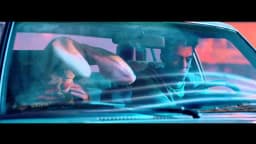
Amaysim's 'Twerk, Eye Protection' campaign, created by BMF in Australia in September 2014, used symbolic humour to position the brand's mobile internet as a

Amaysim Turns Internet Anxiety Into a Punchline With BMF
Amaysim's 'Twerk, Eye Protection' is a Eftm.clapboard.com/archive/van-santen-netwerk-stopmotion-xmas-media">film campaign created by BMF and published in Australia in September 2014, using symbolic humour to argue that fast, reliable mobile internet protects users from the accidental and unwanted content that slow connections force them to endure longer than anyone should.
The campaign sits within Amaysim's broader 'Say Hi to More' brand initiative, a platform built to communicate the tangible, everyday value of having a mobile plan that simply works, according to Itwire. Rather than leading with technical specifications or price comparisons, 'Twerk, Eye Protection' takes an oblique and comedic route: if your internet is slow, you cannot skip, scroll, or escape fast enough. The two media assets produced for the campaign each dramatise a different flavour of that vulnerability, using the titles 'Twerk' and 'Eye Protection' to signal the specific cultural anxieties they address. In 2014, twerking had achieved a degree of ubiquitous, inescapable cultural saturation that made it ideal shorthand for content you did not ask for and cannot unsee.
Distributed across television, outdoor, and digital channels in Australia, the campaign reached audiences at multiple touchpoints, ensuring the comedic premise landed in contexts where mobile internet was both relevant and immediately relatable. The production involved a notable roster of Australian creative and production talent: Infinity2 handled production, Heckler managed post-production, Sonar Music supplied music and sound, and Debaser contributed illustration, according to Iabaustralia. Together, these collaborators gave the campaign a finish that matched the wit of its concept. The creative approach is formally categorised within Clapboard's archive as 'Symbolize the Benefit', meaning the execution does not demonstrate the product's speed directly but instead represents the consequence of having it — or not having it — through visual and narrative metaphor. The Clapboard Score for 'Twerk, Eye Protection' stands at 58 out of 100.
 ARCHIVE
Amaysim operated as a mobile virtual network operator in one of Australia's most structurally concentrated telecommunications markets, according to Zdnet. At June 2014, Australia had approximately 31.01 million mobile voice and data services in operation, according to the Australian Communications and Media Authority. That scale of market activity made mobile internet not a niche concern but a mass-market battleground, and Amaysim needed creative work that could cut through without the media budgets available to the major carriers.
The competitive pressure was real and measurable. Telstra held approximately 40.2 percent of overall market share in June 2014, according to Roy Morgan Research, while Optus held approximately 20.9 percent. Against those entrenched incumbents, MVNOs as a category were gaining ground: their collective market share rose from 13.2 percent in June 2013 to 15.6 percent in June 2014, a gain of 2.4 percentage points, according to Roy Morgan Research. MVNOs represented approximately 20 percent of the prepaid market in June 2014, per Roy Morgan Research, and within that segment Amaysim held a 7.3 percent share of the prepaid market, exceeding Virgin Mobile's share among prepaid users, according to Roy Morgan Research.
The strategic logic behind 'Twerk, Eye Protection' reflects that competitive reality precisely. Amaysim could not outspend Telstra or Optus on reach, so BMF constructed a campaign designed to earn attention through humour rather than buy it through volume. The 'Say Hi to More' platform gave the campaign a consistent brand voice — optimistic, irreverent, and human — while the symbolic execution allowed the films to work across television, outdoor, and digital without requiring a single frame of product demonstration. In Australia's MVNO segment, where the proposition of simplicity and value had to be communicated without technical jargon, comedy functioned as both a differentiator and a proof point.
The creative approach for 'Twerk, Eye Protection' rests on a single, transferable idea: the internet you have determines what you cannot escape. BMF's execution of that idea leans into cultural specificity rather than generic tech-brand abstraction, anchoring the films in recognisable 2014 Australian digital life.
Production credits for the campaign are publicly documented across Clapboard's archive. Infinity2 served as production company, bringing the scripted scenarios to screen with a sensibility attuned to the deadpan comic register that Australian advertising has long deployed effectively. Heckler, one of Australia's most established post-production houses, handled the edit and finishing work, ensuring the visual rhythm of the films supported the comedic timing that jokes of this kind depend on entirely. Sonar Music composed and produced the music and sound design, elements that in comedy-led advertising carry significant structural weight — a misplaced beat or an overemphatic sting can collapse a joke that the script earned. Debaser provided illustration, suggesting at least one asset made significant use of a graphic or animated element to extend the symbolic language of the campaign beyond live action.
The formal creative categorisation of 'Symbolize the Benefit' is instructive here. BMF did not shoot footage of fast-loading pages or smooth video streams. Instead, the films work through implication: a user with slow internet is exposed to content — specifically the kind of content that became culturally dominant and inescapable around 2014 — for longer than they would choose. Speed, in this framing, is not a technical feature but a form of protection. That reframing transforms a commodity specification into an emotional and social benefit, which is a more durable and memorable advertising position. The two-asset structure of the campaign allowed BMF to execute that single idea across two distinct cultural flashpoints, maximising the platform's range without diluting its central logic.
No verified performance data for 'Twerk, Eye Protection' is publicly available. No measured sales lift, market-share change, or brand-tracking shift has been linked to the campaign, and no verified awards have been recorded at Cannes Lions, the Effies, the One Show, D&AD, the Clios, the Webby Awards, or WARC Awards. No media budget, spend tier, or reach data is on record.
Structural analysis, however, offers meaningful evaluation. The campaign's core mechanism — using cultural humour to dramatise a consequence rather than a feature — is one of the more transferable approaches available to a challenger brand operating in a category dominated by larger-spending incumbents. By anchoring the films in a 2014 cultural moment that Australian audiences were actively navigating, BMF gave the work an immediacy that product-led creative would not have achieved. The two-asset approach extended the campaign's conversational range without requiring a new creative platform, which represents efficient use of a production investment.
The Clapboard Score of 58 out of 100 reflects a campaign that executes its chosen strategy coherently but does not break new creative ground. The 'Symbolize the Benefit' categorisation indicates conceptual clarity, and the involvement of Heckler, Sonar Music, and Debaser points to a production standard consistent with the Australian market's professional norms. What the score suggests is a solid, competent piece of challenger-brand advertising that served its strategic moment without becoming a defining creative statement for either Amaysim or BMF. Its lasting relevance lies more in what it reveals about how Australian MVNOs competed for attention in 2014 than in any formal creative breakthrough.
'Twerk, Eye Protection' is a two-asset film campaign created by BMF for Amaysim in September 2014 in Australia. It uses symbolic humour to argue that fast mobile internet protects users from lingering in unwanted content. The campaign forms part of Amaysim's broader 'Say Hi to More' brand platform, distributed across television, outdoor, and digital channels.
BMF created the campaign for Amaysim, published in September 2014 in Australia. BMF has been Amaysim's creative agency partner since the brand's Australian launch in November 2010. Production was handled by Infinity2, with post-production by Heckler, music and sound by Sonar Music, and illustration by Debaser.
Infinity2 served as production company for 'Twerk, Eye Protection'. Heckler handled post-production, Sonar Music supplied music and sound design, and Debaser contributed illustration. These collaborators are publicly documented in Clapboard's archive and represent a roster of established Australian creative and production talent active in the 2014 market.
Amaysim held a 7.3 percent share of Australia's prepaid mobile market in June 2014, according to Roy Morgan Research, competing against Telstra's approximately 40.2 percent overall share. As an MVNO unable to outspend incumbents, Amaysim relied on humour-led, symbolically driven creative work to earn audience attention rather than buy reach through volume.
No verified awards for 'Twerk, Eye Protection' are recorded at Cannes Lions, the Effies, the One Show, D&AD, the Clios, the Webby Awards, or WARC Awards. The campaign received a Clapboard Score of 58 out of 100, reflecting competent strategic execution within Australia's challenger-brand mobile market rather than a formally recognised creative breakthrough.
Clapboard categorises 'Twerk, Eye Protection' under the 'Symbolize the Benefit' creative method, meaning the films represent the consequence of fast internet rather than demonstrating the product directly. In practice, BMF showed what slow internet forces users to endure, making speed feel like social and emotional protection rather than a technical specification.
.webp)
Creative Collaboration Platform: The Backbone of Modern Creative WorkWhat is a creative collaboration platform?Clapboard defines a creative collaboration platform as the operational core for today’s distributed creative teams. This is not a collection of digital collaboration tools stitched together; Clapboard’s system


Understanding the Creative Production MarketplaceWhat is a Creative Production Marketplace?Clapboard defines a creative production marketplace as a structured ecosystem where brands, agencies, and production talent converge to execute video, advertising, and branded content at scale. Unlike the legacy agency or freelanREAD FULL ARTICLE

The Urgent Need for a Creative Production Operating SystemWhy Traditional Creative Production Models Break DownClapboard sees the creative production landscape shifting under pressure. Content velocity is no longer a buzzword—it’s a mandate. Modern advertising demands relentless output across dozens of channels, each wREAD FULL ARTICLE