Department For Transport's 2014 Rural Roads campaign by AMV BBDO used documentary film to shift driver behaviour on UK country roads, producing a measurable 1

Department For Transport Rural Roads Campaign Reframes Driving Danger
The Department For Transport's 2014 Rural Roads campaign is a UK public service film created by AMV BBDO for the THINK! road-safety platform, launched on 9 October 2014 and running through 3 December 2014, designed to reduce collision risk on country roads by persuading drivers to brake before bends rather than in them.
Rural roads in the United Kingdom carry a disproportionate share of serious road casualties. The campaign addressed this through a single, technically precise instruction — brake before the bend, not in it — delivered via documentary-style film that placed viewers inside the physical reality of rural driving rather than confronting them with conventional shock imagery. The creative approach reflected a strategic shift within the THINK! platform, which had operated as the government's primary road-safety communications vehicle since its establishment in 2000, according to Gov Uk.
AMV BBDO developed one film asset for the campaign, deploying it across video-on-demand channels in the United Kingdom during the October-to-December 2014 period. The choice of VOD as the primary medium reflected both the platform's ability to reach targeted demographic groups — particularly young male drivers — and the constrained budget environment within which the Department For Transport was operating. As reported by the BBC, the Department's road-safety publicity budget had contracted sharply in the years preceding the campaign, falling from £19 million in 2008–09 to £3.9 million in 2011–12, according to gov.uk. The Rural Roads campaign therefore needed to generate behavioural impact through creative precision rather than media weight. Clapboard scores the campaign 63 out of 100, recognising its measurable real-world effectiveness while noting limitations in scale and creative ambition relative to the platform's historical output.
 ARCHIVE
Rural roads in the United Kingdom present a distinct and persistent safety challenge. The strategic rationale behind the 2014 campaign rested on a clear insight: drivers consistently underestimate the risk of bending rural roads and misjudge the correct point at which to reduce speed. Rather than attempting to change general attitudes toward driving, AMV BBDO identified a single correctable behaviour — late braking on bends — and built the entire campaign around demonstrating its consequence.
Young male drivers were identified as a priority audience. Research underpinning the campaign showed that this group demonstrated lower recognition that their own driving fell short of safe standards, according to Assets Publishing Service Gov Uk. The campaign was designed to close that gap in self-perception, making the message personally relevant rather than abstract. Multiple exposures to the film were found to increase effectiveness in reducing speed before bends, according to assets.publishing.service.gov.uk, which shaped decisions around VOD frequency and targeting.
The competitive context for public service road-safety advertising in the United Kingdom in 2014 included established campaigns from organisations such as Brake, the road-safety charity, and the Royal Society for the Prevention of Accidents, both of which maintained ongoing public communications. Within the government's own THINK! portfolio, earlier campaigns such as Named Riders — a motorcycle-safety initiative that reached a reported ninety-two percent of drivers an average of eight times on a budget of £1.2 million in 2012, according to gov.uk — had demonstrated that precisely targeted messaging could deliver reach and behavioural shift simultaneously. Rural Roads applied the same logic to a different hazard type, using documentary realism as the strategic instrument to bypass habituated indifference to road-safety messaging.
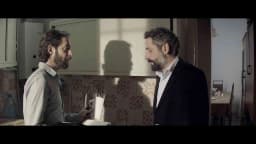
The Rural Roads film deploys documentary and social-experiment conventions to place viewers in an uncomfortable position of self-recognition. The creative team at AMV BBDO — copywriter Martin Loraine and art director Steve Jones — structured the work around a single behavioural truth rather than an emotional manipulation, allowing the driving scenario itself to generate unease. Directors Giles Revell, Steve Jones, and Martin Loraine shared directorial duties on the production, an unusual arrangement that reflects the tight integration between creative origination and execution on the project.
Production was handled by We Folk in collaboration with ScanLAB Projects, a studio known for its work with three-dimensional scanning and spatial capture technology. The involvement of ScanLAB Projects suggests the film employed immersive or point-of-view visual techniques designed to replicate the perceptual conditions of rural driving — the narrowing of a country lane, the approach of a blind bend — with a fidelity that conventional filming would struggle to achieve. Post-production was completed by The Mill, one of the United Kingdom's most established visual effects and finishing houses, ensuring the material carried a broadcast-quality finish appropriate to a government public interest campaign.
The Drum covered the campaign in a November 2014 article by Gillian West, noting its documentary approach and the precision of its core message. The film avoided the graphic crash imagery that characterised earlier decades of UK road-safety advertising, instead trusting viewers to draw their own conclusions from behavioural evidence presented on screen. This restraint was not merely aesthetic. It reflected an understanding that audiences habituated to shock campaigns had developed resistance to them, and that a quieter, more observational register could penetrate where confrontation no longer could. The campaign ran across video-on-demand platforms in the United Kingdom, a medium that enabled controlled frequency exposure to the target demographic.
The Rural Roads campaign produced a statistically significant one mile-per-hour reduction in drivers' average speed on rural roads, according to assets.publishing.service.gov.uk. That figure, modest in isolation, represents a meaningful outcome in road-safety terms, where small reductions in approach speed translate directly into reduced collision severity and fatality risk on the specific road geometry the campaign addressed.
Beyond average speed, the campaign decreased both overall average speed and corner-entry speed on rural roads, according to assets.publishing.service.gov.uk. Corner-entry speed is the precise behaviour the creative targeted, making this a rare instance of a public service advertising campaign in the United Kingdom demonstrating a direct line between creative strategy, message content, and the specific physical behaviour it set out to change.
Young male drivers — the primary target audience — showed positive attitudinal movement, with greater recognition that they were not driving as safely as they should, according to assets.publishing.service.gov.uk. The finding is significant because attitudinal shift in this demographic is historically difficult to achieve through advertising alone. The fact that multiple exposures to the film increased effectiveness in reducing speed before bends, as reported by assets.publishing.service.gov.uk, validates the VOD deployment strategy and its frequency logic.
No independent awards recognition for the Rural Roads campaign is publicly documented in available records. Its Clapboard Score of 63 out of 100 reflects a campaign that achieved its stated public interest objectives with demonstrable real-world effect, constrained by the modest scale of a single film asset and a reduced government media budget, but distinguished by the directness and measurability of its behavioural outcome.
The Rural Roads campaign was a UK public service film by AMV BBDO for the Department For Transport's THINK! platform, running from 9 October to 3 December 2014. It targeted rural road safety with the message to brake before bends rather than in them, reaching drivers via video-on-demand channels across the United Kingdom.
The campaign produced a statistically significant one mile-per-hour reduction in average rural road speeds, according to assets.publishing.service.gov.uk. It also decreased corner-entry speed specifically — the behaviour the campaign targeted — and multiple exposures to the film increased effectiveness in reducing speed before bends, demonstrating a direct link between creative exposure and behaviour change.
AMV BBDO created the campaign with copywriter Martin Loraine and art director Steve Jones. Directors Giles Revell, Steve Jones, and Martin Loraine shared directorial duties. We Folk and ScanLAB Projects handled production, and The Mill completed post-production. Planners Tom White and Pippa Morris contributed to the strategic development of the work.
Young male drivers were identified as the priority audience because research showed this group had lower recognition that their own driving was unsafe, according to assets.publishing.service.gov.uk. The campaign was designed to close that self-perception gap. The documentary format made the message personally relevant rather than abstract, addressing a habituated resistance to conventional road-safety shock advertising.
THINK! is the Department For Transport's road-safety communications platform, established in 2000, according to gov.uk. It has encompassed campaigns targeting drink-driving, motorcycle safety, and rural road hazards. The Rural Roads initiative launched in October 2014 as part of this long-running public interest programme, operating under a significantly reduced budget compared to earlier years of the platform.
Clapboard scores the Rural Roads campaign 63 out of 100. The score reflects measurable real-world behavioural impact — including a statistically significant speed reduction — alongside constraints including a single film asset and a reduced government media budget. The campaign's directness and demonstrable outcome distinguish it within the United Kingdom's public service advertising landscape.
.webp)
Creative Collaboration Platform: The Backbone of Modern Creative WorkWhat is a creative collaboration platform?Clapboard defines a creative collaboration platform as the operational core for today’s distributed creative teams. This is not a collection of digital collaboration tools stitched together; Clapboard’s system


Understanding the Creative Production MarketplaceWhat is a Creative Production Marketplace?Clapboard defines a creative production marketplace as a structured ecosystem where brands, agencies, and production talent converge to execute video, advertising, and branded content at scale. Unlike the legacy agency or freelanREAD FULL ARTICLE

The Urgent Need for a Creative Production Operating SystemWhy Traditional Creative Production Models Break DownClapboard sees the creative production landscape shifting under pressure. Content velocity is no longer a buzzword—it’s a mandate. Modern advertising demands relentless output across dozens of channels, each wREAD FULL ARTICLE