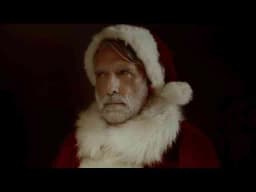
Magnum Opus Partners reimagined Santa Claus for modern advertising in this 2018 Australian agency self-promo film that challenges holiday creative conventions.

Magnum Opus Partners Asks What Santa Would Look Like If Made Today
"What Would Santa Look Like If He Was Created Today?" is a 2018 Brandinginasia.clapboard.com/blog/branding-and-advertising/video-marketing/video-marketing-today">agency self-promotional film by Melbourne-based Magnum Opus Partners that reframes the familiar Christmas icon through the lens of contemporary advertising practice, asking whether today's industry would produce the same enduring character that has defined holiday culture for nearly a century.
The campaign operates as a single-film creative exercise rather than a commercial brief for an external client, according to Adsoftheworld. Published in December 2018 in Australia, it invites the advertising community to consider what creative decisions, strategic pressures, and aesthetic conventions now governing the industry would produce if applied to the mythmaking that originally built Santa Claus. The premise is both self-aware and pointed: if modern advertising creatives were handed the task from scratch, would the result carry the same cultural weight as the figure audiences recognise today?
Magnum Opus Partners positions the film squarely within the agency self-promotion category, using the Christmas season as a natural vehicle for a reflective creative statement. In Australia, where the holiday advertising market competes for attention across an increasingly fragmented media landscape, a single-asset film released at peak December engagement represents a deliberate editorial choice. The work targets peers and prospective clients within the Australian advertising and media entertainment sector, using narrative craft rather than promotional claims to demonstrate the agency's thinking.
The campaign carries a Clapboard Score of 62 out of 100, reflecting competent conceptual ambition and culturally resonant subject matter balanced against the limitations of a single-asset, self-funded production without documented distribution reach or independently verified audience impact.
Magnum Opus Partners grounds its creative strategy in one of advertising's most consequential pieces of cultural folklore. The familiar commercial image of Santa Claus is widely associated with Coca-Cola's 1931 advertising, as noted by both Branding in Asia and Ads of the World in their coverage of this campaign, according to Mo Partners. That association makes the premise of the film immediately legible to any advertising professional: it locates the origin of a global icon inside the industry itself, then asks whether the industry has changed enough to produce something different today.
The strategic rationale is sharp for an agency self-promotion context. Rather than showcasing a portfolio of client work, Magnum Opus Partners uses the film to signal the kind of thinking it brings to briefs — historically informed, critically minded, and willing to interrogate received wisdom. In a competitive Australian creative market where independent agencies contend with the local operations of holding-company networks including WPP and Publicis Groupe, demonstrating a distinct intellectual posture carries real positioning value.
According to the Australian Competition and Consumer Commission, the Australian advertising and media sector was subject to ongoing scrutiny of digital market concentration during this period. Separately, Australian advertising expenditure increased 1.9% in 2018 to reach A$7.03 billion, according to Campaign Asia reporting on the market. Digital advertising exceeded A$2 billion in Australia during that same year, according to the same source. Against that backdrop of platform consolidation and digital-first investment, a film that asks qualitative questions about creative culture rather than optimising for reach metrics reads as a deliberate counter-positioning move by a boutique independent agency.
Pat Langton led the project as Creative Director, shaping a film that relies on narrative argument rather than spectacle to make its point. The creative approach treats the question in the campaign title as a genuine rhetorical device, using voiceover and visual language to walk the viewer through what contemporary advertising conventions might do to the Santa Claus legend if applied without the benefit of historical hindsight.
Stephen Yolland served as Copywriter, and Johnathan Akiki served as Art Director, according to credits documented on the Magnum Opus Partners agency website and confirmed by Ads of the World. The writing carries the argumentative weight of the piece. Where many agency Christmas films default to warmth and sentiment, this script maintains an analytical register, positioning advertising itself as both the creator and the potential corruptor of cultural mythology. That tonal choice is consistent with the self-promotional intent: the film demonstrates copywriting and strategic thinking simultaneously.
Patrick Harvey provided voice performance and Paul McCosh handled sound design, rounding out a lean production team that kept the execution tightly scoped. Meg Langton served as actor in the film. Mike Allen received additional credits, as documented by the agency and archived by Ads of the World. No director, production company, post-production house, music composer, or editor is identified in available records sourced from Magnum Opus Partners, Ads of the World, and Clapboard. The absence of those credits suggests a production model where the creative team retained close control over every element, consistent with how boutique agencies typically approach self-funded work. The single media asset format reinforces this: the film is built to perform as a standalone statement, not as one component within a broader campaign architecture.
No verified performance data for "What Would Santa Look Like If He Was Created Today?" is publicly available. Metrics including view counts, earned media reach, new business attributed to the film, or audience engagement figures have not been published by Magnum Opus Partners or reported by third-party sources including Ads of the World, Branding in Asia, or Campaign Asia.
Structurally, the campaign demonstrates several conditions associated with effective agency self-promotion. The timing is precise: a December 2018 release aligns the work with peak cultural attention on Christmas and the Santa Claus figure, ensuring the subject matter is immediately relevant to any viewer in the Australian market. The premise is singular and memorable, which aids organic sharing within advertising industry networks. Coverage by Branding in Asia, published on December 17, 2018, confirms the work travelled beyond its immediate market to reach a regional creative audience, representing a meaningful outcome for a single-asset production with no documented paid distribution.
The film's structural limitation is its reliance on a single touchpoint. Without supporting content, a media plan, or a participatory mechanic, the campaign's ability to sustain conversation beyond its initial release window depends entirely on the strength of the central idea. The Clapboard Score of 62 out of 100 reflects that balance: the conceptual premise is genuinely distinctive, but the execution and measurable impact do not reach the threshold of the most awarded work in the agency self-promotion category.
"What Would Santa Look Like If He Was Created Today?" is a 2018 agency self-promotional film by Melbourne-based Magnum Opus Partners. Published in December 2018 in Australia, it uses a single film to ask whether contemporary advertising conventions would produce the same enduring Santa Claus figure associated with Coca-Cola's 1931 advertising.
Magnum Opus Partners created the film with Pat Langton as Creative Director, Stephen Yolland as Copywriter, and Johnathan Akiki as Art Director. Patrick Harvey provided voice performance, Paul McCosh handled sound design, Meg Langton served as actor, and Mike Allen received additional credits, as documented by Ads of the World and the agency's own records.
The campaign asks whether modern advertising creatives, if tasked with building Santa Claus from scratch today, would produce the same culturally durable icon. It treats the Santa legend as an advertising creation, widely linked to Coca-Cola's 1931 campaign, and uses that lineage to interrogate how contemporary industry conventions shape brand mythology.
No awards for "What Would Santa Look Like If He Was Created Today?" are documented in publicly available records from Ads of the World, Branding in Asia, or Clapboard. The campaign carries a Clapboard Score of 62 out of 100, reflecting its conceptual strength as a self-promotional exercise without confirmed industry recognition.
Magnum Opus Partners used the Santa Claus origin story to demonstrate strategic and creative thinking to peers and prospective clients in Australia. By choosing an analytically framed Christmas narrative over a conventional seasonal greeting, the agency signalled a critical, historically informed creative perspective — a positioning approach suited to a boutique independent competing in the Australian market.
.webp)
Creative Collaboration Platform: The Backbone of Modern Creative WorkWhat is a creative collaboration platform?Clapboard defines a creative collaboration platform as the operational core for today’s distributed creative teams. This is not a collection of digital collaboration tools stitched together; Clapboard’s system


Understanding the Creative Production MarketplaceWhat is a Creative Production Marketplace?Clapboard defines a creative production marketplace as a structured ecosystem where brands, agencies, and production talent converge to execute video, advertising, and branded content at scale. Unlike the legacy agency or freelanREAD FULL ARTICLE

The Urgent Need for a Creative Production Operating SystemWhy Traditional Creative Production Models Break DownClapboard sees the creative production landscape shifting under pressure. Content velocity is no longer a buzzword—it’s a mandate. Modern advertising demands relentless output across dozens of channels, each wREAD FULL ARTICLE