Canadian Canoe Museum's 'Open Again' film by BrandHealth reframes national identity, arguing the canoe — not hockey — built Canada's economy and connected its

How the Canadian Canoe Museum Reframed National Identity in 2017
"Open Again" is a 60-second narrative film created by BrandHealth for the Canadian Canoe Museum, published in Canada in May 2017, arguing that the canoe — not hockey — was the defining force behind Canada's economic development, territorial exploration, and social connection.
The Canadian Canoe Museum occupies a singular position in Canada's cultural landscape. Located in Peterborough, Ontario, it holds the world's largest collection of canoes and bark craft, and its mandate extends well beyond artifact preservation. The museum tells the story of how a waterborne vessel shaped an entire nation. "Open Again" translates that institutional mission into a piece of travel marketing designed to draw visitors, provoke thought, and assert cultural relevance at a moment when Canada's 150th anniversary celebrations were drawing unprecedented attention to the country's heritage identity.
The campaign's central creative proposition inverts a widely held Canadian cultural belief. Its narration opens with the line "Some say it was hockey that defined us," as reported by kawarthanow.com, before dismantling that claim and replacing it with the canoe as the true engine of Canadian civilization. The film positions hockey as something Canadians played while waiting for the waterways to "open again" — a phrase that simultaneously names the campaign, signals the museum's seasonal reopening, and reframes the entire arc of the nation's history. In doing so, BrandHealth created a narrative campaign that functions on multiple registers: as a seasonal promotional message, as a brand positioning statement, and as a genuine contribution to the ongoing Canadian conversation about what this country is and how it came to be. The geographic market is Canada in its entirety, though the campaign's production and the museum's location root it firmly in Ontario.
 ARCHIVE
The Canadian Canoe Museum faces a structurally challenging marketing environment. Museums across Canada compete intensely for visitor attention and discretionary leisure spending, and institutional heritage sites without federal funding scale must work considerably harder to establish cultural salience. In Canada, Parks Canada recorded more than 23 million visits in 2015–16, a figure up seven percent year over year according to Parks Canada's own reporting, and the federal government's decision to offer free admission to Parks Canada sites throughout Canada's 150th anniversary year in 2017 intensified competition for leisure audiences across the country. Against that backdrop, a small regional museum needed a strategy that punched well above its media weight.
BrandHealth's answer was to eschew conventional travel marketing — scenic imagery, visitor testimonials, event listings — and instead stake out a position in a cultural argument that every Canadian already has an opinion about. By challenging hockey's status as Canada's foundational symbol, the campaign guaranteed engagement from its target audience before a single ticket was sold. The strategic logic is sound: in a crowded leisure industry landscape, salience requires a point of view, not a feature list.
The competitive context reinforces the boldness of this choice. The Canadian Museum of History attracted over 1.53 million visitors in 2016 according to Publications Gc Ca, and the Canadian War Museum and the Canadian Museum of History together held fifty-five percent of the National Capital Region museum market share in 2017–18, also according to publications.gc.ca. The Canadian Canoe Museum, without comparable federal backing or metropolitan location, could not compete on scale. It competed instead on narrative — transforming a niche cultural proposition into a nationally resonant claim about identity, exploration, and the recreational industry's deepest roots in Canadian life.
Rick Kemp directed, wrote, and served as creative director on "Open Again," giving the film a rare creative coherence that comes from a single authorial vision controlling concept, copy, and execution simultaneously. That consolidation of creative roles under one filmmaker is not incidental — it explains why the film's narration and imagery feel precisely calibrated rather than assembled from separate creative departments.
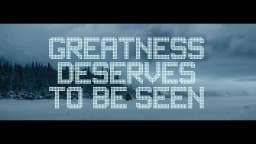
The visual grammar of the film opens on aerial views of a winter landscape, establishing Canada's geography as both beautiful and inhospitable, before depicting settlers moving through forest terrain, as noted in Clapboard's editorial observation. The imagery is deliberate: it invokes the iconography of Canadian settlement and exploration before the narration redirects the viewer's interpretation of what they are seeing. The settlers carry old-fashioned hockey sticks, a detail that functions as both a visual joke and a rhetorical setup for the campaign's central inversion.
Cinematography was handled by Pawel Dwulit and Mark McNeilly, according to clapboard.com. McNeilly served a triple function on the production, acting as cinematographer, picture editor, and contributing to sound post-production alongside Tom Thorney and Jason Donkergoed, as documented by clapboard.com and kawarthanow.com. This compressed, multi-hyphenate production structure is consistent with independent and regional Canadian film production, where resourcefulness often produces more intimate, authorial results than larger-budget campaigns with siloed departments. The 60-second runtime imposes discipline on the argument: every image and every line of narration must earn its place, and the film's reported structure — setup, inversion, payoff — maps directly onto the single-asset format. Production credits for "Open Again" are documented across clapboard.com and kawarthanow.com. For a campaign built on a single film asset, the craft investment per second of finished footage is considerable, and the production team's efficiency in serving the creative idea is evident in the film's tonal consistency.
No verified performance data for "Open Again" is publicly available in terms of visitor uplift, earned media reach, or measurable conversion metrics. The campaign's single-asset format and regional production context mean that standardised campaign effectiveness reporting was not filed in any publicly accessible industry database.
What structural analysis can confirm is that the campaign's design addresses several genuine effectiveness drivers. The narrative inversion at its core — hockey as placeholder, canoe as protagonist — is immediately memorable and inherently shareable, satisfying the conditions for organic amplification that paid media budgets alone cannot manufacture. The campaign's release timing in May 2017 aligned with Canada's 150th anniversary year, a period when international arrivals to Canada reached 20.8 million, up four percent from 2016 according to Warmuseum Ca's market context reporting, and when Canadian cultural identity was a topic of active national and international conversation. Releasing a film that intervenes directly in that conversation was strategically well-timed.
The Clapboard Score for "Open Again" is 59 out of 100. That score reflects a campaign with a genuinely strong conceptual foundation — a clear, provable cultural argument delivered with authorial consistency — that is constrained by its single-asset execution and the absence of a broader campaign ecosystem to amplify and sustain the central idea. The 2018 follow-up print campaign, also by BrandHealth, titled "Railroad, Indirect Canadians, Sanity, Minivan, 8000lb Canoe" and documented by kawarthanow.com, suggests that the strategic territory opened by "Open Again" had legs, and that the museum recognised the value of continuing to mine the same cultural vein across subsequent years and formats.
"Open Again" is a 60-second film created by BrandHealth for the Canadian Canoe Museum in May 2017. It argues that the canoe, not hockey, built Canada's economy and connected its communities. The campaign functioned as both a seasonal reopening announcement and a broader cultural provocation about Canadian national identity.
Rick Kemp directed, wrote, and served as creative director on "Open Again," consolidating creative control under a single author. Cinematography was shared by Pawel Dwulit and Mark McNeilly, with McNeilly also editing the film. Sound post-production involved McNeilly, Tom Thorney, and Jason Donkergoed, as documented by clapboard.com and kawarthanow.com.
BrandHealth chose cultural provocation because the Canadian Canoe Museum could not compete on scale with federally funded institutions. Challenging hockey's role as Canada's defining symbol guaranteed immediate engagement from Canadian audiences. The strategy transformed a niche heritage museum into a participant in a nationally relevant conversation about identity, exploration, and the leisure industry's roots.
The Canadian Canoe Museum's "Open Again" campaign holds a Clapboard Score of 59 out of 100. The score reflects a strong conceptual premise and authorial creative execution, offset by the campaign's single-asset format and the absence of a broader media ecosystem to extend and amplify the central narrative argument across the Canadian market.
"Open Again" launched in May 2017, the year Canada marked its 150th anniversary. Parks Canada offered free site admission that year, intensifying competition for leisure audiences across Canada, according to Parks Canada. The campaign's argument about Canadian cultural identity was directly relevant to a national moment already focused on heritage, exploration, and what it means to be Canadian.
BrandHealth created a follow-up print campaign for the Canadian Canoe Museum in April 2018, titled "Railroad, Indirect Canadians, Sanity, Minivan, 8000lb Canoe," as documented by kawarthanow.com. That campaign continued the museum's strategy of raising awareness of Canada's historical roots, confirming that the cultural territory established by "Open Again" in 2017 remained a productive creative direction.
.webp)
Creative Collaboration Platform: The Backbone of Modern Creative WorkWhat is a creative collaboration platform?Clapboard defines a creative collaboration platform as the operational core for today’s distributed creative teams. This is not a collection of digital collaboration tools stitched together; Clapboard’s system


Understanding the Creative Production MarketplaceWhat is a Creative Production Marketplace?Clapboard defines a creative production marketplace as a structured ecosystem where brands, agencies, and production talent converge to execute video, advertising, and branded content at scale. Unlike the legacy agency or freelanREAD FULL ARTICLE

The Urgent Need for a Creative Production Operating SystemWhy Traditional Creative Production Models Break DownClapboard sees the creative production landscape shifting under pressure. Content velocity is no longer a buzzword—it’s a mandate. Modern advertising demands relentless output across dozens of channels, each wREAD FULL ARTICLE