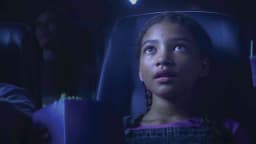
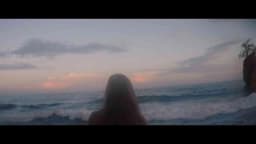
Go RVing's 2018 Canadian campaign Bring Back Wildhood, created by doug&partners, used nostalgic film storytelling to reconnect adults with outdoor recreation

Go RVing Bets on Nostalgia to Bring Back Wildhood in Canada
Go RVing's "Bring Back Wildhood" is a 2018 Canadian film-medium campaign, created by agency doug&partners, that uses narrative-driven emotional storytelling to position RV travel as a means of reclaiming the uninhibited outdoor freedom of childhood.
The campaign launched in March 2018 in Canada and represented a deliberate pivot away from product-led advertising toward cultural and emotional territory. Rather than promoting the mechanical or financial attributes of recreational vehicles, "Bring Back Wildhood" addressed a felt absence in adult life: the loss of unstructured time in nature. The campaign's central idea argued that modern adults had traded their instinctive wildness for routine, and that RV travel offered a credible, accessible path back to that earlier self.
Go RVing operates as an industry-wide consumer brand managed by the RV Industry Association, according to research sourced from rvia.org, functioning as a category-marketing platform rather than as a single manufacturer or retailer. Its mandate is to grow the overall RV market by shifting consumer perception, which gives campaigns like "Bring Back Wildhood" a broader strategic purpose than any individual brand campaign would carry. In the Canadian market specifically, that mission required language and imagery that resonated with distinctly Canadian relationships to wilderness and outdoor recreation.
The campaign comprised English- and French-language executions, extending its reach across Canada's two primary language markets. Its primary media asset was a long-form film, a format choice that prioritised depth of emotional engagement over reach efficiency — a meaningful creative bet for a leisure and recreation category where consideration cycles are long and emotional resonance drives eventual conversion. The campaign earned a Clapboard Score of 63/100, reflecting solid creative ambition within a category execution that rewards sustained narrative investment.
Go RVing's "Bring Back Wildhood" strategy rests on a single, well-grounded consumer insight: adults in Canada feel disconnected from the physical freedom they experienced in childhood, and that disconnection creates latent demand for experiences that restore it.
Doug&partners anchored the campaign in nostalgia not as a sentimental device but as a strategic reframing of the RV category. Recreational vehicles, as a product class, face an ongoing perception challenge: they are associated with an older demographic and with a particular mode of travel that younger adults do not instinctively see as relevant to their lives. By centering the campaign on a universal emotional experience — the wildness of childhood summers, of unsupervised time outdoors, of nature as playground rather than backdrop — the agency repositioned RV travel as an emotionally necessary act of self-recovery rather than a retirement-era lifestyle choice.
The Canadian outdoor recreation and travel market provided fertile ground for this argument. Canadians have a culturally distinct relationship with wilderness, one that competitors in the leisure travel sector, including conventional hotel chains and package-tour operators, are structurally unable to claim with the same authenticity. By contrast, RV travel places the traveller inside that wilderness rather than adjacent to it, a point the campaign's narrative made implicitly but with considerable force.
Go RVing's positioning as a category platform, confirmed by rvia.org, means the campaign's competitive target was the broader leisure travel market rather than a specific RV brand rival. In that framing, the campaign competed for share of summer-holiday intent against air travel packages, resort tourism, and urban leisure experiences. The 2018 campaign also ran in both English and French across Canada, signalling a market commitment to the full national geography rather than a regionally concentrated media strategy. The campaign's appearance on Strategy Online's 2018 Marketing Awards advertising shortlist, as reported by Strategy Online, confirmed that it registered meaningfully within Canadian advertising's own evaluative framework.
"Bring Back Wildhood" commits fully to the film medium. Its primary asset is a long-form lifestyle video that runs approximately four minutes, a duration that signals creative confidence and an explicit rejection of the compressed logic of broadcast advertising.
The film's narrative structure follows a recognisable emotional arc: it opens in the register of childhood memory, uses visual and sonic language associated with freedom and outdoor play, and arrives at the present moment of adult constraint before proposing RV travel as the resolution. This structure — loss, longing, reclamation — is classically effective in emotional advertising, but what distinguishes the "Bring Back Wildhood" execution is its commitment to restraint. The film does not pivot abruptly into product demonstration or brand declaration. It sustains its emotional argument to the end, trusting the audience to complete the commercial logic themselves.
Production credits for "Bring Back Wildhood" are not publicly documented in available sources. What the campaign's production choices do make evident, however, is a deliberate aesthetic sensibility: natural light, landscapes of recognisable Canadian wilderness, and a tonal register that avoids the heightened production sheen of conventional travel advertising. These choices are consistent with the campaign's strategic objective of emotional authenticity. Overly polished imagery would have undermined the nostalgia argument at the level of craft.
The decision to produce both English- and French-language versions of the campaign is itself a creative and production commitment that extends beyond simple localisation. French-language Canadian audiences bring distinct cultural associations to narratives about nature, freedom, and childhood, and a campaign that acknowledges this through dedicated creative execution rather than dubbed adaptation demonstrates a more considered approach to the Canadian market. The film's four-minute format also positioned it as content capable of living beyond paid media placements, functioning as shareable narrative in digital environments where attention is self-selected rather than interrupted.

No verified performance data for "Bring Back Wildhood" is publicly available in granular form, though the campaign's award trajectory provides meaningful proxy evidence of its effectiveness.
"Bring Back Wildhood" was named a Fitness and Leisure finalist at the 2019 Effie Awards Canada, according to the 2019 Effie case journal. The Effie Awards evaluate campaigns specifically on demonstrated marketing effectiveness rather than creative craft alone, making finalist recognition in this category a substantive indicator of commercial impact. The same Effie case journal reported all-time gains across brand-health measures and online conversions, per that source, though specific numerical figures have not been independently confirmed across publicly available records and are therefore characterised here in qualitative terms consistent with the Effie documentation.
The campaign also appeared on Strategy Online's 2018 Marketing Awards advertising shortlist, as reported by Strategy Online, situating it among the more notable Canadian campaigns of that year in the judgment of the country's leading marketing trade publication. Additionally, Ad Age ranked "Bring Back Wildhood" at number three in its Top 5 Global Ad of the Week feature, as reported by woodallscm.com, placing it ahead of an Adidas entry in that ranking — a competitive context that underlines the campaign's creative standing beyond the Canadian market.
Structurally, the campaign's effectiveness case is coherent. Long-form emotional film in a high-consideration leisure category, distributed in both of Canada's official languages, with a clear and resonant insight, is a well-constructed approach. The Clapboard Score of 63/100 reflects a campaign that executes its emotional strategy with skill while leaving room for greater measurable impact or broader creative ambition. The absence of Cannes Lions, D&AD, or Clio recognition does not diminish the campaign's domestic effectiveness record, which remains its primary measure of success.
"Bring Back Wildhood" is a 2018 Canadian film campaign created by doug&partners for Go RVing. It uses long-form emotional narrative to position RV travel as a way for adults to reclaim the outdoor freedom of childhood, running in both English and French across Canada.
Doug&partners created "Bring Back Wildhood" for Go RVing in Canada. Go RVing itself is an industry-wide consumer brand managed by the RV Industry Association, functioning as a category-marketing platform rather than a single manufacturer, which gave the campaign a broad market-growth mandate.
"Bring Back Wildhood" was a Fitness and Leisure finalist at the 2019 Effie Awards Canada, according to the Effie case journal. It also appeared on Strategy Online's 2018 Marketing Awards advertising shortlist and was ranked number three in Ad Age's Top 5 Global Ad of the Week, per woodallscm.com.
Doug&partners centred the campaign on nostalgia and the loss of childhood freedom, reframing RV travel as emotional reclamation rather than lifestyle aspiration. The strategy targeted the broader Canadian leisure travel market, competing against hotels and package tours rather than individual RV brand rivals.
"Bring Back Wildhood" used the film medium as its primary format, with a four-minute lifestyle video as its lead asset. The campaign also produced separate English- and French-language executions for the Canadian market, extending its reach across both of Canada's official language communities.
Go RVing's "Bring Back Wildhood" carries a Clapboard Score of 63 out of 100. The score reflects a campaign with genuine emotional craft and a coherent strategic rationale, while indicating room for stronger measurable impact or broader creative ambition relative to top-tier benchmark campaigns.
.webp)
Creative Collaboration Platform: The Backbone of Modern Creative WorkWhat is a creative collaboration platform?Clapboard defines a creative collaboration platform as the operational core for today’s distributed creative teams. This is not a collection of digital collaboration tools stitched together; Clapboard’s system


Understanding the Creative Production MarketplaceWhat is a Creative Production Marketplace?Clapboard defines a creative production marketplace as a structured ecosystem where brands, agencies, and production talent converge to execute video, advertising, and branded content at scale. Unlike the legacy agency or freelanREAD FULL ARTICLE

The Urgent Need for a Creative Production Operating SystemWhy Traditional Creative Production Models Break DownClapboard sees the creative production landscape shifting under pressure. Content velocity is no longer a buzzword—it’s a mandate. Modern advertising demands relentless output across dozens of channels, each wREAD FULL ARTICLE