 ARCHIVE
You know - Atún Van Camp’s | Clapboard Ad Archive
Van Camp’s returned to Colombian advertising in 2022 with the campaign You know, a strategic effort...
Burger King Brazil Champions Blind Inclusion in a Fast-Food First
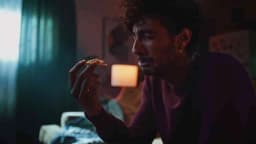
Burger King Brazil's 'King em Dobro' campaign, created by David São Paulo and launched in July 2019, is a film advertisement that placed a blind customer named Eduardo at the centre of a mainstream broadcast television commercial while embedding open audio description directly into the primary audio channel rather than routing it to a secondary accessibility track.
The campaign, also titled '2×15 – Cego' in production documentation, was designed to promote Burger King's King em Dobro offer — a two-sandwich deal priced at R$15 — while simultaneously marking what the brand described, as reported by LatinSpots on July 26, 2019, as its first audio-description campaign on open broadcast television in Brazil. The strategic decision to place the descriptive narration within the main audio feed meant that sighted and visually impaired viewers received an identical version of the commercial, a meaningful departure from industry convention at the time. The campaign was published in Brazil in July 2019 and comprises a single film asset archived on Clapboard.com. In the Brazilian market, where accessibility in mass-media advertising had rarely been treated as a creative opportunity rather than a compliance obligation, the work represented an attempt to bring inclusive storytelling into the Food and Drink category's mainstream conversation. The creative team at David São Paulo, led by managing director Sylvia Panico and creative VP Rafael Donato, chose not to separate the accessibility layer from the entertainment layer, constructing a narrative in which the audio description itself functions as part of the storytelling rather than an addendum to it. Clapboard.com archives the campaign as a single-asset film submission representing the Food industry category.
Burger King Brazil grounded the King em Dobro campaign in a specific and verifiable demographic reality. According to Brazil's 2010 census, approximately 46 million people in the country lived with some form of disability, including more than 6.5 million people with visual disabilities, as cited by Burger King Brazil's Director of Marketing and Sales in coverage by LatinSpots dated July 26, 2019. David São Paulo used this figure as the strategic foundation for an inclusivity argument aimed at broadcast television audiences, a medium that had historically marginalised visually impaired viewers by consigning audio description to secondary audio programme channels that required additional equipment or deliberate action to access.
The competitive context for this decision is significant. In Brazil's fast-food market, Burger King competes directly against McDonald's, which according to Financhill held approximately 21.4 percent of the global fast-food market in 2019, and KFC, which according to the same source held approximately 2.82 percent globally in that year. Burger King itself held approximately 1.16 percent of the global fast-food market in 2019, according to Financhill. Within this competitive landscape, differentiation through brand values and emotional storytelling carries particular weight, especially in a market as culturally engaged with television advertising as Brazil. By choosing to lead with a real Burger King customer — Eduardo, identified in campaign materials as a person with visual impairment — rather than a fictional character, David São Paulo signalled that the campaign's inclusivity rationale was rooted in genuine consumer representation rather than performative gesture.
The creative execution of King em Dobro rests on a single structural decision that defines the entire piece. Audio description, the narrated layer that conveys visual information to blind and low-vision viewers, was placed within the primary broadcast audio channel rather than being relegated to a secondary accessibility feed. This choice, documented in coverage by Ads of the World and Cidade Marketing, meant that the descriptive narration became part of the film's texture for all audiences — sighted viewers heard Eduardo's world described aloud in the same register as the rest of the commercial's sound design.
The creative team responsible for this work was led by Sylvia Panico as managing director of David São Paulo, with Rafael Donato serving as vice president of creative. Edgard Gianesi served as creative director, Bernardo Tavares as copywriter, and Paulo Damasceno as art director, as documented in campaign credits archived on Clapboard.com. Rafael Donato was quoted in Propmark on August 30, 2019, addressing the campaign's focus on accessibility and the deliberate integration of description into narrative rather than treating the two as separate editorial concerns. The film's protagonist, Eduardo, is presented as an ordinary Burger King customer whose experience of the restaurant and its offer is conveyed through the combined tools of performance and narration. Production credits beyond the named creative team are not publicly documented in available sources. The campaign's formal ingenuity lies in the way it turns an accessibility convention — audio description — into a storytelling device, so that what might in another context feel like an operational overlay instead reads as the film's voice.
No verified performance data for the King em Dobro campaign is publicly available in terms of view counts, sales uplift, media reach, or consumer sentiment metrics. Clapboard.com records no verified wins or shortlistings for this campaign at Cannes Lions, the Effies, The One Show, D&AD, or the Clio Awards. The Clapboard Score for this campaign stands at 71 out of 100.
Structural analysis of the work suggests several reasons why it merits serious evaluation regardless of the absence of measurable outcomes. The decision to embed audio description in the primary audio channel rather than a secondary track is not a cosmetic creative choice — it reframes the entire relationship between accessibility and broadcast advertising in the Brazilian market. A campaign that treats disability accommodation as a narrative tool rather than a legal footnote occupies a genuinely different category of ambition from most fast-food advertising of its era. The campaign's coverage across trade publications including LatinSpots, Propmark, Meio e Mensagem, and Ads of the World indicates that it generated meaningful industry attention in Brazil in the second half of 2019, which itself constitutes a form of earned-media effectiveness. The combination of a promotion-led mechanic — the King em Dobro R$15 two-sandwich offer — with an accessibility-first creative approach demonstrates that inclusive storytelling and transactional advertising objectives are not mutually exclusive, a structural lesson with lasting relevance for the Food and Drink category across the Brazilian market and beyond.
King em Dobro is a July 2019 Burger King Brazil television campaign created by David São Paulo. It featured Eduardo, a blind customer, as its central character and promoted a two-sandwich deal priced at R$15. The campaign is also documented under the production title '2×15 – Cego' and was submitted to Clapboard.com as a single film asset.
Burger King Brazil cited Brazil's 2010 census, which recorded more than 6.5 million people with visual disabilities in the country, as strategic rationale. According to LatinSpots, the brand's Director of Marketing and Sales described King em Dobro as the company's first audio-description campaign on open broadcast television in Brazil.
Audio description was placed in the primary broadcast audio channel rather than a secondary SAP track. This meant sighted and visually impaired audiences received an identical version of the commercial. The decision, documented across Ads of the World and Cidade Marketing coverage, transformed an accessibility convention into an active narrative device within the film itself.
David São Paulo's team included Sylvia Panico as managing director, Rafael Donato as vice president of creative, Edgard Gianesi as creative director, Bernardo Tavares as copywriter, and Paulo Damasceno as art director. Rafael Donato spoke about the campaign's accessibility focus in Propmark on August 30, 2019.
No verified wins or shortlistings for King em Dobro are publicly available at Cannes Lions, D&AD, The One Show, the Effies, or the Clio Awards, according to Clapboard.com records. The campaign received trade press coverage from LatinSpots, Propmark, Meio e Mensagem, and Ads of the World following its July 2019 launch in Brazil.
The Clapboard Score for the King em Dobro campaign is 71 out of 100. This editorial score reflects the structural ambition of placing open audio description in a primary broadcast channel and using inclusive storytelling within a mainstream fast-food promotional context in the Brazilian market in 2019.
.webp)
Creative Collaboration Platform: The Backbone of Modern Creative WorkWhat is a creative collaboration platform?Clapboard defines a creative collaboration platform as the operational core for today’s distributed creative teams. This is not a collection of digital collaboration tools stitched together; Clapboard’s system


Understanding the Creative Production MarketplaceWhat is a Creative Production Marketplace?Clapboard defines a creative production marketplace as a structured ecosystem where brands, agencies, and production talent converge to execute video, advertising, and branded content at scale. Unlike the legacy agency or freelanREAD FULL ARTICLE

The Urgent Need for a Creative Production Operating SystemWhy Traditional Creative Production Models Break DownClapboard sees the creative production landscape shifting under pressure. Content velocity is no longer a buzzword—it’s a mandate. Modern advertising demands relentless output across dozens of channels, each wREAD FULL ARTICLE