 ARCHIVE
You Can Taste When It’s a Waitrose Christmas
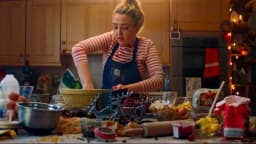
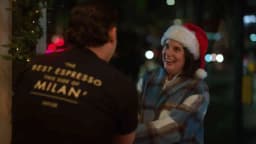
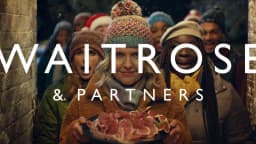
Waitrose’s Christmas campaign, You Can Taste When It’s a Waitrose Christmas, launched in the United...
KFC Crossroads Pits a Rooster Against Christmas Turkey
KFC's "Crossroads" is a November 2018 film campaign created by Mother London for the United Kingdom market, positioning KFC chicken as a compelling alternative to traditional Christmas turkey through a Western-style cinematic confrontation between a rooster and a turkey set to Ennio Morricone's iconic theme from The Good, the Bad and the Ugly.
The campaign launched at the precise moment British consumers begin planning their Christmas meals, staking a claim in one of the most convention-bound food occasions in the United Kingdom's cultural calendar. Where rival quick-service brands typically retreat from Christmas messaging — ceding the season to supermarkets and turkey producers — KFC stepped directly into the conversation, using the language of spaghetti Western cinema to dramatise a simple but audacious proposition: chicken belongs at the Christmas table. The strategic hook was as precise as the creative was bold. KFC restaurants in the United Kingdom are open on every day of the year except December 25, a fact that Monica Pool, then marketing director of KFC UK, framed as the campaign's emotional engine. The brand was not claiming to replace Christmas Day itself, but rather to own every festive occasion that surrounds it — the office parties, the family gatherings, and the December moments that demand something indulgent but accessible.
The single film asset that comprises "Crossroads" demonstrates how much creative ambition Mother and KFC were willing to concentrate into one piece of work. Rather than fragmenting the idea across multiple executions, the campaign trusted a single, cinematically crafted narrative to carry its weight across the United Kingdom. The result is a Food and Drink campaign that operates simultaneously as seasonal entertainment and brand positioning, earning coverage from outlets including Ad Age, which described the spot as a hilarious Western-style film, and The Drum, which reported on its strategic framing. Clapboard scores "Crossroads" at 70 out of 100, reflecting strong creative distinctiveness against a backdrop of limited verified performance data.
KFC identified a genuine cultural tension at the heart of British Christmas eating. Turkey is the default centrepiece of the United Kingdom's Christmas dinner, a convention so deeply embedded that challenging it requires either extraordinary creative confidence or a brand with enough cultural equity to be taken seriously as a provocateur. By 2018, KFC UK had both, having appointed Mother London as its creative agency in 2017, as reported by Marketing Week. That relationship had already begun shifting KFC UK away from the product-led, internationally adapted advertising it had relied on under previous agencies including Ogilvy, Y&R, and BBH, and toward culturally specific, humour-driven work built around a distinctive British brand voice.
The QSR sector context matters here. According to Restaurant Business Online, Technomic's 150-chain QSR group grew by a combined rate in the region of three percent in 2018, with the largest chains capturing the overwhelming majority of that growth. In this environment, brand distinctiveness — not merely promotional offers — was a meaningful driver of competitive separation. McDonald's held the largest share of the global fast-food market in 2018, according to data cited by T4, with KFC occupying a considerably smaller but strategically significant position. In the United Kingdom, KFC's central competitive challenge was not simply to outsell McDonald's or Subway during December, but to insert itself into a cultural occasion — Christmas — where no QSR brand had convincingly established relevance. "Crossroads" addressed that challenge by meeting consumers on their own imaginative terrain, using the shared cinematic vocabulary of the Western genre to make a food argument feel like entertainment.
"Crossroads" was directed by Nicolai Fuglsig, a filmmaker known for his command of large-scale, visually driven narrative work. The choice of director signals the level of craft investment Mother and KFC committed to a single-film Christmas campaign. Fuglsig's approach treats the confrontation between the rooster and the turkey not as a comedic sketch but as a genre piece — faithful enough to the grammar of the spaghetti Western that the humour emerges from earned cinematic tension rather than from broad comic performance.
The decision to anchor the film's entire sonic identity to Ennio Morricone's theme from The Good, the Bad and the Ugly is itself a creative statement. Morricone's composition is one of the most immediately recognisable pieces of film music in history, and its deployment here does double work: it signals genre immediately, requiring no exposition, and it lends the rooster-versus-turkey confrontation a grandeur that is inherently absurd when applied to a fast-food context. That gap between the score's seriousness and the scenario's ridiculousness is precisely where the campaign lives. Mother structured the entire narrative around this tonal dissonance, a technique that had become a hallmark of the agency's work for KFC UK since the partnership began in 2017, as documented by Marketing Week. The film's production values — the framing, the costume design, the dusty Western landscape — are deployed without irony, which is what makes the irony land. Ad Age noted the spot's hilarious Western-style execution, a descriptor that captures how earnest craft amplifies comic effect. The campaign's single media asset concentrates this creative energy into a film that functions as a short narrative piece as much as an advertisement, a format consistent with the premium Christmas advertising tradition the United Kingdom's market is known for.
No verified performance data for "Crossroads" is publicly available. No sales lift figures, market-share changes, or effectiveness awards have been documented in any publicly accessible source, including Contagious, Ads of the World, or Marketing Week. What can be assessed is the campaign's structural effectiveness — the internal logic of its creative and strategic decisions evaluated against the brief it was designed to answer.
The campaign's architecture is sound. It targets a high-intent seasonal moment in the United Kingdom, uses an unmistakable creative device that requires no explanation, and delivers a brand message — KFC is open 364 days a year — that is both factually grounded and emotionally resonant. The decision to invest in a single, high-production film rather than a fragmented multi-format campaign reflects a confidence in the idea's ability to travel on its own. Coverage in Ad Age and The Drum confirms that "Crossroads" generated editorial attention beyond paid placement, which is a meaningful indicator of cultural cut-through in the United Kingdom's competitive Christmas advertising landscape, where brands including John Lewis and Marks and Spencer set an extremely high standard for seasonal film work. Mother's broader creative tenure at KFC UK, which began in 2017 according to Marketing Week, had already established a track record of culturally engaged work, and "Crossroads" sits within that lineage as one of its more formally ambitious executions. The Clapboard Score of 70 out of 100 reflects this balance: strong creative craft and strategic clarity, tempered by the absence of verified effectiveness metrics.
KFC's "Crossroads" is a 2018 UK Christmas film by Mother London positioning KFC chicken as an alternative to traditional turkey. The spot depicts a Western-style showdown between a rooster and a turkey, set to Ennio Morricone's theme, with KFC framing itself as the dependable festive choice for the 364 days before Christmas Day.
Nicolai Fuglsig directed the KFC "Crossroads" film for Mother London. Fuglsig brought cinematic precision to the spaghetti Western format, using authentic genre craft — wide compositions, deliberate pacing, and Morricone's score — to create a comedic tension that earned editorial coverage in Ad Age and The Drum.
KFC identified turkey as a deeply entrenched British Christmas convention and saw a cultural gap no QSR brand had claimed. Mother London used Western film language to make the challenge feel entertaining rather than confrontational, with the strategic anchor being KFC's 364-days-a-year availability across the United Kingdom.
Mother London created "Crossroads" for KFC. Mother became KFC UK's creative agency in 2017, as reported by Marketing Week, and shifted the brand toward culturally specific, humour-driven advertising. "Crossroads" represents one of the more formally ambitious films from that partnership, released in November 2018.
The KFC "Crossroads" film used Ennio Morricone's theme from The Good, the Bad and the Ugly. The score's immediate recognisability established the Western genre frame without exposition, while the gap between its cinematic grandeur and the rooster-versus-turkey scenario produced the campaign's central comic effect.
No verified awards data for KFC's "Crossroads" is publicly available. Sources including Contagious, Ads of the World, and Marketing Week do not document any industry honours for the campaign. Despite the absence of award recognition, the film received editorial coverage from Ad Age and The Drum for its creative approach.
.webp)
Creative Collaboration Platform: The Backbone of Modern Creative WorkWhat is a creative collaboration platform?Clapboard defines a creative collaboration platform as the operational core for today’s distributed creative teams. This is not a collection of digital collaboration tools stitched together; Clapboard’s system


Understanding the Creative Production MarketplaceWhat is a Creative Production Marketplace?Clapboard defines a creative production marketplace as a structured ecosystem where brands, agencies, and production talent converge to execute video, advertising, and branded content at scale. Unlike the legacy agency or freelanREAD FULL ARTICLE

The Urgent Need for a Creative Production Operating SystemWhy Traditional Creative Production Models Break DownClapboard sees the creative production landscape shifting under pressure. Content velocity is no longer a buzzword—it’s a mandate. Modern advertising demands relentless output across dozens of channels, each wREAD FULL ARTICLE