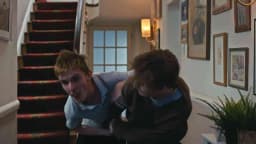
Burger King's Escape the Clown campaign in Germany used augmented reality, geotargeting, and a one-cent Whopper offer to reframe McDonald's mascot as a horror

Burger King Germany Turns Ronald McDonald Into a Horror Villain
Burger King's Escape the Clown is a September 2019 augmented reality and geotargeting campaign launched in Germany that used the theatrical release of It Chapter Two to reframe McDonald's mascot Ronald McDonald as a horror villain, rewarding users who fled McDonald's locations with a WHOPPER for €0.01 via the Burger King app.
Burger King Germany launched Escape the Clown as a multidimensional digital media activation that operated across several simultaneous channels. At its core, the campaign fused cultural timing with competitive conquest strategy: the release of It Chapter Two provided a ready-made horror context in which Pennywise the clown and Ronald McDonald could be conflated through imagery and association, without Burger King needing to name its rival directly. The mechanism was straightforward in concept and technically ambitious in execution. Users who opened the Burger King app near a McDonald's location were served an augmented reality experience that transformed the surrounding environment with horror aesthetics drawn from the film's visual language, culminating in an offer to claim a WHOPPER for one euro cent. According to famouscampaigns.com, the campaign also included a print placement in a McDonald's-related cinema magazine with a reported circulation of 800,000 copies, extending the reach of the horror-clown conceit into a physical medium that McDonald's itself had a stake in. Geotargeted ads were distributed through Facebook, Instagram, and Twitter, serving the campaign creative to users identified as being at or near McDonald's restaurants across Germany, according to marketingdive.com. In Germany, where fast-food competition between the two QSR giants is longstanding and visible, the campaign represented a notable escalation in Burger King's tradition of direct, provocative competitor engagement. The activation contained two media assets, as documented in the Clapboard archive. No production budget or media spend figure has been publicly disclosed for Escape the Clown.
Burger King Germany structured Escape the Clown around a precise consumer insight: proximity to a McDonald's location is itself a moment of brand consideration that can be intercepted.
Rather than waiting for consumers to seek out Burger King, the campaign inverted the competitive dynamic by using geotargeting to identify people already at McDonald's and serving them a disruptive, culturally resonant experience designed to redirect that consideration. This approach reflects a broader conquest logic that Burger King has pursued internationally, but the Germany execution sharpened it with a time-bound cultural hook. According to marketingdive.com, the campaign was explicitly timed to the theatrical release of It Chapter Two, giving the horror-clown association a sense of cultural currency that extended the campaign's relevance beyond paid media placements. McDonald's held an estimated 21.4% share of the global quick-service restaurant market around 2019, according to financhill.com, illustrating the scale of the competitor that Burger King was targeting. In the German fast-food market, both chains operate extensive networks, making location-based conquest a strategically credible tactic rather than a symbolic gesture. The one-cent WHOPPER offer served as the conversion mechanism, giving consumers an economically irrational reason to act on the disruption the campaign created. According to adsoftheworld.com, the campaign's digital channels included Facebook, Instagram, and Twitter, each platform selected for its ability to serve location-aware advertising to users in real time. The integration of augmented reality into the Burger King app deepened engagement beyond a standard promotional offer, creating a branded experience that required active participation and made the act of leaving McDonald's feel like gameplay. This structural design — cultural timing, platform-native geotargeting, AR experience, and a price-based incentive — gave the campaign a layered architecture that competitors including McDonald's Germany could not easily replicate in real time.
Escape the Clown was created for Burger King Deutschland by Grabarz and Partner Werbeagentur GmbH, according to ameawards.com, making it one of the more technically layered productions to emerge from a German fast-food brief in that period.
The creative premise operates on a single, clean insight: that Pennywise, the shape-shifting horror clown from Stephen King's It, and Ronald McDonald, the mascot of Burger King's primary competitor, share enough visual and symbolic territory to make the association feel both obvious and unsettling once made. Burger King did not need to state this connection explicitly. The imagery did the work, and the cultural moment of It Chapter Two's release provided the ambient context that made the association legible to a broad audience in Germany. The augmented reality layer translated this conceptual elegance into an interactive format. When a user opened the Burger King app near a McDonald's location, the AR environment introduced horror visual elements consistent with the film's aesthetic, turning the act of standing near a competitor's restaurant into an immersive, slightly unnerving brand experience. The resolution of that experience — a WHOPPER for €0.01 — reframed escape from the horror clown as a literal, transactional journey toward Burger King. The print placement in a McDonald's-affiliated cinema magazine, reported by famouscampaigns.com as reaching a circulation of 800,000 copies, added a physical dimension to the campaign that disrupted McDonald's own media environment. Production credits beyond the agency attribution to Grabarz and Partner Werbeagentur GmbH are not publicly documented in available sources. The campaign's two media assets, as noted in the Clapboard archive, demonstrate an economy of creative output that concentrated impact rather than diffusing it across a large volume of executions.
No verified performance data for Escape the Clown is publicly available.
According to marketingdive.com, clapboard.com, and adsoftheworld.com, no published figures exist for sales lift, incremental WHOPPER redemptions, app downloads, brand tracking movement, or return on advertising spend attributable to this campaign. No verified award wins have been recorded across Cannes Lions, the Effies, The One Show, D&AD, the Clios, the Webby Awards, or WARC Awards for Escape the Clown, according to the Clapboard research archive. The absence of performance data does not diminish the structural coherence of the campaign's design. Escape the Clown combined four distinct mechanisms — cultural timing, geolocation-based audience targeting, augmented reality engagement, and a near-zero-cost purchase incentive — into a single integrated activation that addressed both brand perception and transactional conversion simultaneously. In the German fast-food market, where McDonald's maintains significant brand equity and physical presence, a campaign that turns proximity to the competitor into a Burger King touchpoint represents a meaningful strategic inversion. The print distribution through a McDonald's-affiliated magazine, reaching a reported 800,000 copies according to famouscampaigns.com, further demonstrates that the campaign was designed to operate inside the competitor's own media territory rather than alongside it. Clapboard assigns Escape the Clown a score of 78 out of 100, reflecting strong marks for strategic originality, cultural integration, and technical ambition, with room remaining for demonstrated, measurable consumer impact at scale.
Escape the Clown was a September 2019 digital and augmented reality campaign by Burger King Germany. It used geotargeting and the Burger King app to serve horror-themed AR experiences to users near McDonald's locations, offering a WHOPPER for €0.01 to anyone who "escaped" the clown, according to marketingdive.com.
Burger King timed Escape the Clown to the theatrical release of It Chapter Two in 2019. The campaign used horror imagery associated with Pennywise the clown to visually connect with Ronald McDonald, McDonald's mascot, giving the competitive conquest strategy a culturally resonant and timely creative framework, according to marketingdive.com.
Grabarz and Partner Werbeagentur GmbH created Escape the Clown for Burger King Deutschland, according to ameawards.com. The campaign launched in Germany in September 2019 and combined geotargeting, augmented reality, and a one-cent WHOPPER offer across the Burger King app, Facebook, Instagram, and Twitter.
Escape the Clown has no verified award wins recorded at Cannes Lions, the Effies, The One Show, D&AD, the Clios, the Webby Awards, or WARC Awards, according to the Clapboard research archive. Clapboard assigns the campaign a score of 78 out of 100 for strategic and creative merit, though this is not an industry award.
Burger King Germany distributed Escape the Clown through Facebook, Instagram, and Twitter using geotargeted ads, alongside the Burger King app for augmented reality delivery, according to adsoftheworld.com. A print placement in a McDonald's-affiliated cinema magazine with a reported circulation of 800,000 copies extended the campaign into physical media, per famouscampaigns.com.
Burger King offered eligible users a WHOPPER for €0.01 during the Escape the Clown campaign in Germany in September 2019. The near-zero price point served as the conversion incentive, rewarding users who engaged with the augmented reality experience near a McDonald's location, according to marketingdive.com and famouscampaigns.com.
.webp)
Creative Collaboration Platform: The Backbone of Modern Creative WorkWhat is a creative collaboration platform?Clapboard defines a creative collaboration platform as the operational core for today’s distributed creative teams. This is not a collection of digital collaboration tools stitched together; Clapboard’s system


Understanding the Creative Production MarketplaceWhat is a Creative Production Marketplace?Clapboard defines a creative production marketplace as a structured ecosystem where brands, agencies, and production talent converge to execute video, advertising, and branded content at scale. Unlike the legacy agency or freelanREAD FULL ARTICLE

The Urgent Need for a Creative Production Operating SystemWhy Traditional Creative Production Models Break DownClapboard sees the creative production landscape shifting under pressure. Content velocity is no longer a buzzword—it’s a mandate. Modern advertising demands relentless output across dozens of channels, each wREAD FULL ARTICLE