



Varun Katyal | Founder, Clapboard
Varun Katyal is the Founder & CEO of Clapboard and a former Creative Director at Ogilvy, with 15+ years of experience across advertising, branded content, and film production. He built Clapboard after seeing firsthand that the industry’s traditional ways of sourcing talent, structuring teams, and delivering creative work were no longer built for the volume, velocity, and complexity of modern content. Clapboard is his answer — a video-first creative operating system that brings together a curated talent marketplace, managed production services, and an AI- and automation-powered layer into a single ecosystem for advertising, branded content, and film. It is designed for a market where brands need content at a scale, speed, and level of specialization that legacy agencies and generic freelance platforms were never built to deliver. The thinking, frameworks, and editorial perspective behind this blog are shaped by Varun’s experience across both the agency world and the emerging platform-led future of creative production. LinkedIn: https://www.linkedin.com/in/varun-katyal-clapboard/
Rethinking Product Strategy: More Than Just Features
The “Product” in the 4 Ps of marketing is too often reduced to a checklist of features. That’s a tactical view, not a strategic one. Senior marketers know a product’s real leverage comes from the sum of its design, experience, and differentiation—not just what it does, but how it feels, how it’s delivered, and why it matters in the first place.
How to differentiate your product in a crowded market
True product differentiation starts with clarity: what problem do you solve, and how is your approach distinct? Packaging, design language, and embedded services are as critical as core functionality. Premium brands don’t win on features—they win on the totality of their offer. In saturated categories, nuance in customer experience and brand narrative is what creates margin and loyalty.
The role of customer feedback in product development
Market-ready products are born from relentless alignment with customer insights. This isn’t a focus group checkbox; it’s continuous intelligence. High-performing teams build feedback loops into every stage of product development, using real usage data and frontline feedback to refine, pivot, or even kill ideas. This discipline turns “innovation” from a buzzword into a measurable process.
Product strategy trends in the 4 Ps of marketing
The modern product strategy is adaptive. Product innovation now means anticipating shifts in customer expectations, not just responding to them. Lifecycle planning is non-negotiable: what launches today will need iteration tomorrow. The best teams treat product as a living asset, tuning everything—design, support, even pricing models—to sustain relevance and value over time.
Senior marketers who master the full scope of the “Product” P—beyond features, toward experience and differentiation—set the pace for their markets. The real competitive edge isn’t in what you launch, but in how you evolve. For deeper dives on execution, see our take on product development best practices and customer-centric product design.
Why the 4 Ps of Marketing Still Matter in a Digital Age
The 4 Ps of marketing—product, price, place, and promotion—aren’t relics of a pre-digital era. They are the architecture that supports every effective marketing mix, even as digital marketing strategies become more sophisticated. The temptation to chase new channels or platforms is constant, but the fundamentals remain the filter for what works and what doesn’t. Senior marketers who ignore these principles risk building campaigns on sand.
What are the 4 Ps of marketing and why are they timeless?
At their core, the 4 Ps of marketing force commercial clarity: What are you selling? At what value? Where will it be available? How will people hear about it? These questions haven’t changed, even as the answers have. The rise of digital marketing essentials—social, programmatic, influencer—doesn’t replace these questions. It simply changes the context in which they’re answered.
How digital transformation reshapes the 4 Ps of marketing
Digital transformation hasn’t made the 4 Ps obsolete; it’s made them more dynamic. Product is now shaped by real-time feedback loops. Price is set with algorithmic precision. Place isn’t just shelves but screens, feeds, and marketplaces. Promotion is a battleground of attention, not just spend. The marketing mix fundamentals still determine success, but the levers are faster and the stakes higher.
Are the 4 Ps of marketing still effective in 2024?
There’s a persistent myth that foundational marketing principles are too rigid for today’s environment. In reality, the marketers who win in 2024 are those who adapt the 4 Ps to new realities, not those who abandon them for the flavor of the month. Chasing trends without anchoring in fundamentals leads to fragmented, ineffective work. The 4 Ps aren’t a checklist—they’re a discipline that keeps strategy honest, measurable, and commercially viable.
Ignore the basics at your peril. The 4 Ps of marketing are as relevant now as ever, and every modern marketing principle worth its salt is built on their foundation.
Pricing Decisions: Balancing Value, Competition, and Perception
How to set the right price for your market
Pricing in the 4 Ps of marketing is a calculated move, not a guess. The baseline: your costs and margins must be sustainable, but that’s table stakes. The real leverage comes from understanding your market’s willingness to pay, how your offer stacks against the competition, and—most critically—how your pricing signals value or scarcity. If you’re not running a competitive market analysis and mapping price sensitivity, you’re operating blind. The right price is the intersection of economic reality and perceived worth, not a simple markup.
Pricing strategies for different business models
There’s no universal pricing strategy—context is everything. SaaS leans on tiered models to capture different segments. Consumer goods might exploit psychological thresholds, like $9.99 instead of $10. Premium brands, meanwhile, use price as a positioning tool: Rolex charges more than its rivals not for cost, but to reinforce exclusivity (Brand Constellations, 2024). For service businesses, value-based pricing is ascendant—charging for outcomes, not hours, aligns incentives and can unlock margin. The key is to match your approach to your business model and audience sophistication. Don’t default to cost-plus because it’s easy; it leaves value on the table.
The impact of perceived value on pricing decisions
Perceived value is where pricing battles are won or lost. Customers judge price against what they believe they’re getting—brand, experience, status, or utility. Starbucks isn’t just selling coffee; it’s selling a ritual, an environment, a badge (Brand Constellations, 2024). If your pricing outpaces your value story, you’ll bleed market share. If you underprice, you risk undermining your own positioning. Dynamic pricing and segmentation—adjusting price for different cohorts or moments—let you capture more value, but only if you understand what drives perception in your category. Misalignment here is fatal.
Avoiding common pricing pitfalls in the marketing mix
The most common mistake: treating price as an afterthought or a discount lever. Price is a brand statement. It must be coherent with your product, promotion, and place. Undercutting to win volume often ends in a race to the bottom, eroding both margin and brand equity. Overpricing without a credible value proposition is equally dangerous. The discipline is to align pricing with both market realities and customer perception—anything less is leaving money, and reputation, on the table.

Place in the 4 Ps of Marketing: Rethinking Distribution for Modern Audiences
Choosing the right distribution channels for your business
The “place” in the 4 Ps of marketing has never been more contested—or more consequential. Traditional distribution channels, dominated by brick-and-mortar and wholesale, have been fractured by digital platforms, DTC models, and hybrid approaches. The right channel mix is now a moving target, dictated by where your audience expects to transact and interact, not by legacy infrastructure. Senior marketers must interrogate whether their current distribution strategy tips toward convenience, reach, or control—and whether those priorities align with actual customer behavior.
How omnichannel strategies are transforming “Place” in marketing
Omnichannel strategy is no longer a buzzword; it’s the new baseline. Modern consumers expect frictionless movement between online and offline touchpoints—click, collect, return, repeat. Each interaction is an opportunity to reinforce brand positioning and capture incremental value. A seamless experience across digital and physical environments isn’t just customer-centric; it’s commercially necessary. This evolution of place in the 4 Ps of marketing is about delivering a consistent, engaging experience across every channel, meeting customers wherever they are and however they choose to buy (Southern New Hampshire University, 2024).
Ensuring product availability and customer convenience
Distribution channels are only as effective as the logistics and inventory systems underpinning them. Product availability is non-negotiable: the right product, in the right place, at the right time. This demands operational discipline and real-time visibility across the supply chain. For brands scaling into new markets, the challenge is not just adding more channels, but ensuring those channels deliver as promised—minimizing stockouts, delays, and friction. Place is defined by execution, not aspiration (Purdue University Extension, 2024).
Aligning place with market reach and brand experience
Distribution is now a lever for both market reach and brand storytelling. The physical evidence of place—store design, packaging, even the unboxing moment—shapes perception as much as the product itself. Brands that treat distribution as a strategic extension of positioning, rather than a back-end function, build defensible differentiation. In the modern marketing mix, place is where operational excellence meets creative intent. Ignore it, and you leave both revenue and relevance on the table.
From Awareness to Advocacy: Promotion in the 4 Ps of Marketing
Promotion in the 4 Ps of marketing is where strategy meets execution. It’s not about shouting the loudest; it’s about orchestrating a mix of promotional tactics—advertising, PR, digital, and social—that build brand awareness, drive engagement, and convert attention into loyalty. The market is saturated, and every touchpoint is a test of your brand messaging’s clarity and relevance. Consistency isn’t a nice-to-have; it’s the minimum standard for any brand aiming to move people from passive awareness to genuine advocacy.
Best practices for integrated marketing communications
Integrated marketing communications are non-negotiable. Fragmented messaging wastes budget and confuses audiences. The most effective brands align every channel—paid, earned, owned, and shared—behind a single narrative. This means your promotional campaign ideas and brand communication strategy must be built for cohesion, not just coverage. Every asset, from a 30-second spot to a tweet, should reinforce the same core promise.
How to measure the success of your promotional efforts
Measuring promotional impact goes beyond surface metrics. Impressions and reach are entry-level KPIs. Senior marketers track shifts in unaided awareness, brand preference, and ultimately, customer lifetime value. Attribution models should account for the interplay between channels, recognising that no single tactic operates in isolation. If you can’t draw a line from promotion to business outcome, you’re not measuring what matters.
Digital vs. traditional promotion: What works best today?
Digital channels dominate the conversation, but traditional promotion still has a place—if it’s targeted and integrated. The real question is not digital or traditional, but which mix best matches your audience’s media consumption and decision journey. Data-driven creative optimisation lets you adapt in real time, but only if your team has the discipline to act on what the numbers reveal.
The brands winning today are those that treat promotion as a disciplined, data-informed system—one that turns awareness into advocacy by delivering the right message, in the right place, with relentless consistency.
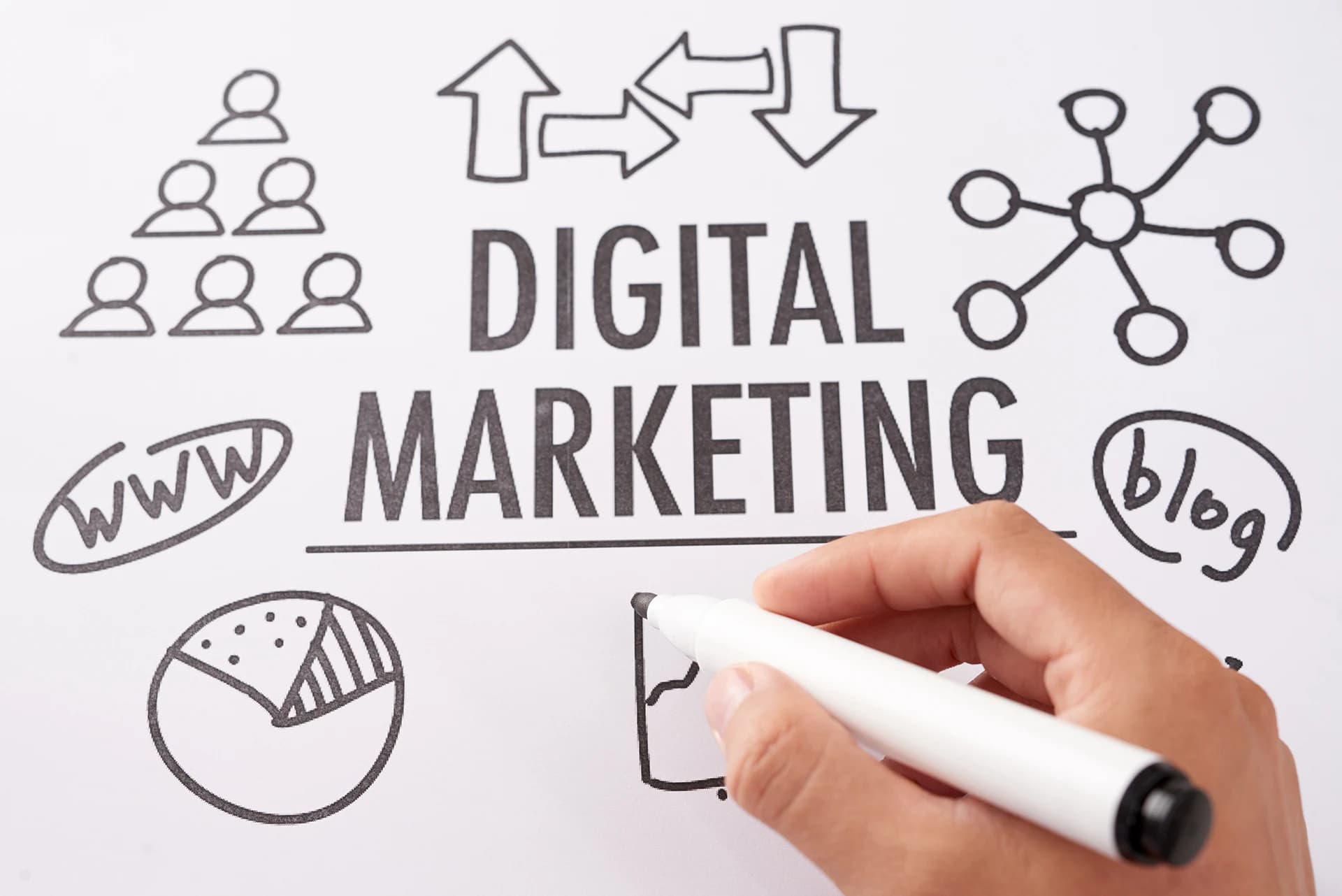
Integrating the 4 Ps of Marketing into a Cohesive Strategy
How to align the 4 Ps of marketing with your business goals
Integrating the 4 Ps of marketing—product, price, place, and promotion—demands more than box-ticking. It’s about orchestrating each lever to deliver on your business objectives and brand promise. Start by clarifying what success looks like: revenue growth, market share, category leadership. Every decision on your marketing mix should ladder up to these outcomes. If your “product” positioning isn’t tuned to what your core segments value, or if your “promotion” channels don’t map to where your buyers actually convert, you’re burning budget. Alignment isn’t theoretical; it’s a discipline of constant calibration.
Using customer insights to guide your marketing mix
Effective marketing strategy alignment starts with research—quantitative and qualitative. Build detailed customer and market profiles. Go beyond surface-level demographics; interrogate motivations, buying triggers, and pain points. Feed these insights directly into your product development, pricing logic, distribution choices, and creative messaging. Customer insights are the connective tissue of a holistic marketing approach. If your mix is built on assumptions, you’re leaving performance on the table.
Practical steps for integrating the 4 Ps into your strategy
- Audit your current mix: Map each “P” against your business goals and identify disconnects.
- Close the gaps: Adjust your offer, pricing, distribution, and comms so they reinforce each other and your commercial objectives.
- Stress-test with data: Use real customer feedback and performance analytics to validate your mix. Iterate fast.
- Institutionalise alignment: Make ongoing review of your 4 Ps part of your marketing strategy framework, not a one-off exercise.
Integrating the 4 Ps of marketing isn’t a static playbook—it’s an operating system for growth. The brands that win are those that treat alignment as a process, not a campaign. In a market that never stands still, cohesion is your only real advantage.
Optimizing the Marketing Mix: Data, Feedback, and Continuous Improvement
Optimizing the 4 Ps of marketing isn’t a one-off exercise. It’s a relentless process that demands real data, sharp analytics, and an honest feedback loop. Senior marketers who treat the marketing mix as static get left behind. The leaders are those who interrogate every element—product, price, place, promotion—against hard numbers and evolving market signals.
How to use analytics to optimize your marketing mix
Marketing analytics isn’t about dashboards for their own sake. It’s about isolating what moves the needle. Attribution models, channel-level ROI, and customer journey analytics let you see which “P” is underperforming or over-indexing. If distribution costs spike, or a product variant lags in a key segment, the data points you to the fix—fast. Internal benchmarks matter, but so does competitive context. The right analytics tools turn anecdote into action.
The role of customer feedback in marketing improvement
Customer feedback loops are your reality check. Quantitative surveys, qualitative interviews, and behavioral data all expose where the 4 Ps either meet or miss expectations. The best teams don’t just collect feedback—they operationalize it. That means rapid iteration: adjusting price points, rethinking positioning, or refining creative based on what real customers actually value. A robust feedback strategy isn’t a box-tick; it’s a continuous feed into your marketing engine.
Adapting your 4 Ps strategy for long-term growth
Markets shift, and so must your marketing mix. Continuous improvement is about building a culture where testing, learning, and pivoting are the norm. This isn’t about trend-chasing. It’s about institutionalizing agility: regular reviews of analytics, structured feedback cycles, and the discipline to sunset what isn’t working. When the 4 Ps are optimized in real time, brands stay relevant and outpace the market—not just today, but quarter after quarter.
Tailoring the 4 Ps of Marketing for Different Business Models and Industries
The 4 Ps of marketing for different businesses are not static—they’re a toolkit, not a checklist. Startups, SMEs, and large enterprises each require a distinct approach, shaped by scale, resource constraints, and market realities. The real edge comes from knowing how to flex the marketing mix for your business model and sector, not just following textbook definitions.
How startups can leverage the 4 Ps of marketing
Startups must weaponise focus. Product often means MVP—get to market with a core solution, then iterate. Price is about finding the sweet spot between traction and margin, not chasing volume. Place demands agility: digital-first, direct-to-consumer, or leveraging niche channels. Promotion is less about big campaigns and more about targeted, high-ROI tactics. For more on this, see our startup marketing tips.
Adapting the marketing mix for service-based industries
Industry-specific marketing is non-negotiable for services. Product becomes experience—intangibles like expertise and reliability are front and centre. Price often signals value and trust, not just cost. Place isn’t shelves, it’s platforms, people, and process. Promotion should build authority and nurture relationships, not just drive awareness. In B2B, credibility trumps flash; in B2C, responsiveness and reputation carry weight.
Scaling your 4 Ps strategy as your business grows
Business model adaptation is ongoing. As companies scale, the 4 Ps shift: Product lines expand, pricing structures evolve, distribution gets more complex, and promotion moves from scrappy to systematic. Enterprises must manage consistency across markets while localising for relevance. SMEs face the challenge of scaling marketing strategies without losing agility. For sector-specific approaches, see our industry marketing strategies.
Ultimately, the 4 Ps of marketing for different businesses demand continual recalibration. What works for a SaaS startup won’t cut it for a legacy manufacturer. The only constant is change—adapt the mix, or watch relevance slip away.
Conclusion
The 4 Ps of marketing—product, price, place, and promotion—remain the backbone of any effective marketing mix, even as digital channels rewrite the rules of engagement. Senior marketers know these principles aren’t relics; they’re the scaffolding that supports every campaign, regardless of platform or technology. The digital age hasn’t replaced the fundamentals; it’s exposed the gaps in weak strategy and rewarded those who understand how to adapt foundational models for new realities.
Modern digital marketing strategies demand a sharper, more agile application of the 4 Ps. Algorithms shift, platforms rise and fall, but the core questions—what are you offering, at what value, where is it accessible, and how are you communicating—don’t change. What does change is the speed and granularity at which these levers can be pulled. Personalization, data-driven targeting, and omnichannel delivery have redefined what’s possible, but not what’s essential.
Customer experience now sits at the intersection of every “P.” It isn’t an add-on; it’s the throughline that determines whether the marketing mix delivers commercial impact or gets lost in the noise. The teams who win are those who integrate the 4 Ps of marketing into every stage of their process, optimizing the 4 Ps of marketing for both efficiency and resonance. The framework’s relevance is proven not by tradition, but by its adaptability across industries and business models.
In short: the 4 Ps aren’t just still relevant—they’re non-negotiable. The challenge for modern marketers is not whether to use them, but how to tailor the 4 Ps of marketing for different business models and industries, ensuring every lever is tuned for today’s customer and tomorrow’s landscape.
FAQs
How to master the 4 Ps of marketing?
Mastering the 4 Ps—Product, Price, Place, Promotion—means understanding how each lever drives commercial outcomes. Product defines what you offer; Price sets market expectations; Place determines accessibility; Promotion shapes perception. Effective marketers align these variables to market realities, ensuring each decision reinforces the business’s positioning and profitability.
What is the importance of product differentiation?
Product differentiation is the foundation of competitive advantage. It’s how you avoid commoditization and command margin. In saturated markets, clear differentiation—through features, brand, or user experience—creates preference. Without it, even the best campaigns struggle to convert, and pricing power erodes rapidly.
How to set the right price for your products?
Pricing isn’t guesswork. It’s a balance between perceived value, market demand, cost structure, and competitor benchmarks. Smart operators test elasticity, factor in brand positioning, and monitor customer response. The right price maximizes revenue without sacrificing long-term brand equity or market share.
What are effective distribution channels for my business?
Effective distribution channels depend on your audience, product type, and commercial goals. Direct-to-consumer works for high-margin or niche products; wholesale and retail suit scale. Digital channels offer reach and data, but logistics and experience must be dialed in. Channel choice should align with your growth strategy.
How to develop integrated marketing communications?
Integrated marketing communications demand unified messaging across every customer touchpoint. This requires tight alignment between creative, media, and sales teams. Consistency builds trust and amplifies impact, but only if the message is grounded in real customer insight and executed with discipline across all channels.
What are examples of the 4 Ps in action?
A premium tech brand leverages product innovation, premium pricing, exclusive retail partnerships, and aspirational campaigns. A challenger snack brand may use unique flavors (product), aggressive price points, convenience stores (place), and viral social content. The 4 Ps flex to fit sector dynamics and business objectives.
How to continuously evaluate marketing strategies?
Continuous evaluation hinges on rigorous data collection and honest analysis. Track performance metrics, gather customer feedback, and run controlled tests. The goal is to identify what’s working, what’s not, and iterate fast. Static strategies stagnate; adaptive ones outperform in volatile markets.
.webp)
Creative Collaboration Platform: The Backbone of Modern Creative WorkWhat is a creative collaboration platform?Clapboard defines a creative collaboration platform as the operational core for today’s distributed creative teams. This is not a collection of digital collaboration tools stitched together; Clapboard’s system

Understanding the Creative Production MarketplaceWhat is a Creative Production Marketplace?Clapboard defines a creative production marketplace as a structured ecosystem where brands, agencies, and production talent converge to execute video, advertising, and branded content at scale. Unlike the legacy agency or freelanREAD FULL ARTICLE

The Urgent Need for a Creative Production Operating SystemWhy Traditional Creative Production Models Break DownClapboard sees the creative production landscape shifting under pressure. Content velocity is no longer a buzzword—it’s a mandate. Modern advertising demands relentless output across dozens of channels, each wREAD FULL ARTICLE
JOIN THE NEWSLETTER.
Content Production insights, videos, books, and freebies, delivered to your inbox weekly


LEAVE A COMMENT
Your email address will not be published.