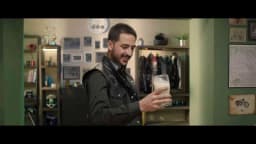
The campaign for Hunger Station centers on positioning the brand as an innovator and market leader in Saudi Arabia’s rapidly evolving and competitive food delivery landscape. Faced with a surge of well-funded international competitors, Hunger Station’s proposition is to simplify the ordering process by tapping into the subconscious mind, addressing the pervasive issue of choice overload that frustrates consumers when confronted with extensive menu options. By leveraging cutting-edge AI technology and eye-tracking to interpret subconscious preferences, the campaign offers a uniquely intuitive and efficient ordering experience that reduces decision fatigue and enhances customer satisfaction.
Strategically, the campaign capitalizes on Saudi Arabia’s digital growth and tech-savvy population, emphasizing innovation as a critical differentiator. It uses behavioral insights around cognitive processing limits and choice overload to connect with users who are overwhelmed by conventional digital menus. The innovative “subconscious ordering” feature not only streamlines the decision-making process but also taps into accelerated information processing in the subconscious, positioning Hunger Station as a forward-thinking brand attuned to consumer needs. The integration of this technology both inside the app and on social media extends reach and engagement, reflecting a deep understanding of current digital consumption patterns and “compressed commerce” trends—delivering from inspiration to purchase with minimum friction. The campaign’s execution gathers rich consumer data, enabling more personalized targeting and reinforcing customer loyalty in a crowded market. Results indicate strong initial adoption and engagement, affirming the strategic approach of combining technological innovation with behavioral science to maintain Hunger Station’s leadership and relevance in an increasingly competitive sector.
FORMAT#1 DEMONSTRATION — Directly shows how a product works and highlights its benefits.
This campaign centers on introducing and displaying a novel in-app feature—subconscious ordering—using detailed explanations of how it identifies “choice overload” and leverages eye-tracking and AI to recommend food. The narrative primarily illustrates the innovation’s functionality (activation when scrolling, tracking eye interest, analyzing subconscious cravings, narrowing options), making it a clear case of “show and tell.” The creative focus isn’t on a character’s journey, exaggeration, symbolism, or competition, but on visually and narratively demonstrating the product’s smart, benefit-driven user experience—precisely matching the Demonstration format.
ADVERTISING FORMATS EXPLAINED: https://www.clapboard.com/blog/branding-and-advertising/brand-strategy/12-advertising-creative-formats
1. Talabat – Positioned as a leading food delivery platform in the Gulf region, Talabat leverages extensive restaurant partnerships and a user-friendly app to offer quick, reliable service. It emphasizes broad choice and regional customization, focusing on convenience and timely delivery with frequent promotional offers to capture price-sensitive customers.
2. Jahez – A Saudi-based local player emphasizing hyper-local delivery with deep understanding of Saudi consumer preferences. Jahez focuses on speed, reliability, and supporting local restaurants, positioning itself as an accessible and community-driven platform with competitive pricing and simplified user experience.
3. Carriage – Operating primarily in the Middle East, Carriage highlights its premium service standards, customer support, and fast delivery times. It differentiates through a curated selection of quality restaurants and seamless app experience, targeting urban consumers seeking reliability and superior service.
4. Uber Eats – Known globally, Uber Eats combines international brand trust with localized offerings in Saudi Arabia. It focuses on superior logistics, extensive restaurant options, and integration with the Uber ecosystem to provide convenience, frequent discounts, and a broad customer base appeal.
5. HungerMates – An emerging niche platform in Saudi Arabia, HungerMates positions itself around social dining and shared food experiences. It targets younger demographics by integrating social features and curated food events, differentiating through community engagement and experiential food ordering.
Q: What is Hunger Station - The Subconscious Order (case study) about?
A: Hunger Station - The Subconscious Order (case study) is a 2023 campaign created by Wunderman Thompson and its regional teams for Hunger Station, Saudi Arabia’s pioneering food delivery app. The campaign addresses the challenge of choice overload faced by consumers overwhelmed by extensive menus. It introduces an innovative app feature that harnesses subconscious mind power through eye-tracking and AI to simplify food ordering. By tapping into subconscious cravings, the campaign aims to maintain Hunger Station’s leadership amid a surge of new, well-funded competitors in Saudi Arabia’s rapidly growing digital food delivery market.
Q: What creative device does Hunger Station - The Subconscious Order (case study) use?
A: Hunger Station - The Subconscious Order (case study) employs the FORMAT#1 DEMONSTRATION creative device as classified by Clapboard’s 12-format taxonomy. This approach directly shows how the subconscious ordering feature works by visually and narratively demonstrating the app’s activation during scrolling, eye-tracking technology, AI analysis, and curated food recommendations. The campaign focuses on a clear, benefit-driven user experience without relying on character journeys or symbolism, making the innovation’s functionality the central storytelling element.
Q: What is the campaign proposition for Hunger Station - The Subconscious Order (case study)?
A: The campaign proposition positions Hunger Station as an innovator and market leader in Saudi Arabia’s competitive food delivery sector by simplifying the ordering process through subconscious mind technology. It targets tech-savvy consumers frustrated by choice overload, offering an intuitive and efficient experience that reduces decision fatigue. By leveraging AI and eye-tracking to interpret subconscious preferences, the campaign emphasizes innovation and convenience, ensuring Hunger Station remains the preferred platform amid a digital boom and intensifying competition from international and local rivals.
Q: How does Hunger Station - The Subconscious Order (case study) rank in Clapboard's archive?
A: Hunger Station - The Subconscious Order (case study) holds a Clapboard Campaign Score of 83/100. This score reflects the campaign’s creative ambition, execution quality, and cultural relevance as assessed by Clapboard’s global ad archive. The rating underscores the campaign’s successful integration of behavioral science and cutting-edge technology to deliver a distinctive user experience in a competitive market.
Q: Who are the competitors in Hunger Station's category?
A: Hunger Station competes with several key players in Saudi Arabia’s food delivery market. Talabat leads in the Gulf region by offering extensive restaurant partnerships and a user-friendly app focused on convenience and timely delivery. Jahez emphasizes hyper-local delivery with strong ties to Saudi consumer preferences, prioritizing speed and community support. Carriage targets urban consumers with premium service standards and curated restaurant selections. Uber Eats combines global brand trust with localized offerings and seamless integration within the Uber ecosystem. HungerMates differentiates itself by focusing on social dining experiences and community engagement aimed at younger demographics.



.webp)