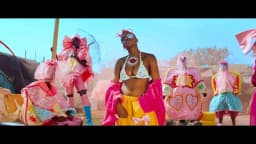
Bat for Lashes launched Kids in the Dark in the United States in July 2019, a self-directed music video by Natasha Khan previewing the Lost Girls album.

Bat for Lashes Brings Lost Girls to Life with Kids in the Dark
"Kids in the Dark" is a self-directed music video released by Bat for Lashes in the United States on July 2, 2019, created by artist Natasha Khan as a cinematic preview for her album Lost Girls, using symbolic imagery of fire, moonlight, and pines to establish a haunting, emotionally intimate atmosphere rooted in a nostalgic Reagan-era aesthetic.
Bat for Lashes is the long-running musical project of British-Pakistani artist Natasha Khan. In the United States, the campaign launched through digital film distribution, with Apple Music listing the video on July 3, 2019, according to Apple Music records. The video functions less as a conventional promotional asset and more as a standalone short film, a creative decision that reflects Khan's consistent prioritisation of visual world-building alongside her music. The single media asset archived on Clapboard.com stands as the campaign's complete deliverable, a deliberate act of restraint in an era of multi-platform content saturation.
The campaign's objectives were threefold. First, it introduced the sonic and visual identity of Lost Girls, the album that would follow on September 6, 2019, released through AWAL Recordings, as documented by Paste Magazine. Second, it positioned Bat for Lashes within the media and entertainment landscape as an artist who exercises total creative authorship, directing, producing, and performing within the same work. Third, it seeded audience anticipation in the United States through a broader mystery-led rollout: as reported by IMDB, Natasha Khan had released cryptic social-media videos in early June 2019 and created a hotline concerning a missing girl, building narrative suspense ahead of the video's arrival. The Clapboard Score for this campaign is 73 out of 100, reflecting its strong creative coherence and the atmospheric discipline that distinguishes it within the media and entertainment category.
Bat for Lashes built the Lost Girls campaign around a strategy of sustained mystery rather than conventional album promotion. The approach is rooted in a specific consumer insight: audiences engaged with art-pop and cinematic music respond to narrative immersion rather than announcement-led marketing. In the United States, where streaming had become the dominant mode of music consumption, standing out required more than a single release.
According to the IFPI's 2019 Global Music Report, global recorded-music revenue reached US$20.2 billion in 2019, up 8.2% year-over-year, with streaming revenue accounting for US$11.4 billion, representing 56.1% of total recorded-music revenue. In the United States, that streaming dominance was particularly pronounced, making visual content on platforms such as Apple Music and YouTube a primary vehicle for artist discovery and retention. Paid-streaming subscribers reached 341 million globally in 2019, up 33.5% year-over-year, according to the IFPI, underscoring the competitive volume of content artists faced when attempting to break through.
Within this environment, artists such as Lana Del Rey and Florence and the Machine had already established that cinematic, aesthetically cohesive visual campaigns could cultivate devoted audiences willing to engage deeply with an album as a world rather than a playlist. Bat for Lashes operates in adjacent creative territory, and the decision to lead with a director-driven short film rather than a lyric video or performance clip reflects an understanding of where that audience's attention concentrates. The agency credited with supporting the campaign, The Smarts, as noted by Ads of the World, worked within a framework defined entirely by Khan's creative vision, ensuring that the campaign's commercial mechanics remained subordinate to its artistic integrity.
Natasha Khan directed the Kids in the Dark music video herself. This is not a marginal credit: it defines the entire creative logic of the film. Khan's decision to assume the director's chair places her in a tradition of artist-directors whose visual language is inseparable from their music, a lineage that includes artists who treat the music video as a primary rather than secondary artwork.
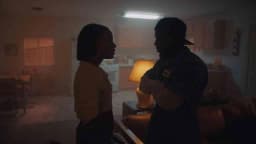
The film deploys a specific and disciplined visual vocabulary. Symbolic imagery built from fire, moonlight, and pine forests establishes a world that feels simultaneously ancient and specifically American, evoking a nostalgic Reagan-era atmosphere, as catalogued by Ads of the World. The aesthetic is not decorative. It is structural. Every visual element reinforces the thematic terrain of Lost Girls: adolescence, danger, freedom, and the uncanny. The production carries haunting, cinematic, and emotionally intimate qualities that distinguish it from the generically polished visual output common to mainstream media and entertainment campaigns in the United States during 2019.
Margo Mars is credited as producer on the project, as documented on Clapboard.com, a role that would have encompassed the logistical and financial architecture required to realise Khan's vision as a single, self-contained film asset. The production values visible in the finished work suggest a careful allocation of resources toward atmosphere rather than spectacle, a choice consistent with the campaign's broader aesthetic priorities. Production credits beyond Khan and Mars are not fully documented in publicly available sources. The campaign contains one media asset, a discipline that concentrates the viewer's entire interpretive energy on a single, carefully authored cinematic statement rather than distributing it across a suite of derivative content.
 ARCHIVE
No verified performance data for the Kids in the Dark campaign is publicly available in terms of view counts, streaming uplift attributable specifically to the video, or measured audience engagement metrics. Assessment therefore rests on structural and contextual evidence.
The campaign's structural effectiveness is considerable. Releasing a self-directed film on July 2, 2019, more than two months before the Lost Girls album arrived on September 6, 2019, gave the video time to circulate and generate conversation independently of a release-week promotional cycle. Apple Music's listing of the video on July 3, 2019, according to Apple Music records, secured placement on a platform that in 2019 was actively courting exclusive and premium visual content to differentiate itself from competitors. The IFPI reported that synchronisation revenue, the category most directly connected to visual media placements, grew 5.8% in 2019, reflecting a market in which music-to-image pairings carried increasing commercial and cultural value.
The mystery-led pre-campaign, involving cryptic social media videos and a narrative hotline concerning a missing girl, as reported by IMDB, created earned media conditions before the video launched, meaning Kids in the Dark arrived into an already-primed audience rather than a cold market. In the United States, where the media and entertainment landscape rewards artists who generate cultural conversation rather than simply releasing content, this sequencing represents sophisticated campaign architecture. The Clapboard Score of 73 out of 100 reflects a campaign that succeeds on creative and strategic terms even in the absence of independently verified performance figures, with its principal limitation being the opacity of measurable outcome data.
Kids in the Dark is a self-directed music video released by Bat for Lashes on July 2, 2019, in the United States. Natasha Khan directed and performed in the film, which previewed the Lost Girls album released September 6, 2019, through AWAL Recordings. The video uses symbolic imagery of fire, moonlight, and pines to build a cinematic, emotionally intimate world.
Natasha Khan directed the Kids in the Dark music video. Khan, who records as Bat for Lashes, assumed full creative authorship of the film alongside her role as performer. Margo Mars is credited as producer on the project, as documented on Clapboard.com. No additional directing credits are publicly attributed to the campaign.
Kids in the Dark promotes Lost Girls, the Bat for Lashes album released September 6, 2019, through AWAL Recordings, as documented by Paste Magazine. The video arrived on July 2, 2019, more than two months before the album, functioning as the opening cinematic statement of a mystery-led promotional campaign in the United States.
Bat for Lashes released cryptic social media videos in early June 2019 and created a narrative hotline concerning a missing girl, as reported by IMDB. This mystery-led campaign built audience anticipation in the United States before Kids in the Dark arrived on July 2, 2019, ensuring the video launched into a primed rather than cold market.
The Kids in the Dark campaign by Bat for Lashes holds a Clapboard Score of 73 out of 100, as recorded on Clapboard.com. The score reflects the campaign's strong creative coherence, disciplined visual world-building, and atmospheric consistency, assessed within the media and entertainment category for campaigns released in the United States in 2019.
Kids in the Dark was released in the United States on July 2, 2019, with Apple Music listing the video on July 3, 2019, according to Apple Music records. The campaign operated as a single media asset within the United States media and entertainment market, designed to circulate through streaming and digital platforms ahead of the Lost Girls album.
.webp)
Creative Collaboration Platform: The Backbone of Modern Creative WorkWhat is a creative collaboration platform?Clapboard defines a creative collaboration platform as the operational core for today’s distributed creative teams. This is not a collection of digital collaboration tools stitched together; Clapboard’s system


Understanding the Creative Production MarketplaceWhat is a Creative Production Marketplace?Clapboard defines a creative production marketplace as a structured ecosystem where brands, agencies, and production talent converge to execute video, advertising, and branded content at scale. Unlike the legacy agency or freelanREAD FULL ARTICLE

The Urgent Need for a Creative Production Operating SystemWhy Traditional Creative Production Models Break DownClapboard sees the creative production landscape shifting under pressure. Content velocity is no longer a buzzword—it’s a mandate. Modern advertising demands relentless output across dozens of channels, each wREAD FULL ARTICLE