 ARCHIVE
How BBDO Singapore Made Typing a Window Into Autism
The Autism Resource Centre's "Search Activated Banner" is a 2013 public service digital campaign created by BBDO Singapore that used real-time keyboard interaction to simulate hypersensitivity to sound, one of the documented symptoms of autism, reaching a potential audience of approximately 2.2 million visitors across partner websites in Singapore during World Autism Month, according to campaign documentation.
Singapore's largest autism awareness organisation at the time of the campaign, the Autism Resource Centre launched the initiative in April 2013 to coincide with World Autism Month, which takes place every April. The strategic imperative was clear: early diagnosis of autism can alter a child's developmental trajectory significantly, yet public understanding of autism symptoms remained limited. By concentrating on a single, concrete symptom — hypersensitivity to sound — the campaign sought to close that knowledge gap in a way that static public service advertising rarely achieves.
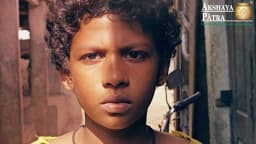
The mechanism was technically inventive. BBDO Singapore developed source code capable of tracking keystrokes as users typed into search bars on partner websites. That input triggered a visible, emotional reaction from a young girl depicted in a banner positioned directly beside the search field. Every letter a user typed produced a seemingly distressing response in the child, translating the act of ordinary browsing into an involuntary lesson about autism symptoms. In the United States and globally, interactive digital formats had been used for commercial purposes, but the application of keyboard-activation technology to a public interest campaign was claimed as a world first, though no independent technical verification of that claim has been documented.
The campaign went live across approximately six partner websites in Singapore and subsequently attracted television coverage, with Denise Phua, Singapore's President of the Autism Resource Centre at the time, appearing on broadcast media to extend the campaign's reach beyond its digital footprint. Clapboard rates the Search Activated Banner 79 out of 100, recognising its creative ingenuity and the precision with which the execution served the autism awareness message.
ARCHIVEThe Autism Resource Centre identified a specific communication gap in Singapore's public understanding of autism. General awareness initiatives had existed before 2013: in 2012, the "Light It Up Blue" initiative brought together the Autism Resource Centre, Autism Association Singapore, Rainbow Centre, St Andrew's Autism Centre, and Duke-NUS ahead of World Autism Awareness Day, as reported by the Straits Times. That coalition effort demonstrated that broad visibility campaigns were achievable, but they did not necessarily communicate what autism feels like from the inside.
The 2013 Search Activated Banner represented a deliberate pivot. Rather than asking audiences to accept information about autism symptoms abstractly, the campaign manufactured direct sensory empathy. According to campaign documentation, one in 88 children were diagnosed with autism at the time, representing an increase of up to 17 times over the preceding 25 years. In Singapore, the Ministry of Social and Family Development has documented autism as one of the conditions addressed through national disability support frameworks, as noted on Msf Gov Sg. The Autism Resource Centre itself was established in 2000 as a registered charity serving autistic individuals, their families, and professionals working in the field, according to Autism Org Sg.
In the competitive landscape of public service advertising in Singapore, campaigns by organisations such as the Autism Association Singapore and the broader cluster of special-needs charities consistently competed for public attention and donor engagement. The Search Activated Banner's advantage was its placement within habitual online behaviour: search bars are among the most frequently used interface elements on the web, meaning the campaign intercepted users at a moment of active intent rather than passive scrolling. That contextual precision gave the autism awareness message an unusually high relevance score relative to the moment of exposure. The decision to focus exclusively on hypersensitivity to sound, rather than attempting to cover the full spectrum of autism symptoms, also reflected disciplined strategic thinking — a single, demonstrable insight lands with greater force than a comprehensive but diluted overview.
BBDO Singapore built the Search Activated Banner on a genuinely novel technical foundation. The agency developed proprietary source code that monitored keystroke activity within search fields embedded on partner websites, then used that data to animate a banner in real time. The result was not a pre-rendered video or a looping animation triggered by page load — it was a live, responsive creative unit that changed its behaviour based on what a specific user was doing at that specific moment.
Production of the campaign involved Little Red Ants as the production company, who were responsible for translating the technical brief into a visually and emotionally coherent execution. The central creative element was a young girl whose on-screen reactions mapped directly to keyboard input: each keystroke produced a visible, distressed response, communicating hypersensitivity to sound without narration, without headline copy, and without any requirement that the user read an explanation before understanding the point. The creative logic relied entirely on experiential demonstration.
According to adruby.com, the campaign's Chief Creative Officer was Joanna Yip, whose oversight shaped the campaign's restrained visual language — the execution avoided melodrama precisely because the interactive mechanism was dramatic enough on its own terms. The banner's strength lay in what it withheld as much as what it showed. No sound was required from the user's device. No video autoplay. The campaign produced its effect through the user's own voluntary action — typing — which carried an additional layer of implication: the sounds that distress a child with autism are not exceptional or aggressive; they are the ordinary sounds of everyday life that most people produce without a second thought. That reframing of the mundane as potentially overwhelming was the campaign's most sophisticated creative achievement, and it was inseparable from the technical method used to deliver it.
No verified third-party performance data for the Search Activated Banner is publicly available. Campaign documentation records a potential audience of approximately 2.2 million visitors across the six partner websites where the banner was deployed in Singapore, but conversion metrics, interaction rates, and downstream awareness uplift figures have not been independently published or verified.
What structural analysis can confirm is that the campaign's architecture was well-suited to generating meaningful engagement. By embedding the activation mechanism within search bars — interface elements users approach with active intent — the campaign avoided the passive-scroll problem that undermines most banner advertising. Users who typed into a search field beside the banner were, by definition, alert and focused, not skimming. The likelihood of the banner's reaction registering consciously was therefore higher than it would be in a standard display placement.
The television coverage secured during the campaign, featuring Denise Phua as Singapore's President of the Autism Resource Centre, functioned as an earned media multiplier. Broadcast appearances extended the campaign's reach to audiences who would never have encountered the digital banner itself, and they lent institutional credibility to the autism awareness message by placing a named authority at the centre of the coverage. For a public interest campaign operating without a commercial media budget, that earned amplification represented a structurally significant outcome. The campaign's focus on a single, verifiable autism symptom — hypersensitivity to sound — also positioned it as a durable reference point for early diagnosis conversations, giving the work a potential longevity beyond its April 2013 activation window.
The Search Activated Banner was a 2013 digital public service campaign by BBDO Singapore for the Autism Resource Centre. It used custom code to track keystrokes in website search bars, triggering a banner showing a child reacting with distress, demonstrating hypersensitivity to sound as an autism symptom during World Autism Month in Singapore.
BBDO Singapore created the Search Activated Banner for the Autism Resource Centre in 2013. The production company was Little Red Ants, and the campaign's Chief Creative Officer was Joanna Yip, according to adruby.com. The campaign was published in June 2013 following its World Autism Month activation in April of that year.
BBDO Singapore developed source code that tracked letters typed into search bars on partner websites. Each keystroke triggered a visible distress reaction from a girl depicted in an adjacent banner, simulating how ordinary sounds can feel overwhelming to a child with autism, according to campaign documentation, without requiring any audio from the user's device.
The Search Activated Banner ran across approximately six partner websites in Singapore, reaching a potential audience of approximately 2.2 million visitors, according to campaign documentation. The campaign also received television coverage featuring Denise Phua, Singapore's President of the Autism Resource Centre, extending its reach through broadcast media beyond its digital placements.
The Autism Resource Centre selected hypersensitivity to sound because it is a concrete, demonstrable autism symptom that interactive digital formats could simulate directly. Campaign documentation notes that early diagnosis of autism makes a significant difference to outcomes, and communicating a specific, recognisable symptom was judged more effective than broad general awareness messaging for the Singapore public.
Clapboard rates the Autism Resource Centre's Search Activated Banner 79 out of 100. The score reflects the campaign's creative ingenuity in using keyboard-activation technology to serve a public interest objective, its precise focus on a single autism symptom, and the structural effectiveness of deploying the banner alongside high-intent search interface elements in Singapore.
.webp)
Creative Collaboration Platform: The Backbone of Modern Creative WorkWhat is a creative collaboration platform?Clapboard defines a creative collaboration platform as the operational core for today’s distributed creative teams. This is not a collection of digital collaboration tools stitched together; Clapboard’s system


Understanding the Creative Production MarketplaceWhat is a Creative Production Marketplace?Clapboard defines a creative production marketplace as a structured ecosystem where brands, agencies, and production talent converge to execute video, advertising, and branded content at scale. Unlike the legacy agency or freelanREAD FULL ARTICLE

The Urgent Need for a Creative Production Operating SystemWhy Traditional Creative Production Models Break DownClapboard sees the creative production landscape shifting under pressure. Content velocity is no longer a buzzword—it’s a mandate. Modern advertising demands relentless output across dozens of channels, each wREAD FULL ARTICLE