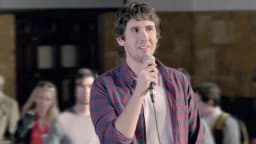
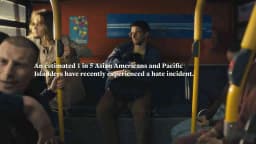
Are We Next's 'Targets' is a 2019 film by BooneOakley that confronts school shooting culture in the United States by placing students at the centre of a stark

Are We Next Turns School Shooting Fear Into a Film Called Targets
'Targets' is a 2019 public interest film created in the United States by Charlotte, North Carolina agency BooneOakley for Are We Next, a student and parent advocacy initiative focused on school shootings, released around the twentieth anniversary of the Columbine High School shooting on April 20, 1999.
Are We Next released 'Targets' in April 2019 as a single-asset film campaign. The timing is not incidental. By anchoring the work to the Columbine anniversary — a date that carries cultural weight across the United States — BooneOakley and Are We Next positioned the film at the precise moment when national attention to school gun violence would be at its most acute. The campaign addresses the lived experience of American students navigating active-shooter drills, lockdowns, and the persistent fear that accompanies attendance at a public school in the contemporary United States. It does not treat these realities as abstractions. Instead, it places students — their bodies, their routines, their vulnerability — at the centre of the frame, making the campaign's central argument through proximity rather than polemic.
Are We Next describes itself, per Ads of the World, as a group of students and parents demanding policy action on school shootings in the United States. The organisation operates as a public-interest advocacy body, and 'Targets' functions as its primary creative statement. BooneOakley, the agency responsible for the work, is based in Charlotte, North Carolina, and has a documented history of producing socially engaged creative work. For this film, the agency assembled a team that included creative director David Oakley, art director Laura Beebe, copywriter Mary Gross, and director Scott Corbett, with production handled by Station Film. Together, they produced a film designed to make the case not through statistics but through the experiential logic of being young, American, and afraid at school.
Are We Next grounds 'Targets' in a specific and underexplored emotional register: not grief after a shooting, but dread before one. The strategic decision to centre the campaign on active-shooter drills and lockdowns — the normalised infrastructure of fear inside United States schools — separates 'Targets' from the broader field of gun-violence advocacy communications, which more frequently leads with memorial or legislative framing.
In the United States, public-interest and advocacy advertising operates in a crowded and emotionally saturated environment. Organisations including Everytown for Gun Safety and March for Our Lives had already produced high-visibility campaigns in the period leading up to April 2019, meaning that Are We Next and BooneOakley faced a genuine differentiation challenge. Rather than compete on the terrain of statistics or political demands, 'Targets' stakes its claim on documentary intimacy — the feeling of being inside the experience, not observing it from outside. This is a recognised strategic move in public-service advertising: shifting the audience from sympathy to identification.
The campaign's release date functions as earned media strategy as much as editorial choice. The twentieth anniversary of the Columbine shooting on April 20, 1999, generated substantial press attention across the United States in April 2019, creating a contextual window in which a film about student fear would encounter an audience already primed for reflection. According to Ads of the World, 'Targets' was submitted and documented as a United States film campaign published in April 2019, confirming the deliberate alignment of release and anniversary. BooneOakley's choice to work within that window rather than against it demonstrates a strategic maturity that elevates the campaign beyond reactive advocacy into purposeful cultural intervention.
Director Scott Corbett led production on 'Targets' through Station Film. The film takes a documentary or social-experiment approach to its subject, a creative mode that imposes strict demands on execution: authenticity must be felt rather than performed, and any sense of artifice collapses the emotional contract with the audience. Corbett's direction navigates that tension by staying close to the physical and behavioural reality of students in a school environment, allowing the familiar — corridors, classrooms, young faces — to become unsettling through context rather than manipulation.
Creative director David Oakley, art director Laura Beebe, and copywriter Mary Gross shaped the conceptual and verbal architecture of the campaign. The decision to title the work 'Targets' is itself a piece of copywriting: the word is simultaneously literal, describing the position of students in an active-shooter scenario, and rhetorical, implicating the audience in the act of naming. It is a title that works as argument. Mary Gross's contribution as copywriter sits inside that economy of language — a single word carrying the entire weight of the campaign's premise.
The film exists as a single media asset, per Ads of the World, which concentrates all creative energy into one sustained experience rather than distributing it across a campaign system. That formal constraint aligns with the documentary register: a single film, presented without the scaffolding of supporting executions, asks to be taken seriously as a complete statement. Production company Station Film has a documented track record in commercial and branded film production in the United States, providing the technical infrastructure for Corbett to execute the work at a standard commensurate with the subject's gravity. Production credits for 'Targets' are confirmed through Clapboard's editorial records.
No verified performance data for 'Targets' is publicly available. No view counts, reach figures, or advocacy outcomes attributable to the campaign have been confirmed by Are We Next, BooneOakley, or any named third-party source. What can be assessed is the campaign's structural effectiveness — the internal logic of its choices and their probable impact on a public-interest communication objective.
'Targets' earns a Clapboard Score of 63 out of 100. That score reflects the campaign's genuine creative and strategic strengths — its precise timing, its documentary discipline, its single-word conceptual anchor — against limitations that include the absence of a documented distribution strategy and the lack of any confirmed audience measurement. A public-interest film released without a traceable media plan operates on the assumption that the work itself will generate circulation, which is a viable but high-risk model in a media environment where advocacy content competes for attention against continuous news cycles.
The campaign's structural effectiveness is nonetheless meaningful. Releasing 'Targets' on the twentieth anniversary of Columbine in the United States gave the film a built-in contextual amplifier. The social-experiment framing, as documented by Ads of the World, creates a category of content that audiences are more likely to share than conventional PSA formats, because it offers the sensation of discovery rather than instruction. BooneOakley's creative team produced work that respects its audience's intelligence and the gravity of its subject. Whether that translated into measurable advocacy impact for Are We Next remains, on current evidence, unverifiable.
'Targets' is a 2019 public interest film created by BooneOakley for Are We Next, a United States student and parent advocacy organisation focused on school shootings. Released in April 2019 to coincide with the twentieth anniversary of the Columbine shooting, the film confronts the fear students experience through active-shooter drills and lockdowns, according to Ads of the World.
BooneOakley, a Charlotte, North Carolina agency, created 'Targets' for Are We Next. The team included creative director David Oakley, art director Laura Beebe, copywriter Mary Gross, and director Scott Corbett of Station Film. The campaign was published in the United States in April 2019, as documented by Ads of the World and Clapboard's editorial records.
BooneOakley released 'Targets' in April 2019 to align with the twentieth anniversary of the Columbine High School shooting on April 20, 1999. That timing placed the film inside a period of heightened national attention to school gun violence in the United States, giving the public interest campaign a contextual amplifier without requiring additional paid media.
'Targets' uses a documentary and social-experiment approach, directed by Scott Corbett through Station Film. Rather than leading with statistics or legislative argument, the film centres on the physical and emotional experience of students in United States schools, making its public interest case through proximity and identification rather than conventional PSA persuasion techniques.
'Targets' receives a Clapboard Score of 63 out of 100. The score reflects the campaign's strong conceptual precision and strategic timing against the absence of a confirmed distribution plan and no publicly verified audience metrics. No performance data for the campaign has been confirmed by Are We Next, BooneOakley, or any named third-party source.
In the United States gun-violence advocacy space, Are We Next operates alongside organisations including Everytown for Gun Safety and March for Our Lives, both of which produced high-visibility campaigns before and during 2019. BooneOakley differentiated 'Targets' from these efforts by focusing on student dread rather than memorial or legislative framing.
.webp)
Creative Collaboration Platform: The Backbone of Modern Creative WorkWhat is a creative collaboration platform?Clapboard defines a creative collaboration platform as the operational core for today’s distributed creative teams. This is not a collection of digital collaboration tools stitched together; Clapboard’s system


Understanding the Creative Production MarketplaceWhat is a Creative Production Marketplace?Clapboard defines a creative production marketplace as a structured ecosystem where brands, agencies, and production talent converge to execute video, advertising, and branded content at scale. Unlike the legacy agency or freelanREAD FULL ARTICLE

The Urgent Need for a Creative Production Operating SystemWhy Traditional Creative Production Models Break DownClapboard sees the creative production landscape shifting under pressure. Content velocity is no longer a buzzword—it’s a mandate. Modern advertising demands relentless output across dozens of channels, each wREAD FULL ARTICLE