 ARCHIVE
How AACD and Z+ Made Dining Uncomfortable to Build Empathy
Empathy Objects is an experiential public service campaign created by São Paulo agency Z+ for AACD, a Brazilian nonprofit focused on people with physical disabilities, launched in Brazil in June 2019, using deliberately uncomfortable dining objects in selected São Paulo restaurants to simulate everyday barriers experienced by people with physical disabilities and direct participants to AACD's donation portal.
AACD is one of Brazil's most established organisations serving people with physical disabilities, operating five orthopedic workshops across the country and manufacturing a substantial volume of orthopedic products annually, according to adsoftheworld.com. The campaign, also known by its Portuguese-market title "Objetos de la empatía," placed specially designed chairs, wine glasses, and cutlery into real restaurant settings where unsuspecting diners encountered firsthand the physical frustration that defines daily life for people with reduced mobility. That friction was intentional and structural: the objects were not labelled, not explained, and not softened. Participants were left to navigate an ordinary meal under conditions that were quietly extraordinary.
The campaign operated as a social experiment and documentary hybrid, capturing authentic reactions from diners in real time. Content from the activation was distributed across YouTube, Vimeo, Instagram, and Facebook, extending the experiential moment into a shareable public interest narrative. The primary call to action routed audiences directly to AACD's donation portal, connecting the discomfort of the dining experience to a tangible act of support. In Brazil, where disability awareness in public discourse remains an ongoing challenge, the campaign sought to close the empathy gap not through statistics or testimony but through embodied experience. The Clapboard Score for Empathy Objects is 61 out of 100, reflecting a campaign that is structurally inventive and emotionally purposeful, though limited in the volume of publicly documented performance data available for independent verification.
Z+ identified a foundational problem in disability advocacy communications across Brazil. Most public interest campaigns in this category rely on testimony, statistics, or direct emotional appeals, formats that audiences in Brazil and globally have grown increasingly habituated to, according to documented patterns in cause-led advertising practice. The insight driving Empathy Objects was that intellectual awareness of disability rarely produces the emotional urgency required to motivate donation behaviour. Only lived experience, however brief or simulated, reliably closes that gap.
The experiential campaign format was chosen precisely because it bypassed rational processing. By placing disability-simulating objects into the ordinary social ritual of dining at a São Paulo restaurant, Z+ created conditions where empathy became involuntary rather than chosen. The restaurant environment was strategic: dining is a setting defined by ease, pleasure, and social comfort, making the intrusion of physical difficulty unusually jarring and memorable. According to adruby.com, the objects were inspired by the work of Greek architect Katerina Kamprani, whose deliberately dysfunctional design work provided the conceptual and aesthetic framework for the campaign's physical executions.
In the Brazilian public service advertising landscape, campaigns competing for audience attention and donation share include established players such as APAE Brasil and Instituto Rodrigo Mendes, both of which maintain significant public communications programmes. Against that competitive context, AACD and Z+ chose an approach that prioritised singularity of experience over reach of message, a calculated trade-off appropriate for a campaign designed to generate documentary content and social sharing rather than mass broadcast saturation. The strategy reflects Z+'s documented creative relationship with AACD, which according to clapboard.com spans at least two campaigns across a period of nearly three years, beginning with "The Fantastic Problem-Solving Machine" in July 2016.
Empathy Objects was built on a precise creative premise: that objects, not words, are the most direct route to understanding. The campaign's creative leadership was provided by Alexandre Vilela, known professionally as Xã, with creative direction from Celio Salles, Tarso Soares, and Rico Lins, according to elojodeiberoamerica.com. Together they oversaw the design and fabrication of a suite of dining objects — chairs, wine glasses, and cutlery — engineered to replicate the physical constraints experienced daily by people living with disability or reduced mobility.
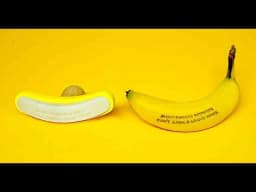
The design language drew on the conceptual work of Greek architect Katerina Kamprani, whose explorations of deliberately uncomfortable and dysfunctional objects provided the intellectual foundation for the campaign's physical executions, as documented by adruby.com. The result was a set of objects that looked, at first glance, like ordinary restaurant furniture and tableware, but that revealed their difficulty only through use. A wine glass designed to make gripping unreliable, a chair that denied postural ease, cutlery that resisted the automatic movements of an ordinary meal: each object translated an abstract category of impairment into a specific, embodied moment of friction.
The activation was filmed as a documentary-style social experiment, capturing the unscripted reactions of real diners in selected São Paulo restaurants. This production approach was integral to the campaign's second life as distributed content across YouTube, Vimeo, Instagram, and Facebook. The authenticity of the footage depended entirely on participants not knowing what they were encountering, which required precise operational control of the restaurant settings involved. According to adsoftheworld.com, the campaign was archived in June 2019, and its single documented media asset functions as both the record of the activation and its primary public-facing creative output.
ARCHIVEEmpathy Objects won a Bronze award in the Social category at El Ojo Sustentable 2019, according to elojodeiberoamerica.com. El Ojo de Iberoamérica is one of the most significant creative awards programmes recognising Ibero-American advertising, and a Bronze in its sustainability-focused strand represents meaningful peer validation for a campaign operating in the public interest category without a commercial media budget of the scale available to brand advertisers.
No verified performance data for Empathy Objects — including donation uplift figures, reach metrics, or engagement rates — is publicly available at the time of writing. What the campaign's structure does make visible, however, is a model of effectiveness built around qualitative depth rather than quantitative breadth. The experiential activation in São Paulo restaurants was never designed to reach millions of people directly. It was designed to produce a documentary moment of genuine emotional impact that could then travel as earned media across social platforms. That architecture — small activation, large content footprint — is a recognised and credible approach in public service advertising, particularly for organisations like AACD that operate in Brazil with finite communications resources.
The campaign's recognition at El Ojo Sustentable, its archival by adsoftheworld.com, and its documentation across adruby.com and Meioemensagem Com Br collectively indicate a level of industry attention consistent with creative work that landed with its intended audiences. Z+'s decision to route all campaign touchpoints toward AACD's donation portal also suggests a direct-response accountability layer beneath the campaign's more visible experiential and documentary surface.
Empathy Objects was an experiential public service campaign launched in Brazil in June 2019 by agency Z+ for AACD. It placed specially designed uncomfortable chairs, wine glasses, and cutlery in selected São Paulo restaurants to simulate the daily physical barriers faced by people with disabilities, then directed participants to AACD's donation portal.
Z+ Comunicação, also credited as Havas Z+, created the campaign for AACD. Creative leadership was provided by Alexandre Vilela, with creative directors Celio Salles, Tarso Soares, and Rico Lins, according to elojodeiberoamerica.com. The campaign launched in São Paulo, Brazil, in June 2019 as a social experiment and documentary activation.
Empathy Objects won a Bronze award in the Social category at El Ojo Sustentable 2019, according to elojodeiberoamerica.com. El Ojo de Iberoamérica is a major creative awards programme for Ibero-American advertising, and the recognition placed the Brazilian public service campaign among the region's most noted cause-led work of that year.
The objects used in the Empathy Objects campaign were inspired by the work of Greek architect Katerina Kamprani, according to adruby.com. Kamprani's explorations of deliberately dysfunctional design provided the conceptual framework for the chairs, wine glasses, and cutlery that Z+ and AACD deployed in São Paulo restaurants to simulate physical disability barriers.
The Empathy Objects activation took place in selected restaurants in São Paulo, Brazil. Unsuspecting diners encountered the disability-simulating objects during ordinary meals. The activation was filmed as a documentary social experiment, with content subsequently distributed on YouTube, Vimeo, Instagram, and Facebook to extend the campaign's public interest reach beyond the physical locations.
AACD is a Brazilian nonprofit organisation focused on people with physical disabilities, operating five orthopedic workshops in Brazil, according to adsoftheworld.com. It commissioned Empathy Objects in 2019 to increase public awareness of disability-related causes and encourage donations, choosing an experiential approach to generate genuine emotional engagement rather than a conventional broadcast appeal.
.webp)
Creative Collaboration Platform: The Backbone of Modern Creative WorkWhat is a creative collaboration platform?Clapboard defines a creative collaboration platform as the operational core for today’s distributed creative teams. This is not a collection of digital collaboration tools stitched together; Clapboard’s system


Understanding the Creative Production MarketplaceWhat is a Creative Production Marketplace?Clapboard defines a creative production marketplace as a structured ecosystem where brands, agencies, and production talent converge to execute video, advertising, and branded content at scale. Unlike the legacy agency or freelanREAD FULL ARTICLE

The Urgent Need for a Creative Production Operating SystemWhy Traditional Creative Production Models Break DownClapboard sees the creative production landscape shifting under pressure. Content velocity is no longer a buzzword—it’s a mandate. Modern advertising demands relentless output across dozens of channels, each wREAD FULL ARTICLE