 ARCHIVE
Mental Health Foundation of Nova Scotia Makes PTSD Visible
Mental Health Foundation of Nova Scotia's 2019 PTSD campaign is a Canadian public-interest experiential installation that used red-and-blue 3D glasses at Halifax's Northernhealth Ca.clapboard.com/archive/art-gallery-nova-scotia-prime-suspects-travel">Nocturne Art event to let audiences physically reveal the concealed signs and symptoms of post-traumatic stress disorder hidden within a multiscreen video and supporting displays.
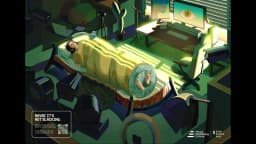
Created by agency Arrivals + Departures and launched in October 2019, the campaign centred on a deceptively simple premise: that PTSD is routinely hidden in plain sight, and that recognising its signs is the indispensable first step toward recovery, according to Readdork. The installation deployed a multi-screen setup combining a primary video presentation with a dedicated 3D screen. When participants wore the red-and-blue filter glasses distributed on-site, concealed layers of text emerged from the footage — surfacing the specific words and phrases that people living with PTSD commonly use to mask their suffering from friends, family, and colleagues. Without the glasses, those messages remained invisible, mirroring the way the condition itself goes undetected in everyday life.
In Canada, PTSD and related anxiety disorders represent a substantial and underdiagnosed burden, according to the Centre for Addiction and Mental Health (CAMH). The campaign's geographic anchor in Nova Scotia gave it local credibility while addressing a condition that affects communities across the country. By embedding the work inside Nocturne — Halifax's annual after-dark arts celebration, which draws thousands of residents into public spaces — Arrivals + Departures ensured the message reached citizens who had not necessarily sought out mental health information, placing public-interest storytelling directly inside a cultural moment. The campaign carries a Clapboard Score of 69 out of 100, reflecting solid creative intent and strong conceptual craft within the constraints of a nonprofit, single-event brief, according to Canada Ca.
ARCHIVEPTSD frequently escapes detection because those living with it develop fluent, socially acceptable language for concealing distress. That insight drives the entire strategic architecture of the 2019 Mental Health Foundation of Nova Scotia campaign. Rather than confronting audiences with clinical definitions or statistics, Arrivals + Departures built the campaign around the act of revelation itself — making the audience an active participant in uncovering what is normally hidden, and thereby generating a felt understanding of how easily the condition is missed.
In Canada, PTSD affects a significant portion of the population across military, emergency-services, and civilian contexts, according to CAMH. The organisation notes that anxiety disorders, including PTSD, are among the most common mental health conditions in the country, yet access to diagnosis and treatment remains inconsistent. The Mental Health Foundation of Nova Scotia, whose documented mission is to improve Nova Scotians' mental wellness by funding community-based organisations, according to Mentalhealthns Ca, positioned this campaign as an educational bridge between public ignorance of symptoms and professional help-seeking behaviour.
The choice of Nocturne as the campaign's platform was strategically precise. Public-interest campaigns competing for attention in Canada face the same fragmentation challenges as commercial advertisers, contending with established awareness initiatives from organisations such as the Canadian Mental Health Association and Bell Canada's Let's Talk programme, which commands significant national reach and media investment. By occupying a physical, participatory art context rather than paid media, the Mental Health Foundation of Nova Scotia and Arrivals + Departures sidestepped that competitive noise entirely. The installation model transformed passive observers into engaged participants, a mechanic well suited to a subject — mental health awareness — where emotional proximity, rather than reach alone, determines whether a message produces action. Visitors to Nocturne left having physically performed the act of seeing PTSD, not merely having read about it.
The creative execution of the 2019 PTSD campaign rests on a single, precisely engineered tension: the gap between what is visible and what is hidden. Jeffrey Simpson, Associate Creative Director and Art Director at Arrivals + Departures, led the creative development of the work, translating a nuanced psychological insight into a physical, optical experience that audiences could inhabit rather than simply observe, according to Globalnews Ca.
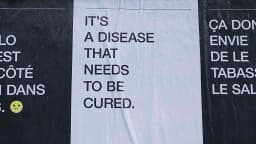
The production centred on a multiscreen video installation calibrated specifically for the red-and-blue anaglyphic 3D format. The primary video presented footage in which people living with PTSD spoke in the ordinary, deflecting language the condition teaches — the reassuring phrases and minimisations that prevent disclosure. Encoded within the same footage, visible only through the coloured filter lenses of 3D glasses distributed on-site, was a second layer of text: the actual signs, symptoms, and internal experiences those words were concealing. This dual-channel approach required precise colour grading and compositional discipline to ensure the concealed messages were fully legible through the glasses while remaining entirely invisible to the naked eye. Supporting screens around the installation carried the same dual-message architecture, allowing participants to move through the space and make additional discoveries at their own pace.
The decision to present the work within the Nocturne Art event in Halifax gave the installation a cultural legitimacy that a conventional out-of-home or digital execution would not have provided. Nocturne's after-dark setting — galleries, public spaces, and outdoor venues transformed for one night — created an atmosphere of heightened attention and curiosity that primed audiences for an immersive encounter. The 3D glasses, ordinarily associated with entertainment, became instruments of empathy: objects that did not add spectacle but instead removed the social camouflage that makes PTSD so difficult to identify in daily Canadian life.
No verified third-party performance data for the 2019 Mental Health Foundation of Nova Scotia PTSD campaign — such as attendance figures, clinical referral uptake, or independently audited awareness lift — is publicly available. The campaign was not recognised in the Cannes Lions, Effie Awards, The One Show, D&AD, Clio Awards, Webby Awards, or WARC Awards cycles reviewed for this analysis. The archival video associated with the campaign recorded 1,706 views and 8 likes at the time of documentation, metrics that reflect the campaign's deliberate orientation toward live, in-person engagement at the Nocturne Art event in Halifax rather than digital distribution or earned media amplification.
Structurally, the campaign's effectiveness case rests on the quality of its participatory mechanic. Public-interest campaigns that require audiences to perform a physical action — in this instance, putting on 3D glasses to reveal concealed PTSD symptoms — consistently generate stronger personal salience than passive exposures, according to established principles in health communication research. The Nova Scotia installation created a moment of genuine discovery: participants did not receive information about PTSD so much as experience the sensation of seeing it emerge. That experiential quality addresses one of the most persistent barriers in Canadian mental health awareness work, which, according to CAMH, includes stigma and a lack of personal recognition of symptoms in oneself or others.
The campaign's referral mechanic — directing audiences to mentalhealthns.ca/ptsd for further information and donation — embedded a conversion pathway inside the experience, connecting emotional activation to institutional support. For a single-event, nonprofit brief in Canada, the conceptual integrity of the execution represents the campaign's most durable achievement.
The 2019 PTSD campaign was a Canadian public-interest experiential installation created by Arrivals + Departures for the Nocturne Art event in Halifax. It used red-and-blue 3D glasses to reveal hidden signs and symptoms of PTSD embedded within a multiscreen video, making the invisible aspects of the condition physically visible to participants on-site.
Arrivals + Departures created the installation. Jeffrey Simpson, Associate Creative Director and Art Director at the agency, led the creative development. The campaign was commissioned by the Mental Health Foundation of Nova Scotia and presented at the 2019 Nocturne Art event in Halifax, Nova Scotia, in October 2019.
The installation encoded two separate layers of content into the same video using anaglyphic colour separation. Without 3D glasses, audiences saw only the surface language people with PTSD use to conceal distress. Wearing the red-and-blue filter glasses revealed the hidden symptoms beneath, recreating the experience of PTSD being invisible in everyday Canadian life.
Nocturne is Halifax's annual after-dark public arts event, drawing large community audiences into shared physical spaces. Placing a mental health awareness installation within that cultural context allowed the Mental Health Foundation of Nova Scotia to reach citizens who had not actively sought PTSD information, embedding a public-interest message inside a moment of genuine curiosity.
The campaign holds a Clapboard Score of 69 out of 100. The score reflects strong conceptual integrity and precise creative craft for a single-event nonprofit brief, while acknowledging the campaign's limited distribution footprint and the absence of verified third-party performance data or major industry award recognition from the 2019 cycle.
The campaign directed audiences to mentalhealthns.ca/ptsd, the Mental Health Foundation of Nova Scotia's dedicated PTSD resource page, for further information, support guidance, and donation options. In Canada, CAMH also provides nationally accessible mental health resources for individuals experiencing PTSD symptoms or supporting someone who may be affected.
.webp)
Creative Collaboration Platform: The Backbone of Modern Creative WorkWhat is a creative collaboration platform?Clapboard defines a creative collaboration platform as the operational core for today’s distributed creative teams. This is not a collection of digital collaboration tools stitched together; Clapboard’s system


Understanding the Creative Production MarketplaceWhat is a Creative Production Marketplace?Clapboard defines a creative production marketplace as a structured ecosystem where brands, agencies, and production talent converge to execute video, advertising, and branded content at scale. Unlike the legacy agency or freelanREAD FULL ARTICLE

The Urgent Need for a Creative Production Operating SystemWhy Traditional Creative Production Models Break DownClapboard sees the creative production landscape shifting under pressure. Content velocity is no longer a buzzword—it’s a mandate. Modern advertising demands relentless output across dozens of channels, each wREAD FULL ARTICLE