How DanceSafe Turned a Taste Test Into a Fentanyl Warning
DanceSafe's "Take the Coke Challenge!" is a Canadian public interest campaign created by Toronto agency The Garden and published in August 2019, in which real participants in a public park setting compared cocaine samples and learned how fentanyl test strips detect contamination invisible to the senses — repackaging harm-reduction science as a familiar cola taste-test parody.
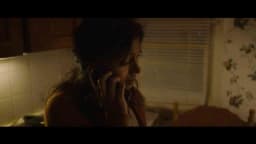
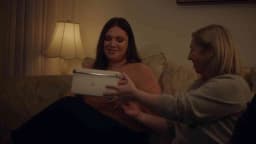
The campaign arrived at a precise cultural moment. Timed to International Overdose Awareness Day on August 31, 2019, as reported by Filter Magazine, the activation was designed to cut through the noise of conventional drug-awareness messaging by borrowing the visual grammar of a format that North American audiences know instinctively: the blind taste test. Where public health communications typically address fentanyl contamination through statistics and warnings, this campaign placed the problem in a public park and invited ordinary people to confront it firsthand.
DanceSafe, the harm-reduction nonprofit founded in 1998 in the United States and long active across North America, provided the subject-matter grounding. The Garden supplied the creative architecture. Together they constructed an experiential activation whose core argument is deceptively simple: fentanyl cannot be detected by sight, smell, or taste, and that invisibility is itself the emergency. The resulting footage, capturing genuine participant reactions, was distributed across social and digital channels throughout North America, extending a street-level moment in Canada into a continent-wide conversation. The campaign carries a Clapboard Score of 72 out of 100, reflecting strong strategic clarity and cultural sharpness against a backdrop of limited independently verified performance data.
DanceSafe built the "Take the Coke Challenge!" strategy on a single, verifiable consumer truth: human perception cannot distinguish fentanyl-contaminated cocaine from uncontaminated cocaine. That biological fact became the campaign's entire strategic foundation. Rather than asking audiences to trust a statistic, The Garden and Strategy Director Shari Walczak constructed a situation in which participants would arrive at that conclusion themselves, in real time, in front of a camera.
The strategic decision to parody the cola taste-test format was not arbitrary. The challenge format — most associated with competitive soft-drink marketing — carries decades of cultural familiarity across Canada and the broader North American market. By transplanting that recognisable structure into a drug-checking context, the campaign lowered the psychological barrier to engagement. Audiences primed to watch a playful consumer competition found themselves inside a harm-reduction demonstration before they had time to disengage.
The competitive landscape for public drug-safety communication in Canada includes organisations such as The Loop, which introduced its front-of-house Multi-Agency Safety Testing model at UK festivals from 2016, according to research published via Springer Link, and domestic harm-reduction services operating at festivals and nightclubs. According to research from the National Drug and Alcohol Research Centre at the University of New South Wales, 31 drug-checking services were operating across 20 countries as of 2017, with 23 of those 31 reporting on-site operation at festivals, nightclubs, and mass gatherings. Against that backdrop, "Take the Coke Challenge!" distinguished itself not by offering a drug-checking service but by dramatising the necessity of one — positioning fentanyl test strips as a practical, accessible answer to a danger participants had just experienced for themselves.
The Garden executed "Take the Coke Challenge!" as a documentary-style experiential activation, shooting live participant reactions in a public park setting to preserve the unscripted authenticity that the concept demanded. Creative Director Shane Ogilvie led the creative team, working alongside Associate Creative Director and Writer Lindsay Eady and Associate Creative Director and Art Director Francheska Galloway-Davis. Director Clay Stang shaped the footage's observational character, with Director of Photography Darrin Klimek responsible for the visual language that made the activation feel candid rather than constructed.
The production approach was deliberate. A heavily produced television-style execution would have undermined the campaign's central argument, which depends entirely on the viewer believing that the participants' surprise is genuine. By shooting in a real public environment with a documentary sensibility, the team allowed the material — real people confronting the limits of their own perception — to carry the persuasive weight. Editor Brett Erinas shaped the raw footage into a single distributable asset, while audio production was handled by Mark Domitric, Ella Kovacs, and Grayson Matthews, with audio capture by Jason Hopfner. Colour grading was completed by Clinton Homuth at Artjail. Director of Visual Media James Morren and Producer Mike Kovacs of Project Cultivator oversaw the asset's journey from activation to distribution across social and digital channels throughout North America.
The formal device — the branded taste-test challenge — required the creative team to work within a recognisable template while subverting its logic entirely. Where the cola original ends with a preference, the Coke Challenge ends with a revelation: that preference is irrelevant when contamination is invisible. That inversion is where the campaign's creative intelligence lives, and the production team's restraint in letting that inversion land without editorial commentary is what gives the 2019 work its lasting impact within Canadian public interest advertising.
No independently verified third-party performance audit of "Take the Coke Challenge!" is publicly available. The figures on record originate from The Garden's own reporting, cited by Warc, and should be read in that context. According to those figures, as reported by Warc, the campaign generated coverage from more than 20 media outlets and accumulated 152,000 earned impressions following its August 2019 release in Canada.
For a zero-paid-media public interest campaign built on a single experiential activation and one distributable footage asset, those numbers speak to meaningful organic reach. Earned media coverage across 20 or more outlets suggests the parody format travelled beyond harm-reduction audiences and reached general news and culture publications — precisely the crossover DanceSafe and The Garden were seeking. The campaign was named a finalist at a recognised advertising award show, as noted in agency documentation cited by Warc, though the specific show name is not fully documented in available public sources.
Structurally, the campaign's effectiveness rests on a mechanism that is difficult to ignore: placing a verifiable scientific fact — fentanyl's sensory invisibility — inside a format people associate with low-stakes consumer fun. That structural contrast is where the communication earns its authority. The Clapboard Score of 72 out of 100 reflects the campaign's genuine strategic originality and production discipline, tempered by the absence of independently corroborated outcome data and the inherent difficulty of measuring behavioural change in harm-reduction public interest contexts.
"Take the Coke Challenge!" is a Canadian public interest campaign created by The Garden for DanceSafe in August 2019. It staged a public taste-test activation in which participants compared cocaine samples to demonstrate that fentanyl contamination is undetectable by sight, smell, or taste, and introduced fentanyl test strips as a practical harm-reduction tool.
DanceSafe released "Take the Coke Challenge!" ahead of International Overdose Awareness Day on August 31, 2019, according to Filter Magazine. The timing anchored the campaign to a moment of heightened public and media attention around overdose deaths, maximising the likelihood of earned media coverage and audience receptivity to its harm-reduction message.
The Garden produced the campaign with Creative Director Shane Ogilvie leading the team. Director Clay Stang shot the activation, with Lindsay Eady as Associate Creative Director and Writer and Francheska Galloway-Davis as Associate Creative Director and Art Director. Strategy Director Shari Walczak shaped the campaign's strategic foundation.
According to figures reported by Warc citing The Garden, the campaign generated coverage from more than 20 media outlets and accumulated 152,000 earned impressions. The footage was distributed across social and digital channels throughout North America following its August 2019 public park activation in Canada.
The campaign borrowed the structure of classic cola taste-test marketing and inverted its logic entirely. Where the original format ends with a consumer preference, DanceSafe's version ends with a harm-reduction revelation: that fentanyl contamination is sensorially invisible, making the familiar format a vehicle for a genuinely urgent public safety argument.
DanceSafe's "Take the Coke Challenge!" receives a Clapboard Score of 72 out of 100. The score reflects strong strategic clarity, a distinctive creative mechanism, and disciplined documentary-style production, balanced against the absence of independently verified outcome data and the structural challenges of measuring behavioural change in public interest campaigns.
.webp)
Creative Collaboration Platform: The Backbone of Modern Creative WorkWhat is a creative collaboration platform?Clapboard defines a creative collaboration platform as the operational core for today’s distributed creative teams. This is not a collection of digital collaboration tools stitched together; Clapboard’s system


Understanding the Creative Production MarketplaceWhat is a Creative Production Marketplace?Clapboard defines a creative production marketplace as a structured ecosystem where brands, agencies, and production talent converge to execute video, advertising, and branded content at scale. Unlike the legacy agency or freelanREAD FULL ARTICLE

The Urgent Need for a Creative Production Operating SystemWhy Traditional Creative Production Models Break DownClapboard sees the creative production landscape shifting under pressure. Content velocity is no longer a buzzword—it’s a mandate. Modern advertising demands relentless output across dozens of channels, each wREAD FULL ARTICLE