How PETA and Don't Panic Made Dog Milk Unforgettable
PETA's 'Could You Stomach This?' is a November 2016 experiential campaign created by Don't Panic London for PETA UK, in which members of the public were filmed tasting soya milk presented under the fictional brand name 'Barker's Farmhouse Milk' and told it came from a dog, before the deception was revealed to make the case against cow's milk consumption.
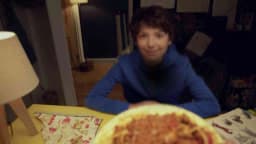
The campaign launched in the United Kingdom on 22 November 2016, according to Peta Org Uk. Its central mechanism was a staged focus group: real participants, an entirely credible tasting scenario, and a product — soya milk — that was nutritionally identical to what they might encounter in any UK supermarket. The fictional branding, 'Barker's Farmhouse Milk', was designed to feel unremarkable until the reveal. As documented by dontpaniclondon.com, the moment participants learned the supposed source of the drink, their reactions ranged from visible horror to outright refusal to continue. That instinctive revulsion was the entire argument.
PETA's underlying message, stated clearly in its own editorial on the campaign, is that humans are the only species on the planet to drink another animal's milk, and that cow's milk carries no greater biological logic for human consumption than dog's milk or rat's milk would. The campaign did not rely on graphic imagery, undercover footage, or statistical argument. It relied on a single, transferable emotional response: if the thought of drinking dogs' milk is nauseating, the discomfort should apply equally to any interspecies milk consumption. In the United Kingdom, where dairy is deeply embedded in dietary culture and national identity, that reframing represented a deliberate and pointed provocation. The campaign earned a Clapboard Score of 79 out of 100, reflecting strong conceptual clarity and cultural cut-through within the public service category.
Don't Panic London identified a specific cognitive vulnerability in the United Kingdom's relationship with dairy. British consumers broadly accept cow's milk as natural and unremarkable while regarding the milk of other mammals as alien or even offensive — a distinction that has no grounding in biology but considerable grounding in cultural conditioning. The campaign's strategic architecture was built entirely on exploiting that inconsistency.
The agency chose the experiential format over conventional advertising for a precise reason. A television spot or press ad can be dismissed as the opinion of an advocacy organisation. A filmed, unscripted reaction from a real member of the public cannot be so easily deflected. As reported by dontpaniclondon.com, the execution involved a staged focus group designed to feel entirely routine, with participants given no reason to anticipate an animal-welfare message before the product's supposed origin was disclosed. The gap between participants' relaxed initial engagement and their subsequent visceral rejection provided the campaign's entire rhetorical force.
In the United Kingdom, PETA operates in a competitive landscape alongside animal-welfare organisations including the Royal Society for the Prevention of Cruelty to Animals and Viva!, the vegan advocacy group, both of which have produced anti-dairy communications. What distinguished the 'Could You Stomach This?' approach was its refusal to moralize directly. Where competing campaigns frequently led with welfare conditions or environmental data, Don't Panic constructed a situation in which the audience's own body produced the counter-argument. The Advertising Standards Authority in the United Kingdom maintains a published framework for the substantiation of health and welfare claims in advertising, according to Asa Org Uk, a regulatory context that made the campaign's choice of a demonstration-based rather than claims-based format strategically astute. PETA's own published commentary on the campaign, available via peta.org, reinforced the philosophical position that the artificial insemination of cows and the separation of calves from their mothers is inherently at odds with the naturalness that dairy marketing routinely invokes.
Errol Ettienne directed 'Could You Stomach This?' for Don't Panic London, according to dontpaniclondon.com. The production's creative challenge was essentially one of sustained authenticity: the focus group setting had to read as entirely ordinary for long enough that participants had no reason to perform scepticism or caution before the reveal.
The fictional product, 'Barker's Farmhouse Milk', was dressed with the visual language of the artisanal dairy category — a sector of the United Kingdom's food market that had grown considerably in the years preceding the campaign, making its aesthetic codes widely recognisable to British consumers. The bottle design and product name were crafted to feel like a credible premium dairy product rather than an obvious provocation, ensuring that participants' initial responses reflected genuine, unguarded engagement with the tasting exercise rather than suspicion about the brand or its motives.
The filmed reactions, once the soya milk was identified as putatively canine in origin, were captured with the naturalistic quality of documentary rather than advertising production. This tonal choice was deliberate: the moment the footage reads as a polished commercial, the authenticity of the participants' responses becomes questionable. By maintaining a register closer to documentary journalism than to brand filmmaking, the production preserved the evidential quality of the reactions that gave the campaign its persuasive weight. Production credits across the campaign as published by dontpaniclondon.com identify the following creative team members involved in the work for PETA UK: Ellie Moore, Tom Loader, George McCallum, Paul Howard, Chris Seaborn, David Graham, and Jake Martin. The campaign's single media asset, as catalogued by Clapboard, is the focus-group reveal video, which carried the full weight of the creative argument without supporting print, outdoor, or broadcast executions.
No independently verified third-party performance data for 'Could You Stomach This?' is publicly available. The principal audience metric on record is an agency-reported figure: according to dontpaniclondon.com, the campaign video generated more than 2.7 million views in under 24 hours of publication. This figure was self-reported by the agency and has not been audited by an independent measurement body, a standard limitation of experiential and social video campaigns from this period.
The figure is nonetheless structurally credible. The campaign launched on 22 November 2016, as documented by peta.org.uk and confirmed by prnewswire.com, at a point when social video was at peak organic distribution velocity on platforms including Facebook, where PETA UK maintained a substantial following. As reported by shots.net, trade coverage published on 23 November 2016 described the execution as a 'shocking' prank and credited the reveal with generating a strong emotional response — a qualitative signal consistent with high early sharing behaviour.
The campaign's structural effectiveness rests on three reinforcing factors. First, the use of real, unscripted participants meant the emotional response was not manufactured by actors, lending the footage a credibility that conventional advertising cannot replicate. Second, the reveal mechanism created a natural social sharing incentive: viewers who found the premise compelling had an obvious reason to send it to others. Third, by operating entirely within the experiential and digital-video register rather than paid broadcast, the campaign generated press coverage as a secondary distribution channel, with trade outlets including shots.net amplifying the reach beyond PETA UK's own audience in the United Kingdom. These structural properties, taken together, support the campaign's Clapboard Score of 79 out of 100.
PETA's 'Could You Stomach This?' challenged the perceived naturalness of cow's milk. Created by Don't Panic London and launched in the United Kingdom in November 2016, it presented soya milk to focus-group participants under the fictional brand 'Barker's Farmhouse Milk', telling them it came from a dog before revealing the deception and making the case against dairy consumption.
Don't Panic London created 'Could You Stomach This?' for PETA UK. The campaign was directed by Errol Ettienne, with a wider creative team that included Ellie Moore, Tom Loader, George McCallum, Paul Howard, Chris Seaborn, David Graham, and Jake Martin, according to dontpaniclondon.com. It launched on 22 November 2016 in the United Kingdom.
The drink used in the stunt was soya milk. Participants were told it was 'Barker's Farmhouse Milk' sourced from a dog, but as confirmed by peta.org.uk and dontpaniclondon.com, the beverage was entirely plant-based. The deception was designed to provoke a disgust response that PETA then applied to the logic of drinking cow's milk.
According to dontpaniclondon.com, the campaign video generated more than 2.7 million views in under 24 hours. This is an agency-reported figure without independent audit. The campaign launched on 22 November 2016 in the United Kingdom and received additional trade coverage from shots.net, which described its execution as a shocking prank.
The United Kingdom was a strategically deliberate market because dairy is deeply embedded in British dietary culture, making the cognitive gap between accepting cow's milk and rejecting dog's milk especially pronounced. Don't Panic London built the entire campaign argument around that culturally specific inconsistency, using a staged focus group to surface it without direct moralising.
PETA's 'Could You Stomach This?' received a Clapboard Score of 79 out of 100. The score reflects the campaign's strong conceptual clarity, its structurally effective use of the experiential and documentary-video format, and its cultural cut-through within the public service category in the United Kingdom, as assessed by Clapboard's editorial team.
.webp)
Creative Collaboration Platform: The Backbone of Modern Creative WorkWhat is a creative collaboration platform?Clapboard defines a creative collaboration platform as the operational core for today’s distributed creative teams. This is not a collection of digital collaboration tools stitched together; Clapboard’s system


Understanding the Creative Production MarketplaceWhat is a Creative Production Marketplace?Clapboard defines a creative production marketplace as a structured ecosystem where brands, agencies, and production talent converge to execute video, advertising, and branded content at scale. Unlike the legacy agency or freelanREAD FULL ARTICLE

The Urgent Need for a Creative Production Operating SystemWhy Traditional Creative Production Models Break DownClapboard sees the creative production landscape shifting under pressure. Content velocity is no longer a buzzword—it’s a mandate. Modern advertising demands relentless output across dozens of channels, each wREAD FULL ARTICLE