 ARCHIVE
Viva Rio Flood Film Puts Donation Appeal at the Heart of Brazil
Viva Rio's "Flood" is a 2013 Brazilian public-interest film created by São Paulo agency dim&canzian to solicit donations for families in Rio de Janeiro state who lost their possessions to flooding, released as a single documentary-style film asset in July of that year.
Viva Rio is a Brazilian NGO dedicated to social inclusion and peace-building across Rio de Janeiro. Its work spans community development, violence reduction, and humanitarian relief, making the "Flood" campaign a natural extension of its core mission. When flooding stripped families across Rio de Janeiro state of their belongings, the organisation needed a fundraising mechanism that could translate the scale of that loss into an emotional prompt for public generosity. The result was a single film, produced at zero production cost according to Viva Rio, that distilled the humanitarian crisis into a focused donation appeal.
The campaign launched in Brazil in July 2013, created entirely within the public interest sector by agency dim&canzian. It represents one of the rare instances in Brazilian NGO advertising where a production was executed without a disclosed budget, relying instead on the persuasive force of the film itself. The format — a single film asset — concentrated all creative and strategic weight into one piece of content, leaving no room for supporting executions to carry the message. In Brazil, where flooding regularly displaces large numbers of families in Rio de Janeiro state and surrounding regions, the subject matter carried immediate cultural and social resonance. The campaign's objective was direct: stimulate donation from Brazilian audiences who had the means to help those who had lost everything. Clapboard assigns "Flood" a score of 56 out of 100, reflecting the campaign's focused intent and the structural challenge of sustaining reach with a single-asset, zero-budget execution.
ARCHIVEViva Rio identified film as the highest-leverage format available for a zero-budget public-interest campaign in Brazil in 2013. The strategic logic was sound: film carries emotional density that static formats cannot replicate, and in a donation-appeal context, emotional proximity to the subject directly influences giving behaviour. For an NGO operating without a media budget, earned distribution — online platforms and social sharing — was the only viable amplification route, and film was the format most likely to generate that sharing.
The Brazilian context made the choice more acute. In 2013, Brazil's digital infrastructure was expanding rapidly, with online video consumption growing alongside smartphone penetration in urban centres including Rio de Janeiro. Flooding is not an abstract risk in Rio de Janeiro state; it is a recurring, documented reality that affects communities across socioeconomic lines, lending the campaign's subject matter an urgency that required little contextual framing for Brazilian audiences. Viva Rio's history of public mobilisation strengthened this foundation. In 2000, the organisation launched the nationwide "Enough! I Want Peace!" campaign, known in Brazil as "Basta! Eu Quero Paz," which engaged actress Fernanda Montenegro and reached a broad Brazilian public, according to the World Council of Churches. That precedent established Viva Rio as an organisation capable of executing culturally resonant public campaigns.
Within the competitive landscape of Brazilian NGO fundraising, Viva Rio operates alongside organisations such as the Brazil Foundation, which according to brazilfoundation.org channels philanthropic investment into Brazilian communities, and international humanitarian actors with established donation infrastructure. Dim&canzian's strategic response was to avoid the conventions of institutional charity advertising — the distant statistic, the generalised appeal — and instead anchor the film in the specific, tangible loss experienced by individual families in Rio de Janeiro state. Social inclusion, the core of Viva Rio's mission, was not stated as an abstract value but enacted through the act of donation itself.
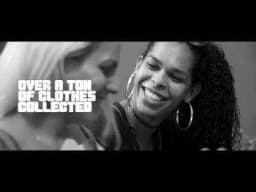
Michele Dim D'Ippolito served as Chief Creative Officer on "Flood," leading the creative vision at dim&canzian alongside Creative Directors Bruno Salgueiro and Gabriel Araujo. The production was executed without a disclosed budget, a constraint that shaped every creative decision from casting to visual approach. Rather than commissioning elaborate production, the team leaned into a documentary sensibility — a formal choice that aligned the film's aesthetic with its subject matter and lent the appeal an authenticity that produced imagery could not have replicated.
Copywriting was handled by Samuel Segatelli, with Thiago Nabisco serving as Art Director. The account was managed by Cristiane Bender, planning directed by Samantha Barbieri, and sound design delivered by Shuffle Áudio. The presence of a dedicated sound design partner, even within a zero-budget framework, signals that the production team understood audio as structurally important to the film's emotional architecture. In documentary-style public interest work, ambient sound and voice carry emotional weight that visual composition alone cannot sustain.
Marcio Canzian occupied the role of Chief Media Officer, responsible for the film's distribution strategy in a context where no paid media was available. The single-asset structure of the campaign placed extraordinary pressure on that one film to perform across all stages of the audience journey — awareness, emotional engagement, and conversion to donation. The documentary approach was not simply an aesthetic preference; it was a strategic answer to the resource constraint. By shooting in a register that felt immediate and unmediated, dim&canzian gave "Flood" a credibility that more polished production might have undermined. Within one week of online exposure in Brazil, the film was named best film of the week by Best Ads On TV, according to Viva Rio, a recognition that validated the team's formal instincts.
No verified performance data for "Flood" is publicly available in terms of donations raised, audience reach, or media impressions. No coverage has been documented in trade publications including Campaign, Ad Age, Adweek, or The Drum, and no verifiable social media data has been identified on YouTube, LinkedIn, Twitter, or Reddit. The campaign holds no confirmed entries in Cannes Lions, the Effie Awards, The One Show, D&AD, Clio Awards, Webby Awards, or WARC Awards.
What is documented provides a partial picture. Within one week of online release in Brazil in 2013, "Flood" was named best film of the week by Best Ads On TV, according to Viva Rio — an independent signal of creative quality that emerged quickly after launch. Viva Rio also reported that the film was produced at zero production cost, a fact that reframes the campaign's structural achievement: any audience reached, any donation prompted, any conversation generated represented a return on a nil investment base.
Structurally, the campaign's single-asset format was both its greatest creative commitment and its primary distribution vulnerability. Without supporting executions, paid media, or a documented activation plan, the film depended entirely on organic sharing and earned attention to reach Brazilian donors. In the public interest sector in Brazil, where fundraising infrastructure varies significantly across organisations, that dependence on earned distribution is common but limiting. Clapboard scores "Flood" at 56 out of 100, a mark that acknowledges the campaign's creative focus and the genuine social urgency of its subject while reflecting the structural constraints that a single zero-budget film faces when measured against sustained impact and reach in the Brazilian market.
Viva Rio's "Flood" is a 2013 Brazilian public-interest film created by agency dim&canzian to encourage donations for families in Rio de Janeiro state who lost their belongings to flooding. It was released in July 2013 as a single film asset, produced at zero production cost according to Viva Rio, and aimed at stimulating public generosity.
Dim&canzian created the Flood campaign for Viva Rio. The Brazilian agency led by Chief Creative Officer Michele Dim D'Ippolito and Chief Media Officer Marcio Canzian produced the film, with Creative Directors Bruno Salgueiro and Gabriel Araujo, copywriter Samuel Segatelli, and art director Thiago Nabisco also credited on the project.
No confirmed awards for the Flood film have been found in Cannes Lions, Effie Awards, D&AD, The One Show, Clio Awards, Webby Awards, or WARC Awards. The film was named best film of the week by Best Ads On TV within one week of its online release in Brazil in 2013, according to Viva Rio.
Viva Rio is a Brazilian NGO focused on social inclusion and peace-building across Rio de Janeiro. The organisation works across community development, violence reduction, and humanitarian relief. Its history of public campaigns in Brazil includes the 2000 nationwide "Basta! Eu Quero Paz" initiative, according to the World Council of Churches.
Clapboard assigns the Viva Rio Flood campaign a score of 56 out of 100. The score reflects the campaign's clear creative focus and the genuine humanitarian urgency of its subject matter in Rio de Janeiro, balanced against the structural limitations of a single-asset, zero-budget film without documented paid media support.
Dim&canzian used a documentary approach for the Flood film because it aligned the film's visual language with its humanitarian subject and lent the donation appeal an authenticity that more polished production might have undermined. The style was also a practical response to a zero production cost constraint, maximising emotional credibility within the Brazilian public interest sector.
.webp)
Creative Collaboration Platform: The Backbone of Modern Creative WorkWhat is a creative collaboration platform?Clapboard defines a creative collaboration platform as the operational core for today’s distributed creative teams. This is not a collection of digital collaboration tools stitched together; Clapboard’s system


Understanding the Creative Production MarketplaceWhat is a Creative Production Marketplace?Clapboard defines a creative production marketplace as a structured ecosystem where brands, agencies, and production talent converge to execute video, advertising, and branded content at scale. Unlike the legacy agency or freelanREAD FULL ARTICLE

The Urgent Need for a Creative Production Operating SystemWhy Traditional Creative Production Models Break DownClapboard sees the creative production landscape shifting under pressure. Content velocity is no longer a buzzword—it’s a mandate. Modern advertising demands relentless output across dozens of channels, each wREAD FULL ARTICLE