A Recreativa's Crossed Memories campaign, created by Mirum in Brazil in June 2018, transformed personalised crossword puzzles into a tool for Alzheimer's

How A Recreativa and Mirum Turned Crosswords Into Alzheimer's Care
Crossed Memories is a June 2018 direct-medium public interest campaign created by Mirum for Brazilian brand A Recreativa, using personalised digital crossword puzzles built from a relative's memories to help families of people living with Alzheimer's disease share stories, stimulate recollection, and spend meaningful time together, according to Propmark Com Br.
The campaign operates through a single, focused mechanic. Users visit crossedmemories.com, where they construct a customised crossword puzzle populated with words drawn from the personal memories of a relative living with Alzheimer's disease. Families then solve the puzzle together, using each clue and answer as a prompt to revisit shared moments. The activity transforms a familiar leisure format — the crossword — into a structured occasion for connection, giving caregivers and loved ones a gentle, low-pressure framework for conversation.
In Brazil, where the campaign launched in June 2018, the cultural resonance of word games runs deep. A Recreativa itself describes a legacy of more than seventy years crossing words, knowledge and lives, according to Loja Arecreativa Com Br, making the crossword format a natural extension of the brand's identity rather than an arbitrary creative choice, according to Adlibrary. Mirum, the Curitiba-based digital agency behind the work, channelled that heritage into a platform that is at once playful and purposeful, according to Mirum Dreamwidth. The campaign is classified as a direct medium execution within the public interest industry and contains one media asset, as documented by Clapboard. Its Clapboard Score of 63 out of 100 reflects a concept with genuine emotional clarity, applied within the constraints of a single-asset, direct-format campaign.
A Recreativa positions itself within a public interest space where few commercial brands choose to operate. The brand's decision to address Alzheimer's disease directly, rather than gesturing toward general wellness, gives Crossed Memories a strategic precision that separates it from broader dementia-awareness efforts. The campaign does not ask audiences to donate or sign a petition; it offers a functional tool that delivers value in the moment of use.
The strategic intelligence lies in the reframe. Alzheimer's disease is typically communicated through the language of loss — memory fading, identity eroding, connection severing. Mirum and A Recreativa invert that frame entirely. The crossword becomes a retrieval mechanism, a structured way to surface what remains rather than mourn what has gone. That shift from deficit to resource is the campaign's sharpest strategic move.
In Brazil, the burden of Alzheimer's disease is significant. The Brazilian Alzheimer's Association, known as ABRAz, has documented that Brazil is among the countries with the highest absolute numbers of people living with dementia in Latin America, a figure that places considerable pressure on family caregivers who represent the primary support network in Brazilian households. The campaign's target of family members, rather than patients alone, reflects an accurate reading of where the need for intervention is greatest. Competing awareness campaigns from global health organisations and pharmaceutical brands operating in Brazil have historically relied on television and out-of-home formats. Crossed Memories occupies a different register entirely: it is interactive, personal, and repeatable, qualities that static awareness advertising cannot replicate. The direct medium classification is therefore not a limitation but a strategic choice, placing the experience inside the user's own hands rather than in front of them on a screen.
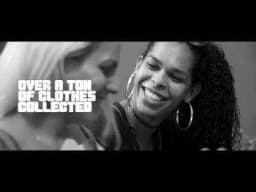
Creative director Filipe Matiazi, art director Guilherme Rubini, and copywriter André Prestes led the creative development of Crossed Memories at Mirum's Curitiba office, according to Musely. Film production was handled by Asteroide Filmes.
The creative execution is built on a single, disciplined idea: the crossword as memory map. Rather than producing a campaign that explains Alzheimer's disease or advocates for funding, the team built a working digital tool at crossedmemories.com that families could use immediately and repeatedly. Every design decision serves that functional purpose. The interface invites users to input personal words — names, places, shared references — and generates a crossword from those inputs, meaning each puzzle is unique to the family that creates it. The clues are not definitions; they are prompts for reminiscence, written by the family themselves.
This places the copywriting burden, deliberately, on the user. André Prestes and the team engineered a creative system in which the most emotionally potent content is generated by the people experiencing it. That is a sophisticated structural decision. It means the campaign scales in emotional intensity with the depth of the relationship it is designed to serve. A family with forty years of shared history produces a richer puzzle than one with ten, and the platform accommodates both without friction.
The production restraint is notable. Crossed Memories contains one media asset, according to Clapboard, yet the campaign earned a gold medal at the 2018 Prêmio Colunistas Sul, as reported by Clapboard, demonstrating that creative juries in Brazil recognised the concept's rigour independent of production volume. Asteroide Filmes' involvement points to a film or documentary element supporting the platform, though the primary deliverable remains the interactive crossword itself. The work achieves tonal precision: it is warm without being sentimental, useful without being clinical.
 ARCHIVE
No verified performance data for Crossed Memories — such as platform visit counts, number of puzzles created, or measurable behavioural outcomes — is publicly available. What the public record does confirm is significant within its context. The campaign won a gold medal at the 2018 Prêmio Colunistas Sul, a leading Brazilian advertising industry award, as reported by Clapboard. That recognition from a regional jury working within the Brazilian market represents a meaningful signal of creative and strategic quality assessed by peers who understand the local cultural and competitive environment.
Structurally, the campaign's effectiveness rests on several compounding factors. The direct medium format ensures that every interaction with the campaign is an interaction with the tool itself, collapsing the distance between awareness and action to zero. The personalisation mechanic means the campaign has no single creative execution that can fatigue; each family produces a different artefact. And the use of crossedmemories.com as a standalone platform gives the work a permanence that a social post or broadcast spot cannot sustain.
The Clapboard Score of 63 out of 100 reflects a campaign that demonstrates strong conceptual integrity and genuine public interest value, calibrated against the single-asset scope of the execution and the absence of documented reach metrics. For a public service campaign operating without a large media budget, the combination of award recognition and structural durability represents a considered outcome.
Crossed Memories is a June 2018 public interest campaign created by Mirum for A Recreativa in Brazil. Families build personalised crossword puzzles from a relative's memories and solve them together, using the activity to prompt conversation and shared recollection with loved ones living with Alzheimer's disease.
Mirum, a digital agency based in Curitiba, Brazil, created Crossed Memories for A Recreativa. The campaign team included creative director Filipe Matiazi, art director Guilherme Rubini, and copywriter André Prestes, with film production handled by Asteroide Filmes, as documented by Clapboard.
Crossed Memories won a gold medal at the 2018 Prêmio Colunistas Sul, a prominent Brazilian advertising industry award, as reported by Clapboard. The recognition affirms the campaign's creative and strategic strength within the Brazilian market, particularly given its single-asset direct-medium format and public interest classification.
Users access crossedmemories.com and build a customised crossword using personal words drawn from a relative's memories. The family then solves the puzzle together, with each clue serving as a prompt for reminiscence. The mechanic is repeatable and unique to each family, according to Clapboard.
A Recreativa is a Brazilian brand with more than seventy years of history in crosswords, describing its mission as crossing words, knowledge and lives, according to loja.arecreativa.com.br. This heritage makes the crossword format in Crossed Memories a natural expression of the brand's identity rather than an opportunistic creative device.
Crossed Memories receives a Clapboard Score of 63 out of 100. The score reflects the campaign's strong conceptual clarity and genuine public interest value, balanced against the single-asset scope of the execution and the absence of publicly documented performance metrics for the Brazil-launched June 2018 campaign.
.webp)
Creative Collaboration Platform: The Backbone of Modern Creative WorkWhat is a creative collaboration platform?Clapboard defines a creative collaboration platform as the operational core for today’s distributed creative teams. This is not a collection of digital collaboration tools stitched together; Clapboard’s system


Understanding the Creative Production MarketplaceWhat is a Creative Production Marketplace?Clapboard defines a creative production marketplace as a structured ecosystem where brands, agencies, and production talent converge to execute video, advertising, and branded content at scale. Unlike the legacy agency or freelanREAD FULL ARTICLE

The Urgent Need for a Creative Production Operating SystemWhy Traditional Creative Production Models Break DownClapboard sees the creative production landscape shifting under pressure. Content velocity is no longer a buzzword—it’s a mandate. Modern advertising demands relentless output across dozens of channels, each wREAD FULL ARTICLE