


Varun Katyal | Founder, Clapboard
Varun Katyal is the Founder & CEO of Clapboard and a former Creative Director at Ogilvy, with 15+ years of experience across advertising, branded content, and film production. He built Clapboard after seeing firsthand that the industry’s traditional ways of sourcing talent, structuring teams, and delivering creative work were no longer built for the volume, velocity, and complexity of modern content. Clapboard is his answer — a video-first creative operating system that brings together a curated talent marketplace, managed production services, and an AI- and automation-powered layer into a single ecosystem for advertising, branded content, and film. It is designed for a market where brands need content at a scale, speed, and level of specialization that legacy agencies and generic freelance platforms were never built to deliver. The thinking, frameworks, and editorial perspective behind this blog are shaped by Varun’s experience across both the agency world and the emerging platform-led future of creative production. LinkedIn: https://www.linkedin.com/in/varun-katyal-clapboard/
Key Phases of the Logo Design Process
Step-by-Step Guide to the Logo Design Process
The logo design process is not a single leap from concept to completion. It’s a disciplined sequence of design phases, each with a clear function and a measurable output. Understanding this creative workflow is non-negotiable for anyone commissioning or managing brand assets at scale.
From Discovery to Delivery: The Essential Phases
Discovery is the intelligence-gathering stage. Here, the focus is on design research—market context, competitive analysis, and stakeholder interviews. The outcome: a sharp creative brief that sets parameters and defines success. Skip this, and you risk designing in a vacuum.
Exploration is where strategy meets possibility. Designers sketch, moodboard, and test visual territories. The objective is breadth, not polish. Expect rough concepts, not finished marks. This phase ensures a wide field before narrowing down, reducing downstream risk and bias.
Design is the engine room. Concepts are selected, iterated, and developed into digital form. Here, the logo development process becomes tangible—vector drafts, color studies, and typographic choices. Deliverables are concrete: initial logo proposals, rationale documents, and use-case mockups.
Refinement is where feedback turns into progress. Stakeholders review, critique, and select a direction. Iteration is deliberate—tweaks to proportion, color, and alignment. The process is collaborative but not democratic; decisions are made with commercial impact in mind.
Definition locks in the final asset. Guidelines are written, usage rules codified, and master files prepared. This phase is about scalability—making sure the logo performs across every channel and context. Typical outputs: logo master files, color specs, and brand guidelines documentation.
What to Expect at Each Stage of Logo Design
Every phase in the logo design process is a checkpoint. Discovery ensures relevance. Exploration fuels creativity. Design delivers options. Refinement drives quality. Definition guarantees consistency. Miss a phase, and you invite risk—misalignment, inefficiency, or poor rollout. The process isn’t bureaucracy; it’s the backbone of effective identity work.
What is the Logo Design Process and Why Does It Matter?
The logo design process is a methodical approach to creating the single most visible asset in your brand’s arsenal. It’s not a one-off exercise in aesthetics. It’s a sequence—research, ideation, refinement, and execution—where every phase is mapped to strategic intent. This process is the difference between a logo that simply exists and one that anchors a brand identity, reinforcing every touchpoint from pitch decks to packaging.
Why a Structured Logo Design Process Builds Stronger Brands
Random creativity may produce something eye-catching, but it rarely delivers long-term value. A structured logo design process forces discipline. It aligns creative exploration with the realities of your branding strategy, ensuring that the final mark doesn’t just look good—it works hard. This rigor reduces the risk of costly rebrands and confusion in the market. It’s how brands earn recognition, not just attention.
How Logo Design Shapes First Impressions
First impressions in business are rarely verbal—they’re visual. The logo is often the first signal your audience receives. It sets expectations and frames perception before a single conversation happens. If the design is inconsistent or off-strategy, it undermines trust from the outset. A disciplined process ensures your logo delivers clarity and confidence, not mixed signals.
The Role of a Logo in Brand Identity
Your logo isn’t your brand, but it is the shorthand for everything your brand stands for. It distills your values, positioning, and ambition into a mark that’s instantly recognisable. When executed through a rigorous logo design process, the result is a logo that integrates seamlessly with broader visual branding and supports deeper brand storytelling. The result: a logo that doesn’t just decorate, but drives commercial outcomes by shaping audience perception and recall.
Choosing the Right Type of Logo for Your Brand
The logo design process is not about picking a style off the shelf; it’s about aligning form with business intent. The three primary logo styles—word mark, brand mark, and combination mark—are more than aesthetic choices. They’re strategic levers that shape perception, recall, and flexibility. Understanding how each functions is fundamental to building a credible visual identity that actually works in-market.
How to Choose the Best Logo Style for Your Brand
Start with clarity on your brand’s positioning and growth ambitions. Word marks—logos built from your brand name in a distinct typographic treatment—excel for brands with unique or memorable names. They put your name front and center, ideal for early-stage ventures seeking awareness or legacy brands with established equity. But they’re less adaptable in global or icon-driven environments.
Word Mark vs. Brand Mark: Which Fits Your Business?
Brand marks—standalone symbols or icons—are powerful for businesses aiming for instant recognition across languages and markets. Think of global tech or lifestyle brands where the mark becomes synonymous with the company. The trade-off: building recognition takes time and consistent exposure. If your brand’s name lacks distinctiveness or you operate in crowded sectors, a strong brand mark can cut through the noise.
Combination Logos: Versatility and Brand Recognition
Combination marks blend text and symbol, offering the best of both worlds—clarity and memorability. They’re pragmatic for brands needing flexibility across platforms, from digital avatars to large-format signage. Over time, you can drop the text as the symbol gains traction. For most growth-focused brands, this is the default for a reason: it scales with your ambitions and market footprint.
Ultimately, the logo design process starts with research—market context, competitive analysis, and a clear articulation of your brand’s mission and values (Outcrowd, 2026). The right logo style emerges from this groundwork, not guesswork. Each logo system—word mark, brand mark, combination mark—offers distinct advantages and constraints, and should be selected with your brand’s trajectory in mind (PRINT Magazine, 2026).
Choose deliberately. Your logo is not just a badge—it’s a strategic asset that signals who you are and where you’re headed.
Principles of Effective Logo Design
What Makes a Logo Effective? Key Design Principles
Effective logo design is built on clarity, not complexity. A logo must be instantly recognisable, adaptable across contexts, and tightly aligned with brand values. Simplicity is non-negotiable: the most memorable logos are stripped of excess, relying on a core visual idea that survives at any scale. This is not about minimalism for its own sake, but about focus—ensuring the mark is legible and distinctive whether it’s on a billboard or a favicon.
How to Ensure Your Logo is Memorable
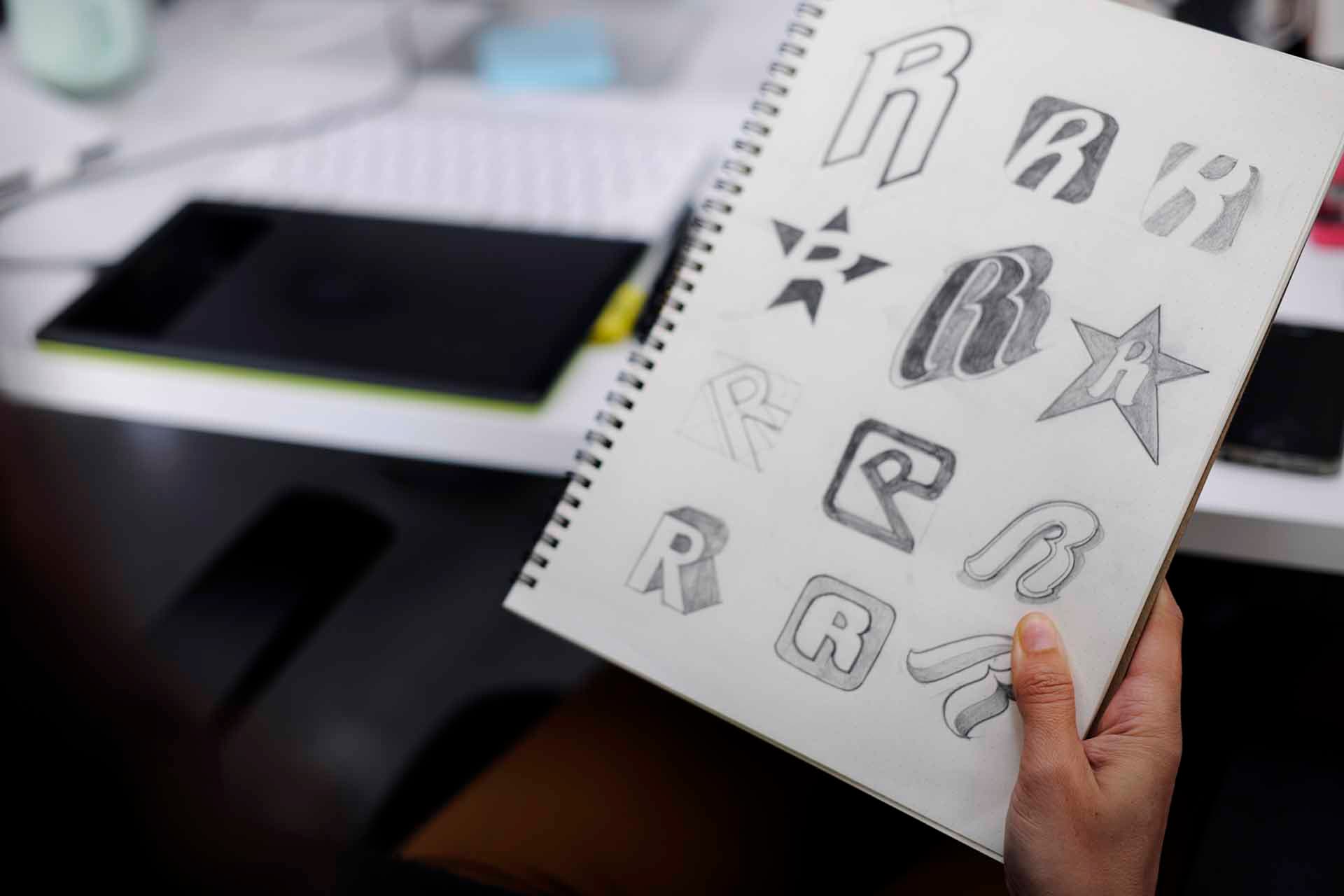
Memorable logos are the product of rigorous distillation. The process begins with research—market, competitors, audience, and brand mission—to ensure the logo communicates precisely what it should (Outcrowd, 2024). From there, the ideation phase should generate volume: sketching 16–20 variations forces creative range, before narrowing to the few that truly resonate. This is not indulgence; it’s commercial discipline. If a logo doesn’t stick in the mind after a single glance, it’s failed its first job.
Designing Logos for Versatility and Longevity
Versatility is a test of real-world conditions. A logo must work in monochrome, at postage-stamp scale, and on every touchpoint from digital to print. Scalability is a technical requirement, but also a creative filter—if the idea collapses when shrunk, it wasn’t robust to begin with. Longevity matters just as much. Trend-driven logos date fast and erode brand equity. The best logos sidestep fads, instead reflecting enduring values and a clear strategic position.
- Simplicity and memorability: Cut the noise, keep the signal.
- Versatility and scalability: Stress-test in every format and size.
- Timelessness over trendiness: Prioritise ideas that will hold up in five years, not just one.
- Emotional resonance: Ensure the logo triggers the right associations—whether trust, energy, or authority.
- Contextual adaptability: Test across environments and media; a logo that only works in one setting is a liability.
In practice, an efficient logo design process should encompass user and market research, creative exploration, style direction, colour palette selection, and rigorous testing in varied environments (Tubik Studio, 2024). The result: a logo that delivers on brand recognition, communicates the right message, and endures in the market—no matter how the landscape shifts.
DIY vs. Hiring a Professional: Making the Right Logo Design Choice
Should You Design Your Own Logo or Hire an Expert?
The logo design process is a strategic inflection point for any brand. Go DIY, and you retain control and reduce costs—but you’re betting on your own creative instincts and technical skills. Hire a professional logo designer, and you’re paying for expertise, process, and a higher probability of distinctiveness. The right choice isn’t about ego or budget alone; it’s about aligning your resources with your business ambitions.
Comparing DIY and Professional Logo Design Outcomes
DIY logo design offers speed and affordability. There’s no waiting for rounds of feedback or invoices to clear. But most DIY efforts lean on templates and generic assets, which can dilute brand differentiation. Professional designers bring a methodical approach: discovery, ideation, iteration, and polish. Their value isn’t just in execution—it’s in surfacing what your brand stands for and encoding that into a visual mark that endures scrutiny.
How to Decide Between DIY and Professional Logo Creation
Assess your internal capabilities first. If you have someone with genuine design chops and a clear brief, DIY branding can work for early-stage projects or low-risk experiments. But if your brand is entering a crowded market, or if you’re building for scale, the margin for error shrinks. A professional logo designer is an investment in competitive advantage, not just aesthetics. The cost premium is justified if your brand’s first impression needs to be bulletproof.
Ultimately, the design decisions you make should reflect your growth trajectory and risk tolerance. Whichever path you choose, ensure the process delivers a logo that aligns with your brand’s core values and market positioning. The logo is not just a graphic—it’s a strategic asset. Treat it as such, and the rest of your branding will follow suit.

Tools and Resources for Every Step of the Logo Design Process
The logo design process demands more than just creativity—it requires the right tools, sharp judgment, and a disciplined workflow. Whether you’re commissioning a new identity or refining an existing mark, your toolkit shapes both the pace and quality of results. The days of relying on a single design suite are over; today’s practitioners curate their stack for speed, flexibility, and scale.
Best Tools for Each Stage of the Logo Design Process
Vector graphic software remains non-negotiable. Industry standards like Illustrator dominate, but alternatives such as Affinity Designer or Figma are gaining traction for their collaborative features. These platforms enable precise, scalable work—critical for logos that must perform everywhere from app icons to billboards.
Online logo makers offer brute efficiency for simple needs or early-stage exploration. They deliver fast, template-driven outputs and can be useful for rapid prototyping. However, their generic assets and limited control rarely satisfy brands seeking distinctiveness or long-term relevance.
Free vs. Paid Logo Design Resources: What to Use
Free tools—like Google Fonts for typography or Coolors for palette generation—are effective for brainstorming and initial concepts. Paid resources, especially premium type foundries and advanced color tools, unlock a higher tier of polish and originality. The smart move is to blend both: use free assets for breadth, then invest where differentiation matters.
How to Select the Right Logo Design Software
Choosing logo design software isn’t about feature lists—it’s about fit for workflow. Prioritize platforms that handle vectors natively and integrate with your broader design resources and creative software ecosystem. Consider team collaboration, export flexibility, and the learning curve. Remember: the best tool is the one your team can wield without friction.
Templates can accelerate ideation but introduce risk. Use them for structure, not as a crutch. Overreliance results in derivative work—a pitfall for any brand with ambition. For inspiration, curated galleries and design communities provide reference points, but the real value comes from understanding why certain logos endure. In logo design, execution is everything. The right tools make that execution repeatable—and scalable—without sacrificing originality.
Turning Ideas into Impact: Practical Tips for the Logo Design Journey
How to Brainstorm Logo Concepts Effectively
The logo design journey starts with disciplined brainstorming. Ditch the groupthink workshops and focus on structured solo sketching or tight, cross-functional sprints. Use constraints—brand values, target audience, core differentiators—to drive sharper ideas. The best brainstorming techniques don’t chase volume; they force clarity. Capture every viable direction, but filter ruthlessly. Don’t fall in love with your first sketch.
Iterative Design: Refining Your Logo Step-by-Step
Iteration is non-negotiable. Move quickly from rough sketches to digital drafts, but keep feedback loops short and business-focused. Stakeholder input matters, but so does knowing when to ignore subjective taste. Prioritize feedback from those closest to the audience or brand strategy. Each iteration should solve a problem or sharpen the core idea—never just tweak for the sake of movement. Reference the creative process, not consensus.
Testing Your Logo: Ensuring Versatility and Impact
Logo testing is where theory meets reality. Drop your logo into real-world contexts: social avatars, packaging, billboards, app icons. Assess legibility, scalability, and emotional impact at every size and format. This is the moment to uncover weaknesses—before the market does. Logo testing isn’t about pleasing everyone; it’s about ensuring the mark performs where it counts. Don’t skip stress-testing in low-light, grayscale, or cluttered environments.
- Common mistakes: Overcomplicating the mark, ignoring legal checks, or skipping application tests. These errors cost time and reputation.
- Originality and legal safety: Run originality checks early. Trademark conflicts kill launches. Use professional clearance, not just Google searches.
The logo design journey rewards rigour, not just inspiration. Structured brainstorming, disciplined iteration, and real-world testing separate forgettable marks from iconic ones. Treat every stage as a filter—only the strongest ideas survive. That’s how you move from concept to impact.
Logo Style Guides: Ensuring Consistency and Brand Recognition
Why Every Brand Needs a Logo Style Guide
A logo style guide is not a nice-to-have. It’s the operational backbone of brand consistency. When campaigns run across markets and platforms, your logo is the constant. Without clear visual guidelines, even the strongest mark can be undermined by sloppy execution—wrong colors, poor placement, or amateur tweaks that dilute recognition and erode trust. A robust logo style guide stops this at the source.
Key Elements to Include in Your Logo Style Guide
Precision matters. The essentials: approved color palettes (Pantone, CMYK, RGB), minimum clear space, size restrictions, and logo usage rules for light and dark backgrounds. Specify unacceptable treatments—distortion, drop shadows, unauthorized colorways—so there’s no room for interpretation. Include file formats and resolutions for digital and print. These visual guidelines are not theoretical—they’re guardrails for every designer, vendor, and partner touching your brand assets.
Maintaining Brand Consistency Through Visual Standards
Brand consistency is enforced, not hoped for. A logo style guide codifies the non-negotiables, ensuring every touchpoint—whether it’s a social ad, packaging, or investor deck—reinforces your visual identity standards. The payoff is cumulative: disciplined logo usage builds equity, while inconsistency chips away at it. In crowded markets, a recognizable and unambiguous logo is a commercial asset, not just a design flourish.
Creating and implementing a logo style guide is about operational clarity. Start with your master logo files. Define every parameter. Distribute the guide widely—make it accessible, not buried in a drive. Train teams and partners on the rules. Audit execution regularly. The brands that win on recognition aren’t the most creative; they’re the most consistent. That’s the real-world impact of a rigorous logo style guide.
Conclusion
The process of effective logo design is not a creative indulgence—it’s a commercial necessity. Every decision, from initial concept through to the final logo style guide, directly shapes brand identity. In a market where differentiation is currency, the discipline behind logo development is what separates the strategically memorable from the merely decorative.
Logo design isn’t about chasing trends or indulging aesthetic whims. It’s a structured exercise in distillation: reducing a brand’s values, ambitions, and market position into a mark that works at any scale, in every channel. Senior marketers and founders know that a logo is a shorthand for trust. It’s the first thing stakeholders see, and often the last thing they remember. That’s why the process must be rigorous. It’s not just about what looks good—it’s about what works, everywhere it needs to.
Consistency is where most brands falter. A logo, unsupported by a robust logo style guide, becomes vulnerable to distortion and dilution. The style guide is not a bureaucratic afterthought; it’s the operational backbone that ensures the logo performs as intended across touchpoints. This is where design principles meet operational reality. When the rules are clear and enforced, the brand identity remains intact, no matter who touches the assets or where they’re deployed.
The impact of a well-executed logo design process is measurable: enhanced recognition, reinforced perception, and a foundation for every future brand expression. For leaders committed to long-term brand equity, the structured approach to logo development isn’t optional—it’s the baseline. In the end, the logo is only as strong as the process and principles behind it. That’s the standard that endures.
FAQs
What is the logo design process?
The logo design process starts with a strategic brief—clarifying objectives, target audience, and market positioning. Next comes research and competitive analysis, followed by concept development. Designers iterate on sketches and digital drafts, refine options, and deliver final assets. The process ends with application testing across key brand touchpoints.
Why is a logo important for brand identity?
A logo is the visual anchor of a brand. It delivers instant recognition, signals professionalism, and sets the tone for all communications. In crowded markets, a strong logo is shorthand for credibility and trust, making it a non-negotiable asset for any serious brand strategy.
What are the different types of logos?
Logos fall into three main categories: word marks (text-based, like logotypes), brand marks (symbol or icon), and combination marks (text plus icon). Each type serves a distinct purpose, from direct name recognition to abstract brand association.
How do I choose the right type of logo for my brand?
Start with your brand’s objectives and audience. If clarity is key, a word mark works. If you want a distinctive symbol, go for a brand mark. Combination marks offer flexibility. The right choice is dictated by context, scalability, and long-term brand ambitions—not personal taste.
What are the principles of effective logo design?
Effective logos are simple, distinctive, and versatile. They perform at any size, work in monochrome, and remain legible across channels. Avoid trends—prioritise timelessness and memorability. Every element must serve a function; nothing is decorative for its own sake.
Should I design my own logo or hire a professional?
DIY logos suit micro-businesses with minimal risk. For growth-focused brands, a professional designer brings strategic thinking, technical skill, and market perspective. The investment pays off in distinctiveness and long-term brand equity—shortcuts rarely deliver lasting impact.
What is a logo style guide and why is it important?
A logo style guide defines usage rules—spacing, color, sizing, and placement. It ensures consistency across every channel and touchpoint. Without a guide, even the best logo will suffer from inconsistent application, diluting brand recognition and undermining credibility.
.webp)
Creative Collaboration Platform: The Backbone of Modern Creative WorkWhat is a creative collaboration platform?Clapboard defines a creative collaboration platform as the operational core for today’s distributed creative teams. This is not a collection of digital collaboration tools stitched together; Clapboard’s system
Understanding the Creative Production MarketplaceWhat is a Creative Production Marketplace?Clapboard defines a creative production marketplace as a structured ecosystem where brands, agencies, and production talent converge to execute video, advertising, and branded content at scale. Unlike the legacy agency or freelanREAD FULL ARTICLE

The Urgent Need for a Creative Production Operating SystemWhy Traditional Creative Production Models Break DownClapboard sees the creative production landscape shifting under pressure. Content velocity is no longer a buzzword—it’s a mandate. Modern advertising demands relentless output across dozens of channels, each wREAD FULL ARTICLE
JOIN THE NEWSLETTER.
Content Production insights, videos, books, and freebies, delivered to your inbox weekly


LEAVE A COMMENT
Your email address will not be published.