Explore powerful audio ads—radio spots, sonic branding, and sound-driven storytelling that engage audiences through voice, music, and sound design.
Audio


Sound Test Drive - | Clapboard Ad Archive
Audio
Sound Test Drive - | Clapboard Ad Archive
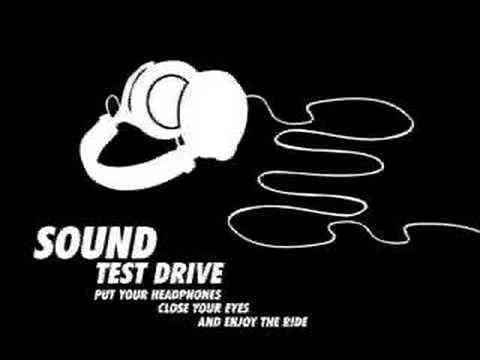
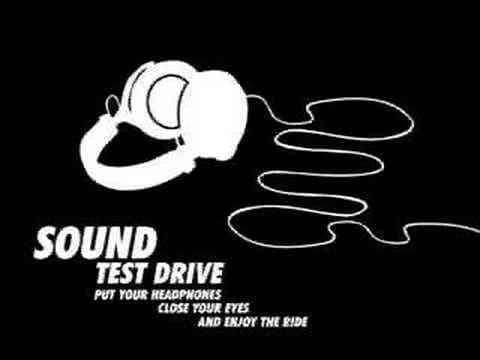
Sound Test Drive marked a defining moment for sonic innovation in the automotive category when it launched in 2007, as Honda and agency partners invited audiences to experience the CB 1300 Superfour like never before — not through visuals or technical stats, but through the immediacy of a sensory demonstration delivered entirely in 3D holophonic audio. Positioned with absolute clarity as a virtual ride-along, the campaign bypassed the established language of motorcycle advertising to let prospective riders and enthusiasts close their eyes, don headphones, and be transported into the saddle, riding by ear through the realistic soundscape of acceleration, environment, and raw engine energy. Leveraging 3D holophonic technology years ahead of its ubiquity, the experience opened with a direct voiceover cue asking users to trust their senses and actively participate, dissolving the line between listener and rider. As a pure example of what Clapboard’s taxonomy would classify as FORMAT#1 — Demonstration, every creative decision isolates and amplifies the product’s true differentiator: the visceral satisfaction of the ride. The trajectory from anticipation to immersion is punctuated by narrational bookends that reinforce both the novelty of this sensory journey and the compelling allure of the CB 1300 Superfour as a machine built for thrill seekers. Metrics tell the story of resonance; with the campaign drawing more than 1.2 million views and sparking hundreds of comments in its first year, it clearly cut through the digital clutter with a concept that was as technologically advanced as it was emotionally sincere. The choice to use audio as the sole creative vessel not only transformed the demonstration into an intimate first-person trial — at a time when such formats were still emerging online — but also showcased how the automotive sector could capture new attention through immersive and participatory marketing, without a single frame of video or glossy product hero shot. In avoiding celebrity endorsement, narrative dramatization, or comparative messaging, the agency delivered a focused, disciplined message: listen, and you’ll feel the difference. Clapboard rates this 78/100. As one of the early large-scale campaigns to harness 3D audio for product demonstration, Sound Test Drive signals how single-sense, direct-immersion formats can recalibrate the marketing toolkit for experience-driven categories.
Radio Invaders - Toshiba | Clapboard Ad Archive
Radio Invaders marked a bold audio intervention by Toshiba and agency Talent in the Brazilian electronics and technology market in 2013, leveraging the unique intimacy of radio to explore the frustrations of signal disruption and interference through highly creative sound design. Instead of showcasing product specs or running with straightforward testimonials, the campaign deployed an inventive metaphor as its core conceit: the so-called invaders of the airwaves symbolized not cartoonish aliens but the all-too-familiar static, distortion, and technical noise that plague consumers’ everyday experiences with less reliable devices. This approach aligns with what Clapboard’s taxonomy classifies as FORMAT#3—Symbolize the Problem, translating technical headaches into a dramatized audio encounter that listeners could vividly relate to, but without falling into literal representation or heavy-handed exposition. Executed entirely in pt-PT and targeting tech-savvy urbanites during peak radio listenership, the campaign subverted expectations by letting the medium itself become the message; by conducting a kind of sonic infiltration, it effectively underscored the very irritations Toshiba products are engineered to eliminate. The use of a singular audio asset drove home the strategic clarity and boldness of the creative, ensuring minimal dilution of message and maximum impact. Rather than layering on character-driven narrative arcs or forced brand evangelism, Talent’s concise audio engineering dramatized the problem, letting the metaphor do the hard work of differentiation in a category often bogged down by technical jargon and visual showpieces. The campaign underscored Toshiba’s claim to technical superiority and reliability not by direct proof points but through evocative, memorable disruption that would linger in listeners’ minds, reinforcing brand association at the very moment a negative experience was being conjured and vanquished. Clapboard rates this 57/100. In an industry dominated by visual spectacle and literal demonstrations, Radio Invaders serves as a reminder that strategic use of metaphor—especially in audio—can cut through commoditized category conventions when anchored in consumer truths.
Message from Jolanda - Belgian Cancer Foundation | Clapboard Ad Archive
Message from Jolanda, the 2018 radio campaign from the Belgian Cancer Foundation and agency Happiness, dismantles conventional health communication by transforming a casting dilemma into its central idea: rather than recruiting a comforting or authoritative voice, the campaign gives a radio platform to the most chilling narrator imaginable — skin cancer itself, personified as the eerie voice emanating from inside a sunbed. Operating within the Public Service market, the campaign starkly reimagines how the dangers of artificial tanning can be dramatized for public understanding, targeting Belgium’s ongoing relationship with sunbed culture through audio’s uniquely intimate reach. By crafting an unsettling monologue that addresses listeners from the mechanical belly of the danger itself, the campaign evokes the embodied risk of sunbed use without visual cues, making the threat both inescapable and deeply personal. This idea leverages what Clapboard’s taxonomy would classify as FORMAT#3—Symbolize the Problem: skin cancer is no longer a distant medical statistic but a tangible presence, represented through audio metaphor rather than illustration or medical testimony. The result is a campaign that bypasses traditional emotional appeals or hard health facts, instead eliciting a mix of discomfort and revelation that lingers well beyond the listener’s exposure. With a singular media execution, Message from Jolanda raises the stakes of sunbed use into the realm of psychological unease, reframing the sunbed as not just a device but as an accomplice with a sinister inner life, speaking directly to its user. The approach marks a distinct turn for public health messaging, eschewing fear-mongering visuals in favor of a more imaginative — and arguably more haunting — form of persuasion that relies on the intimacy and suggestive power of sound. The campaign earns 63/100 in Clapboard's global creative archive. For public service communicators and creative strategists, Message from Jolanda signals the enduring value of symbolic storytelling in audio to cut through habitual messaging fatigue, especially in markets saturated by literal or shock-based health communications.
The Football Pen - Radio.net | Clapboard Ad Archive
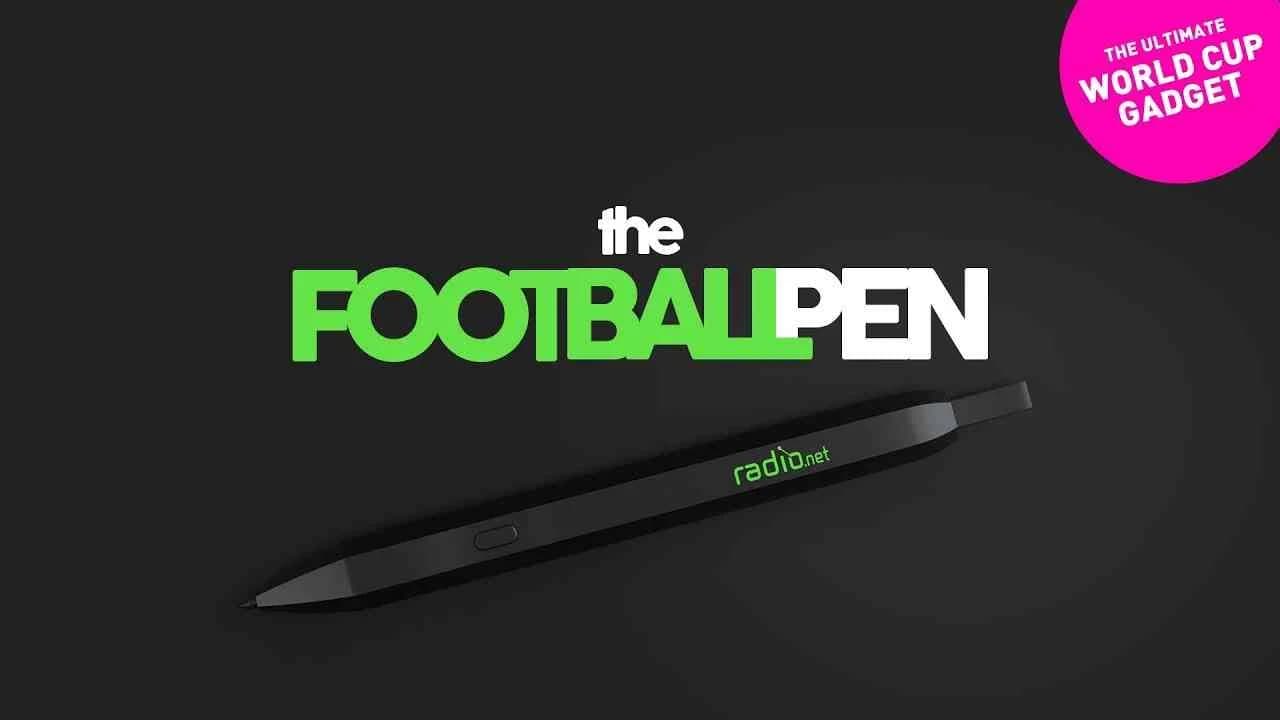
Radio.net’s 2018 Football Pen campaign, created by Havas for the German electronics market, finds a sharp creative angle on a uniquely local dilemma: the collision of national football obsession and workplace reality during a World Cup hosted in Russian time zones. With kickoff times crossing into core working hours, German fans were faced with the unenviable task of choosing between keeping up with the match or meeting their professional responsibilities—an acute tension rendered all the more universal for its resonance among sports-loving professionals everywhere. Havas’ solution was both quietly subversive and technologically forward: the Football Pen, a covert device that embedded a radio receiver into the most unremarkable of office objects—a standard ballpoint—connected to users’ mobile devices via Bluetooth. Bone conduction technology delivered live match commentary directly to the user through the pen’s end, activated discreetly by biting down and creating a solo auditory channel that left colleagues untroubled and office decorum intact. The campaign’s communication, firmly rooted in what Clapboard’s 12-format taxonomy would classify as FORMAT#2—Show the Problem, foregrounds the hours-long divide so familiar to the German workforce before introducing this stealthy branded device as an elegant solution. The marketing narrative made clear the technical mechanics and the emotional proposition, positioning the Football Pen as more than a gadget: it became a symbol of cunning fan ingenuity, ready to turn boardrooms and cubicles into surrogate stadiums. Supporting creative included a multi-language microsite that functioned both as a product information hub and a promotional portal, inviting users—audience and advocates alike—to win their own Football Pen and seamlessly plug Radio.net’s expansive streaming capabilities into the rhythms of working life. With its precise targeting, single-minded proposition, and blend of analog familiarity with digital innovation, the Football Pen neatly encapsulates the shifting boundaries of workplace culture and personal passion. Clapboard rates this 74/100. At its core, the Football Pen campaign matters to the industry because it demonstrates how lateral product thinking and insight-driven storytelling can transform a widely felt inconvenience into a legitimate platform for brand differentiation.
Every Breath You Take, Suspicious Mind, Don’t Cry - 91 Rock | Clapboard Ad Archive
Every Breath You Take, Suspicious Mind, Don’t Cry for 91 Rock stands out as a deliberate exercise in sonic branding, with agency Master leveraging the campaign’s suite of audio assets to anchor the station’s identity squarely within the rock music canon. Launched in Brazil in Year, the campaign weaves instantly recognizable song titles together as both headline and narrative device, signaling a fundamental strategy: build brand equity by appropriating the language and codes of rock culture’s greatest hits. In doing so, 91 Rock eschews the narrative-heavy or problem-solution strategies common to the radio and media category, opting instead for a direct connection with their target: listeners fluent in the emotional shorthand of classic and modern rock. The campaign’s execution is audaciously uncluttered—three iconic tracks serve as unmistakable cultural references and emotional cues, condensed into sharp, audio-driven media that bypasses rational persuasion for the visceral triggers of nostalgia, memory, and genre affinity. Creatively, this places the campaign among those that Clapboard’s taxonomy would classify as FORMAT#12—Parody or Borrowed Format, where recall and impact ride on the listener’s preexisting relationship to music’s most enduring hooks and titles. The Portuguese-language audio spots don’t attempt to retell these songs’ stories; instead, they mine their cultural gravitas, creating a resonance that feels less like radio promotion and more like an open invitation to join a community defined by taste and shared history. Within the fiercely competitive landscape of music and media branding in Brazil, 91 Rock’s campaign is an object lesson in strategic reference: each asset maps onto a listener’s catalogue of emotional triggers, reinforcing loyalty through the offer of recognition and belonging. With three robust audio pieces at its core, the campaign demonstrates just how effective borrowed formats can be at forging powerful associations quickly, especially among a demographically defined base of rock enthusiasts. The campaign earns 56/100 in Clapboard’s global creative archive. As brands seek relevance in saturated entertainment markets, Every Breath You Take, Suspicious Mind, Don’t Cry reminds the industry that sometimes the most memorable statements are made by skillfully echoing the culture your audience already lives and breathes.
Buckle up - Škoda | Clapboard Ad Archive
Buckle up, Škoda’s audio-led road safety campaign launched in Hungary in 2014 by Café Communications, occupies a distinct space within automotive communications through its inventive use of sound to symbolize the risks of neglecting seatbelt use. Eschewing literal demonstration, straightforward storytelling, or celebrity-fronted testimony, Café Communications opts instead for a concept anchored in what Clapboard’s taxonomy would classify as FORMAT#3 — Symbolize the Problem, translating the abstract danger associated with unbuckled travel into an immediate and visceral sonic experience. The campaign’s audio-only strategy is especially powerful in the automotive context, intersecting with drivers and passengers at precisely the moments when behaviour can be influenced most effectively: within the car and on the move. By sculpting a rich auditory atmosphere, the work elevates the urgency around seatbelt adherence without resorting to didactic messaging, inviting listeners to inhabit the consequences through sound rather than sight. This approach amplifies Škoda’s longstanding positioning on safety and reliability, demonstrating the brand’s willingness to innovate in pursuit of public wellbeing and trust in a marketplace crowded with overt product statements. Rooted in the local cultural context of Hungary, the auditory cues and narrative stylings ensure resonance with domestic sensibilities, enhancing the authenticity of the message and facilitating a stronger emotional link between sponsor and audience. Such creative latitude not only reinforces Škoda’s values around consumer care and responsibility but also sidesteps common automotive clichés, reasserting the potential of audio to shape behaviour at scale. With a disciplined focus on the behavioural issue and a refusal of unnecessary embellishment, Buckle up distills the brand’s core message into an essential and memorable listening experience that is at once practical and creative. The campaign earns 56/100 in Clapboard’s global creative archive. As automotive brands continue to navigate the intersection of technology, safety, and cultural relevance, Buckle up exemplifies how potent creative restraint and symbolic storytelling can advance the conversation around driver behaviour.
The Need - Mr Delivery | Clapboard Ad Archive
Mr Delivery’s 2014 campaign The Need stands as a high-water mark in South Africa’s food and drink advertising, recasting the moment of hunger from a fleeting physical urge into an immobilizing, all-consuming force that is only truly appeased by immediate action—specifically, by Mr Delivery’s swift, reliable service. Developed by M&C Saatchi for the professional services market where urgency and convenience converge, the campaign eschews literal storytelling in favour of a metaphor-heavy audio narrative, conjuring hunger as an irrational psychological compulsion rather than the everyday rumble of an empty stomach. This creative approach, which Clapboard’s taxonomy would classify as FORMAT#3—Symbolize the Problem, foregoes visuals in favour of soundscapes and voice talent that evoke urgency and a visceral sense of longing, inviting listeners to empathize with the singular, overwhelming desire that traditional hunger messaging has rarely articulated so vividly. The copy and performance draw listeners into an experience marked by the frustrations of pre-digital meal procurement—times when attempts to quell such needs were met with delay and disappointment—before returning the focus squarely on Mr Delivery as the ultimate solution, ready to deliver not just food but profound relief. In reframing the delivery experience as an emotional rescue, not a transactional convenience, the campaign positions the brand at the intersection of utility and craving, forging a connection that is both rational and deeply felt. M&C Saatchi’s strategy resonates particularly in a sector defined by time scarcity, where professional consumers seek efficiency but also demand an experiential link to their service providers. The decision to leverage radio as the medium amplifies this intimacy, allowing the brand’s narrative to infiltrate the personal routines of its audience, transforming private moments of need into collective understanding. Mr Delivery emerges less as a logistics platform and more as an agent of rescue, cementing its relevance in a crowded market with a tone and creative depth often lacking in professional services advertising. Clapboard rates this 63/100. The Need demonstrates that the most enduring brand platforms arise when agencies have the conviction to dramatize the problem as a lived psychological truth rather than a transactional inconvenience.
Forced to drive - Mini | Clapboard Ad Archive
Forced to drive, the 2014 campaign from Mini in Mexico by Publicis, is a sharp study in how audio storytelling can refract the everyday realities of automotive marketing through potent symbolism. By centering its communications on a single, expertly produced audio asset, the campaign immerses its listeners in an evocative soundscape that dramatizes the act of driving as something imposed rather than embraced, a notion deliberately contrary to Mini’s brand DNA of driving joy. Rather than relying on demonstration, product shots, or testimonials, Publicis turned to psychological suggestion — leveraging the suggestive power of sound and verbal cues to conjure images of obligation, routine, and monotony that frame commuting as a necessary evil. This conceptual approach, which Clapboard’s taxonomy terms FORMAT#3—Symbolize the Problem, replaces literal storytelling with metaphor, transforming what should be a coveted experience into something forced. Such a maneuver is both bold and strategic in Mexico’s fiercely competitive automotive sector, where emotional connection and authentic voice are prized, and where Mini has always defined itself as an outlier against the tyranny of the mundane drive. By localizing its execution, the campaign navigated regional behavioral nuances and cultural expectations, providing additional resonance for a market keenly attuned to status, aspiration, and pleasure. Through tightly built sound design and a narrative that teases the idea of obligation, Mini and Publicis invite potential customers to reconsider what it means to drive with purpose and pleasure, underscoring the brand’s proposition that driving a Mini is never about compulsion, but about desire. The campaign earns 63/100 in Clapboard’s global creative archive. In elevating the symbolic problem rather than showing the literal product solution, Forced to drive signals how audio craft and creative restraint can strategically differentiate automotive brands in saturated, story-driven markets.
Learning on the way - ADN | Clapboard Ad Archive
Learning on the way, the 2016 audio campaign developed by Direktor films for ADN, pushes the boundaries of education marketing in Colombia by reframing the idle moments of everyday transit as opportunities for personal growth. Anchoring ADN’s mission to democratize learning beyond the traditional classroom, the campaign leverages sound and narrative to embed education into the rhythms of daily life—a move that positions the brand at the intersection of accessibility and innovation in the market category. The agency structures the campaign’s narrative around the direct benefit of learning in motion, crafting a scenario where the very act of commuting naturally becomes the catalyst for self-improvement. This creative approach sits squarely in Clapboard’s FORMAT#6—Benefit Causes Story, where the utility of the product or service is the actual trigger for the campaign’s situational narrative. By focusing on the universal experience of travel—whether by bus, train, or on foot—Learning on the way normalizes lifelong learning as part of everyday routines, promoting ADN as an enabler rather than a disruptor in users’ lives. Supported across social platforms including Facebook, Twitter, and Google+, the campaign extends its reach to digitally native audiences who expect flexible, on-demand educational experiences, ensuring the message is as easily accessed as the learning it promotes. The audio format allows for immersive storytelling while underscoring the practical, always-with-you nature of ADN’s offering, differentiating the brand in a crowded education sector increasingly defined by relevance and convenience. With a distinctive campaign that eschews overt problem–solution structures in favor of lived experience and immediate value, Direktor films positions ADN’s service not just as content but as a facilitator of continuous self-betterment. Clapboard rates this 64/100. As education brands seek new footholds in a landscape shaped by mobility and attention scarcity, Learning on the way demonstrates the power of creative alignment between message, medium, and modern behavioral insight.
Girls of Paradise - Mouvement du Nid | Clapboard Ad Archive
Girls of Paradise is Mouvement du Nid and McCann’s unflinching entry into the Public Service market category, debuting in France in 2016 with an audio campaign designed to puncture prevailing apathy around the lived realities of women subjected to prostitution and trafficking. Forgoing literal dramatization or sensational narratives common in the space, the campaign’s creative force lies in its discipline and restraint, opting for what Clapboard’s taxonomy classifies as FORMAT#3—Symbolize the Problem, a technique that uses analogies and indirect cues to evoke the systemic nature of exploitation without resorting to explicit depiction. This format authorized McCann’s approach: by focusing on the nuanced, often-overlooked soundscapes and carefully modulated voices of those affected, the campaign created an immediate and deeply personal intimacy with listeners, transforming statistics into palpable empathy and lived experience through the sheer credibility of well-curated testimony and symbolic aural environments. The French-language execution resonated with an audience of scale, registering more than 568,000 views and igniting a wave of discourse evidenced by its robust comment volume and notable social reach, a notable achievement in a sector often challenged by listener fatigue and the amorphousness of social justice messaging. By anchoring the conversation in the motifs and everyday artifacts of the girls’ experience—absent graphic illustrations but replete with metaphoric weight—Girls of Paradise carved out a cultural space for Mouvement du Nid to further its advocacy with authentic urgency, positioning the brand not just as a commentator but as an essential interlocutor in the national dialogue on exploitation, vulnerability, and systemic neglect. McCann’s creative rigor comes through in the campaign’s refusal to manipulate or sentimentalize its subject matter, choosing instead the tension of suggestion and atmosphere to mirror the complexity and invisibility of the problem—a move that elevated Girls of Paradise above issue-awareness to real agenda-setting. The campaign earns 71/100 in Clapboard’s global creative archive. Public Service campaigns rarely sustain such engagement on audio platforms, so Girls of Paradise stands as a benchmark for how sensitive issues can be rendered accessible and urgent through the conceptual discipline of symbolic narrative when direct depiction is neither possible nor ethical.
Crickets, Birds, Dolphins, Lost Frequency - HearLife Clinic | Clapboard Ad Archive
HearLife Clinic’s Lost Frequency, developed in collaboration with FP7 in Dubai, stands as a pointed lesson in how healthcare communication can shift from didactic messaging to experiential engagement by making the condition itself—namely, high-frequency hearing loss—the subject of demonstration. Launched in the United Arab Emirates in Year 2017, the campaign addressed a critical category challenge: over 500,000 individuals locally affected by hearing loss, with 35% completely unaware of their impairment. Instead of relying on warnings or testimonials, HearLife and FP7 re-engineered the clinical logic of an audiology test into a compelling trilogy of radio spots, where listeners were drawn into immersive wildlife documentaries featuring the natural calls of birds, crickets, and dolphins, all creatures whose songs inhabit the vulnerable upper frequency range at risk. This approach took the raw science of audiology—a process typically buried within sterile exam rooms—and embedded it in beautifully constructed soundscapes, daring the audience to discover for themselves if a crucial piece of the auditory world was missing. By disguising an evaluative audio test as the chance to listen deeper into nature, the series not only informed but triggered passive participation, enabling listeners to self-identify possible hearing loss in real time. It is an approach sitting squarely in Clapboard’s FORMAT#1—Demonstration taxonomy, eschewing narrative artifice or celebrity advocacy in favor of letting the product’s core benefit—the instant, experiential recognition of an undiagnosed problem—speak directly to the target audience. Integral to its creative impact is the campaign’s deft use of the audio medium: because the utility and message fundamentally intertwine, every listener becomes both audience and participant, transforming personal health awakening into a shared, national radio ritual. This innovation bridges empathy and science, collapsing the distance between clinical testing and lived sensory experience, and for many marked their first step toward diagnosis and treatment. The campaign earns 79/100 in Clapboard’s global creative archive. As the health sector seeks more ways to cut through clinical inertia and stigma, Lost Frequency signals the potential for demonstration-driven audio ideas to recast preventive care as both accessible and unforgettable.
Fish, Hamster, Tarantula - Dallas Pets Alive | Clapboard Ad Archive
Fish, Hamster, Tarantula from Dallas Pets Alive positions the nonprofit’s mission at the centre of an inventive audio campaign, crafted by Dieste and launched to US audiences in 2017 with a clear intent to reframe perceptions around pet adoption. The campaign’s three-part structure uses the distinct personalities of unconventional pets—fish, hamster, tarantula—as stand-ins for a broader spectrum of animal welfare challenges, bypassing the literal in favour of emotive allegory and metaphor. In lieu of relying on visual dramatisation, each audio asset leans into the unique auditory cues and imagined inner worlds of these overlooked companions, inviting listeners to form intimate, personal connections and to reconsider what it means to offer a home to an animal in need. The approach sits squarely in Clapboard’s FORMAT#3—Symbolize the Problem strategy, as it eschews didactic appeals for more nuanced, symbolic storytelling that resonates deeply within the healthcare-adjacent pets category. By foregrounding lesser-romanticised pets and unspooling their imagined narratives, Dallas Pets Alive extends the adoption conversation beyond the usual cats and dogs, ultimately broadening the sector’s definition of empathy and inclusivity. This campaign achieves cultural relevance by harnessing the imaginative latitude of audio communication—engaging an increasingly mobile, multi-tasking audience while reinforcing the brand’s ethos of compassion and resourcefulness. The partnership with Dieste ensures the creative execution bridges emotional storytelling with pragmatic advocacy, cultivating a sense of urgency without resorting to guilt or cliché. Clapboard rates this 63/100. As public concern for animal welfare continues to evolve, Fish, Hamster, Tarantula marks an instructive shift in the use of symbolic analogies within audio advertising, prompting agencies and nonprofits to consider more poetic, genre-bending approaches in driving real social impact.
.webp)
Creative Collaboration Platform: The Backbone of Modern Creative WorkWhat is a creative collaboration platform?Clapboard defines a creative collaboration platform as the operational core for today’s distributed creative teams. This is not a collection of digital collaboration tools stitched together; Clapboard’s system
Understanding the Creative Production MarketplaceWhat is a Creative Production Marketplace?Clapboard defines a creative production marketplace as a structured ecosystem where brands, agencies, and production talent converge to execute video, advertising, and branded content at scale. Unlike the legacy agency or freelanREAD FULL ARTICLE
The Urgent Need for a Creative Production Operating SystemWhy Traditional Creative Production Models Break DownClapboard sees the creative production landscape shifting under pressure. Content velocity is no longer a buzzword—it’s a mandate. Modern advertising demands relentless output across dozens of channels, each wREAD FULL ARTICLE