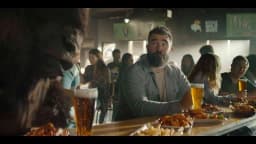
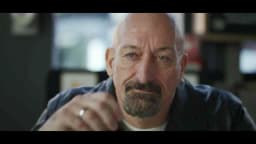
Coffee Shot's Sleepy campaign by BBR Saatchi & Saatchi used drowsy radio announcers to dramatise fatigue across Israel in February 2015, making the energy need

How Coffee Shot's Sleepy Radio Campaign Dramatised Fatigue in Israel
Coffee Shot's Sleepy campaign is a February 2015 Israeli radio execution created by BBR Saatchi & Saatchi in which professional announcers deliver broadcast segments in progressively drowsy voices, dramatising the physical reality of an energy slump to position Coffee Shot as the immediate remedy.
Elite's Coffee Shot is a concentrated coffee product operating in Israel's non-alcoholic drinks category. The Sleepy campaign launched in February 2015 and consists of a single audio asset — a lean, purposeful creative choice that places the entire communicative burden on vocal performance and narrative tension. Rather than describe the product's benefits in conventional terms, the work inverts the typical energy-drink advertising formula: instead of showing the peak, it inhabits the trough. In Israel, where commuter culture and long working hours generate a reliable daily audience for radio, this approach meets the consumer at precisely the moment the product is most relevant.
BBR Saatchi & Saatchi brought the campaign to life with a creative team led by Executive Creative Director Nadav Pressman and Creative Director Eran Nir, with copywriting by Tomer Gidron and Eran Spanier. Strategic direction came from Planner Gilad Kremer and Strategic Planner Shai Nissenboim, with agency leadership provided by CEO Yossi Lubaton. The campaign sits within a documented creative lineage: BBR Saatchi & Saatchi had already established Coffee Shot's alertness positioning through the 2014 film campaign titled Wakes You Up, as documented on bestadsontv.com. Sleepy builds on that platform, shifting from visual demonstration to pure audio storytelling. Clapboard scores the campaign 61 out of 100, reflecting a concept that is strategically coherent and creatively distinctive within the Israeli food and drink advertising landscape.

BBR Saatchi & Saatchi identified fatigue as the most honest and immediate entry point into the Coffee Shot consumer relationship. The strategic logic is direct: a radio listener who is tired is already predisposed to the product's core promise, and reaching that listener through a medium — radio — that is itself consumed passively during low-energy moments compounds the relevance. Strategic Planner Shai Nissenboim and Planner Gilad Kremer anchored the campaign in this behavioural insight, choosing to dramatise the problem rather than assert the solution.
In Israel, radio remains a significant mass-reach medium, particularly during morning and afternoon commutes, making it a credible environment for a quick-format energy product like Coffee Shot. The non-alcoholic drinks category in Israel is competitive, with global brands such as Red Bull and local portfolio players competing across energy and functional beverage segments. Within that landscape, Elite's Coffee Shot occupies a distinct position as a concentrated coffee format, differentiated by dosage convenience rather than the flavour-forward or lifestyle-coded positioning that characterises many energy drink competitors.
The global ready-to-drink coffee market registered approximately eighteen billion US dollars in retail sales in 2015, according to gcrmag.com, though the Israeli market operates at a scale that reflects the country's population size rather than the volumes recorded in Japan — which alone accounted for the majority of global RTD coffee retail value that year, per gcrmag.com. This context underscores why a low-production, high-concept radio campaign is a structurally rational choice for a brand competing in a mid-sized national market: the creative idea must work harder than the media budget. Sleepy does exactly that by making the format itself — audio — serve the narrative of tiredness.
The Sleepy campaign's creative architecture rests entirely on vocal performance. Copywriters Tomer Gidron and Eran Spanier constructed a script — or series of scripts — in which radio announcers perform in the recognisable register of broadcast professionalism before gradually, audibly losing their energy. The joke, if it can be called that simply, is structural: the very voice designed to command attention begins to surrender to fatigue, making the listener experience the product's absence before its presence is proposed.
Executive Creative Director Nadav Pressman and Creative Director Eran Nir chose audio as the definitive medium for this idea, and the choice is not incidental. Radio advertising in Israel and globally operates on a compact timeline — typically thirty seconds — that forces creative discipline. Within that constraint, the drowsy announcer device generates immediate recognisability, mild comedy, and a functional product argument simultaneously. There is no visual crutch, no celebrity endorsement, no musical mnemonic beyond the performance itself. The entire communicative payload is delivered through the quality and deterioration of a human voice.
This approach connects to a broader tradition of narrative radio advertising in which the medium's limitations become its strengths. By selecting a single media asset, the campaign concentrates impact rather than distributing it across a multi-format execution. In the Israeli food and drink advertising context of 2015, where television and digital were increasingly dominant, committing fully to radio required a creative idea robust enough to carry the brand without visual support. The Sleepy concept meets that requirement. Production credits beyond the named agency team are not publicly documented at the level of studio or director, consistent with the radio format's leaner production infrastructure relative to film.
No verified performance data for the Sleepy campaign is publicly available. No published sales lift, revenue growth, market-share movement, or audience reach figures have been documented in connection with this campaign. Equally, no verified awards recognition at Cannes Lions, the Effies, One Show, D&AD, the Clios, the Webby Awards, or WARC Awards has been found.
In the absence of quantified outcomes, structural analysis becomes the appropriate evaluative lens. The Sleepy campaign scores 61 out of 100 on the Clapboard creative effectiveness index — a score that reflects a concept with genuine strategic clarity and a memorable creative mechanism, offset by the constraints inherent in a single-asset, single-medium execution with no documented amplification strategy. The campaign earns its marks through conceptual coherence: the medium, the message, and the consumer moment are aligned without redundancy.
The creative lineage documented by bestadsontv.com and clapboard.com positions Sleepy as the second chapter in BBR Saatchi & Saatchi's Coffee Shot campaign series, following the 2014 Wakes You Up film. That sequence suggests a deliberate brand-building approach in which the alertness promise is explored from multiple angles across formats — visual demonstration in 2014, experiential audio in 2015. For a brand operating in Israel's competitive non-alcoholic drinks segment, that creative consistency across consecutive years represents a meaningful investment in a coherent brand voice, even without disclosed performance metrics to validate the commercial outcome.
Coffee Shot's Sleepy campaign is a February 2015 Israeli radio execution by BBR Saatchi & Saatchi. Announcers deliver broadcast segments in progressively tired voices, dramatising fatigue to position Elite's Coffee Shot as an immediate energy solution. The campaign consists of one audio asset and targets commuters in Israel's non-alcoholic drinks market.
BBR Saatchi & Saatchi created the Sleepy campaign in Israel. The team included CEO Yossi Lubaton, Executive Creative Director Nadav Pressman, Creative Director Eran Nir, and copywriters Tomer Gidron and Eran Spanier, with strategic direction from Shai Nissenboim and Gilad Kremer, as documented by clapboard.com.
Radio reaches Israeli commuters during the low-energy morning and afternoon hours when Coffee Shot's product promise is most relevant. The audio-only format forced the drowsy-announcer concept to work without visual support, aligning medium and message. BBR Saatchi & Saatchi committed to a single audio asset rather than a multi-format execution.
Sleepy is the documented second campaign in BBR Saatchi & Saatchi's Coffee Shot series. It followed the 2014 film campaign titled Wakes You Up, as recorded on bestadsontv.com. Where the 2014 work demonstrated the alertness benefit visually, the 2015 radio campaign dramatised fatigue through vocal performance, deepening the brand's energy positioning.
Clapboard scores the Coffee Shot Sleepy campaign 61 out of 100. The score reflects strong strategic alignment between medium, consumer moment, and creative concept, moderated by the campaign's single-asset scope and the absence of any verified awards recognition or published performance data, according to clapboard.com.
No verified awards recognition for the Sleepy campaign has been found. A review of Cannes Lions, the Effies, One Show, D&AD, the Clios, the Webby Awards, and WARC Awards records yields no documented wins or shortlist entries for this February 2015 Israeli radio campaign, as noted by clapboard.com.
.webp)
Creative Collaboration Platform: The Backbone of Modern Creative WorkWhat is a creative collaboration platform?Clapboard defines a creative collaboration platform as the operational core for today’s distributed creative teams. This is not a collection of digital collaboration tools stitched together; Clapboard’s system


Understanding the Creative Production MarketplaceWhat is a Creative Production Marketplace?Clapboard defines a creative production marketplace as a structured ecosystem where brands, agencies, and production talent converge to execute video, advertising, and branded content at scale. Unlike the legacy agency or freelanREAD FULL ARTICLE

The Urgent Need for a Creative Production Operating SystemWhy Traditional Creative Production Models Break DownClapboard sees the creative production landscape shifting under pressure. Content velocity is no longer a buzzword—it’s a mandate. Modern advertising demands relentless output across dozens of channels, each wREAD FULL ARTICLE