Zurich Film Festival Bets on Narrative Film to Sell the City
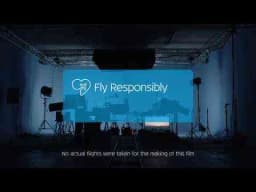
The 'Projections' campaign is a film-medium advertisement created by Euro RSCG Zurich for the Zurich Film Festival, published in Switzerland in September 2011, positioning the festival as an unmissable cultural leisure event through cinematic narrative storytelling.
The Zurich Film Festival occupies a distinct position within the Swiss cultural calendar. Founded in October 2005 by Karl Spoerri, Nadja Schildknecht, and Antoine Monot Jr., and operated by Spoundation Motion Picture GmbH, the festival grew rapidly from a local initiative into an internationally recognised platform for independent and arthouse cinema, according to zff.com. By 2011, ZFF had established a new festival centre at Sechseläutenplatz, marking a concrete phase of institutional and physical expansion.
Against that backdrop of institutional ambition, Euro RSCG Zurich developed 'Projections' as a single-asset film campaign — a deliberate creative choice that mirrors the festival's own medium. The campaign speaks directly to Switzerland's recreation and leisure audience, inviting prospective attendees to experience Zurich not merely as a financial centre but as a city animated by world-class cinema. The Golden Eye, which has functioned as ZFF's symbol since the festival's launch, frames the brand identity within which the 'Projections' creative operates. Nadja Schildknecht, serving as managing director and festival management lead, and Barbara Furrer, overseeing marketing, sponsoring and events, represented the client relationship on the ZFF side. The campaign earns a Clapboard Score of 61 out of 100, reflecting competent craft within a narrowly scoped single-medium execution.
Euro RSCG Zurich identified a core strategic tension at the heart of the Zurich Film Festival's communications challenge. The festival competes for audience attention not only within Switzerland's recreation and leisure sector but against globally recognised film events that command far greater institutional resources. The Berlin International Film Festival, known as Berlinale, operated on an annual budget of €19.5 million in 2011, including €6.5 million in institutional funding from Germany's federal government, according to publicly available Berlinale financial records. The Toronto International Film Festival reported total revenue of C$32.07 million for its 2011 edition, according to TIFF's own published financial statements. Against peers of that scale, ZFF's positioning required precision rather than volume.
The strategic response was to use the festival's own medium — film — as the advertising medium. This alignment between message and channel is a well-established principle in cultural marketing, and Euro RSCG's decision to produce a single, crafted film asset rather than a dispersed multi-channel campaign reflects a deliberate focus on depth over reach. In Switzerland, where cultural event attendance sits within a competitive leisure landscape alongside theatre, opera, and international music festivals, the ability to signal quality through form is particularly important. The 'Projections' campaign addresses the Switzerland market's educated, culturally engaged leisure consumer directly, using narrative film language as both its subject and its method. The Swiss recreation and leisure sector rewards cultural credibility, and a festival campaign that itself demonstrates cinematic sensibility makes an implicit argument for the quality of the programme it promotes.
Director Sebastian Harms led the production of 'Projections', working alongside director of photography Tobias Dengler to shape a film that carries visible cinematic intent. The production was handled by Boutiq, with sound design by Federico Bettini completing the creative team's contribution to the final asset. Creative direction for the campaign was shared by Axel Eckstein and Frank Bodin, two figures whose involvement signals the seniority Euro RSCG Zurich committed to this brief. Art direction was led by Christina Wellnhofer, while copywriting responsibilities were shared between Ivan Madeo and Lars Haensell.
The decision to produce a single film asset rather than an extended suite of executions concentrates the creative effort into one resolved piece of work. In festival advertising, where the subject is cinema itself, this structural choice carries its own argument: the campaign earns credibility by meeting its audience on their own aesthetic terms. The cinematographic craft attributed to Tobias Dengler and the narrative coherence steered by Sebastian Harms suggest a production approach that prioritises atmosphere and suggestion over direct product messaging — a register well suited to the Switzerland leisure and recreation market, where cultural advertising tends to speak to sensibility rather than transaction.
Federico Bettini's sound design is a dimension of the campaign that deserves particular attention. In a single-asset film execution, sound functions as an equal creative partner to image, and the involvement of a credited sound designer — rather than licensed music alone — indicates an investment in the total sensory experience of the work. For a festival whose identity is built on the emotional power of cinema, this is a structurally coherent creative decision.
No verified performance data for the 'Projections' campaign is publicly available. No published business results, effectiveness studies, or media measurement reports have been identified, and no verified awards are recorded across the Cannes Lions, Effies, One Show, D&AD, Clio, Webby, or WARC databases for this campaign.
Structural analysis offers a reasonable substitute for absent metrics. A single-film execution for a cultural leisure institution in Switzerland operates within a context where awareness and perception are the primary currency. The campaign's formal alignment — using cinematic film to advertise a film festival — creates a self-reinforcing logic that requires no supplementary explanation. For a festival that by 2011 had already established a new physical home at Sechseläutenplatz and was competing for international cultural relevance against far better-resourced events, 'Projections' represents a proportionate response: focused, craft-led, and tonally consistent with the ZFF brand identity as documented at zff.com.
The Clapboard Score of 61 out of 100 reflects this reading. The campaign demonstrates genuine creative coherence and a disciplined strategic rationale, but the absence of any documented multi-platform amplification, measurable outcomes, or industry recognition limits the score's upper range. What 'Projections' achieves is a credible articulation of the Zurich Film Festival's cultural ambition in the Switzerland recreation and leisure market — delivered through a medium that is, by definition, the festival's own.
'Projections' is a film-medium advertising campaign created by Euro RSCG Zurich for the Zurich Film Festival, published in Switzerland in September 2011. It comprises a single cinematic film asset designed to position the festival within Switzerland's recreation and leisure market by using narrative film as both the medium and the message.
Sebastian Harms directed 'Projections', with Tobias Dengler as director of photography and Federico Bettini handling sound design. The campaign was produced by Boutiq and created under the creative direction of Axel Eckstein and Frank Bodin at Euro RSCG Zurich, with art direction by Christina Wellnhofer and copy by Ivan Madeo and Lars Haensell.
No verified awards for 'Projections' are recorded across the Cannes Lions, Effies, One Show, D&AD, Clio, Webby, or WARC databases. The campaign has not been publicly cited in any industry award shortlist or winners list, though it represents a craft-led, strategically coherent execution for Switzerland's recreation and leisure sector.
Euro RSCG Zurich aligned the campaign's medium with its subject by producing a cinematic film advertisement for a film festival. This approach allowed 'Projections' to speak credibly to Switzerland's culturally engaged leisure audience, signalling the quality of the ZFF programme through the quality of the advertising itself rather than through direct promotional messaging.
The Zurich Film Festival was founded in October 2005 by Karl Spoerri, Nadja Schildknecht, and Antoine Monot Jr., and is operated by Spoundation Motion Picture GmbH, according to zff.com. By the time 'Projections' was produced in 2011, ZFF had established a new festival centre at Sechseläutenplatz, marking a period of significant institutional growth in Switzerland.
'Projections' receives a Clapboard Score of 61 out of 100. The score reflects genuine creative coherence and strategic alignment between medium and message, tempered by the absence of documented multi-platform activity, measurable business outcomes, or industry recognition across major awards bodies for this Switzerland leisure campaign.
.webp)
Creative Collaboration Platform: The Backbone of Modern Creative WorkWhat is a creative collaboration platform?Clapboard defines a creative collaboration platform as the operational core for today’s distributed creative teams. This is not a collection of digital collaboration tools stitched together; Clapboard’s system


Understanding the Creative Production MarketplaceWhat is a Creative Production Marketplace?Clapboard defines a creative production marketplace as a structured ecosystem where brands, agencies, and production talent converge to execute video, advertising, and branded content at scale. Unlike the legacy agency or freelanREAD FULL ARTICLE

The Urgent Need for a Creative Production Operating SystemWhy Traditional Creative Production Models Break DownClapboard sees the creative production landscape shifting under pressure. Content velocity is no longer a buzzword—it’s a mandate. Modern advertising demands relentless output across dozens of channels, each wREAD FULL ARTICLE