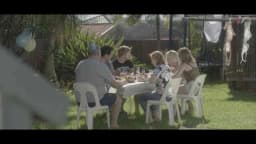
Queer Lisboa's 2011 Cars, Forest, Pilots campaign by Fuel Lisboa promoted the festival's 15th edition through three film executions built around the theme of

Queer Lisboa 15 and the Transgression Campaign That Tried to Mainstream Queer Cinema in Portugal
Queer Lisboa's 2011 campaign, Cars, Forest, Pilots, is a three-execution film campaign created by Fuel Lisboa to promote the 15th edition of the Lisbon gay and lesbian film festival, using the theme of Transgression to reframe queer cinema as a mainstream leisure and cultural event in Portugal.
Published in Portugal in September 2011, the campaign arrived at a significant milestone for the festival. Queer Lisboa 15 marked fifteen years of the event presenting queer cinema to Portuguese audiences, screening feature films and documentaries produced in 2010 and 2011, with competitive sections across multiple categories. The three executions — titled Cars, Forest, and Pilots — were released as short film spots, with the Car and Pilots videos published on September 9, 2011, according to records documented across latinspots.com and youtube.com. Each execution operated as a self-contained narrative, collectively forming a campaign identity held together by the festival's annual thematic keyword: Transgression.
The strategic ambition behind the campaign was explicitly broader than audience retention. As reported by media-marketing.com, the creative brief directed Fuel Lisboa to help transform Queer Lisboa from a niche community event into a festival with mainstream cultural recognition in Portugal. This objective shaped every creative and tonal decision across the three films. Rather than addressing an existing LGBT audience with insider language, the campaign sought to position attendance at Queer Lisboa 15 as a leisure and travel choice available to any culturally engaged viewer. In the context of Portugal's arts and leisure calendar for autumn 2011, that was an assertive strategic claim. The campaign carries a Clapboard Score of 63 out of 100, reflecting creative ambition that is legible and purposeful, if not fully resolved in its execution across all three films.
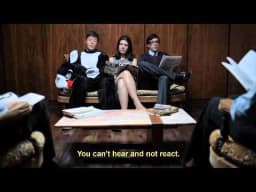
Fuel Lisboa identified a clear tension at the heart of the Queer Lisboa brief. The festival had reached its 15th edition with an established but bounded audience, and growth required a repositioning that would make queer cinema feel like a natural part of Portugal's mainstream leisure and arts landscape rather than a specialist subcultural event. The word Transgression did the strategic work of bridging those two positions: it carried enough cultural edge to remain authentic to the festival's identity while being sufficiently cinematic and universal to invite audiences who might not have considered Queer Lisboa part of their recreational calendar.
The global context for this strategy was not trivial. The LGBT leisure and travel market was estimated at approximately US$142 billion in 2011 and projected to approach US$165 billion in 2012, according to Pride Insights, implying a growth rate substantially above overall international tourism, which expanded at approximately four to five percent in the same period, according to hosteltur.com. This distinction matters because it signals that culturally oriented LGBT events, including film festivals, were operating in an expanding rather than contracting market environment, even if no verified dataset specifically quantifies the advertising category for international queer film festivals, as noted by cabidigitallibrary.org. In Portugal, that broader market energy provided a supportive backdrop for Queer Lisboa's ambition to grow beyond its core constituency.
Within the Portuguese film festival landscape, Queer Lisboa competed not only with other specialist festivals for audience attention but also with mainstream leisure and entertainment options available to Lisbon audiences across any given autumn weekend. Festivals such as IndieLisboa and DocLisboa represent the kind of culturally engaged competitor drawing similar demographics. Against that competitive context, the Cars, Forest, Pilots campaign needed to make Queer Lisboa feel experientially distinct and worth a deliberate leisure choice — which is precisely what the Transgression framework was constructed to achieve.
Pau de la Sierra directed all three executions in the Cars, Forest, Pilots campaign. The campaign was produced by Sync, with television production overseen by Miguel Barbosa, and music and sound handled by Display, also credited as Dizplay, according to records documented at latinspots.com and Ftp Bestadsontv. Creative direction was shared between Marcelo Lourenço and Pedro Bexiga, the Fuel Lisboa team who would continue working with Queer Lisboa across multiple subsequent editions of the festival, as documented by latinspots.com, establishing a creative relationship that lasted at least six years.
The structural decision to produce three distinct film executions rather than a single hero spot reflects a deliberate narrative strategy. Each title — Cars, Forest, Pilots — evokes a setting or a protagonist type rather than an explicit festival message. This approach places the viewer inside a scene before any institutional communication occurs, allowing the theme of Transgression to operate through implication and visual narrative rather than declaration. For a festival audience in Portugal that already had some familiarity with Queer Lisboa, this would read as sophistication. For a new or mainstream leisure audience, it would function as intrigue — a reason to ask what kind of event generates this kind of filmmaking as its promotional material.
De la Sierra's direction, working with the sound design choices of Display, gave the three spots a tonal consistency that functions as a campaign system even when each execution stands alone. The short film format itself was a meaningful choice in 2011: producing genuinely cinematic promotional material for a cinema festival created a self-referential argument for the quality of the programming on offer. Production credits for the precise cinematographer and additional crew on Cars, Forest, Pilots are not publicly documented beyond the named roles recorded at latinspots.com and ftp.bestadsontv.com.
No verified performance data for the Cars, Forest, Pilots campaign is publicly available. No attendance figures attributable specifically to the campaign, no documented media reach numbers, and no independently verified awareness or conversion metrics for Queer Lisboa 15 have been recorded in accessible sources. What can be assessed is the structural effectiveness of the campaign's approach against the strategic brief it was designed to answer.
The decision to frame the festival through the word Transgression and to express that frame through three separate, cinematically confident short films gave Queer Lisboa a promotional presence in Portugal that was proportional to its mainstream ambition. The campaign functioned as a proof of concept: a festival serious enough about cinema to make genuinely directed short films as its advertising was implicitly serious enough to deserve a mainstream leisure audience's attention. That structural logic is sound, and it explains the continued relationship between Fuel Lisboa and Queer Lisboa documented across subsequent festival editions in 2013, 2014, 2016, and 2017, as recorded by latinspots.com — an agency-client relationship that itself signals confidence in the campaign's direction.
The Clapboard Score of 63 out of 100 reflects a campaign that articulates its strategic intent clearly and executes it with craft, but that does not fully resolve the tension between the niche-to-mainstream ambition and the inherent obliqueness of the narrative approach chosen. Three films that prioritise atmosphere over message may have deepened engagement among already interested audiences more effectively than they expanded the festival's reach into new recreational demographics in Portugal. That is not a failure of creativity; it is the characteristic challenge of cultural event advertising, where brand authenticity and broad appeal are genuinely competing demands.
Cars, Forest, Pilots is a three-execution film campaign created by Fuel Lisboa to promote Queer Lisboa 15, the festival's 15th edition, in Portugal in September 2011. The campaign used the festival's annual theme, Transgression, as its creative anchor and was directed by Pau de la Sierra, with production by Sync and music by Display.
Fuel Lisboa created the campaign, with creative direction by Marcelo Lourenço and Pedro Bexiga. Director Pau de la Sierra helmed all three film executions. Production company Sync handled production, TV producer Miguel Barbosa oversaw delivery, and sound design was provided by Display, also credited as Dizplay, according to latinspots.com and ftp.bestadsontv.com.
The strategic brief directed Fuel Lisboa to help move Queer Lisboa beyond its niche community audience toward mainstream cultural recognition in Portugal. As reported by media-marketing.com, the campaign was intended to position the festival as a leisure and cultural destination relevant to any engaged viewer, not only existing LGBT audiences.
Transgression was Queer Lisboa 15's official annual thematic keyword. The theme provided a creative bridge between the festival's authentic queer identity and a broader cinematic language accessible to mainstream leisure audiences in Portugal. It allowed all three film executions to operate through narrative implication rather than direct institutional messaging, according to records at latinspots.com.
Cars, Forest, Pilots holds a Clapboard Score of 63 out of 100. The score reflects clear strategic intent and genuine production craft across the three film executions, while noting that the campaign's atmospheric, oblique narrative approach may have served existing Queer Lisboa audiences more effectively than it expanded the festival's reach to new recreational demographics in Portugal.
.webp)
Creative Collaboration Platform: The Backbone of Modern Creative WorkWhat is a creative collaboration platform?Clapboard defines a creative collaboration platform as the operational core for today’s distributed creative teams. This is not a collection of digital collaboration tools stitched together; Clapboard’s system


Understanding the Creative Production MarketplaceWhat is a Creative Production Marketplace?Clapboard defines a creative production marketplace as a structured ecosystem where brands, agencies, and production talent converge to execute video, advertising, and branded content at scale. Unlike the legacy agency or freelanREAD FULL ARTICLE

The Urgent Need for a Creative Production Operating SystemWhy Traditional Creative Production Models Break DownClapboard sees the creative production landscape shifting under pressure. Content velocity is no longer a buzzword—it’s a mandate. Modern advertising demands relentless output across dozens of channels, each wREAD FULL ARTICLE