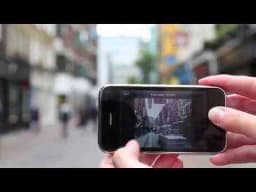
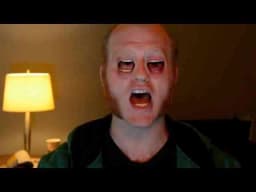
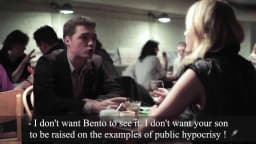
Queer Lisboa's 'Space' campaign, created by Fueld in Portugal in September 2011, used narrative film to promote the 15th edition of the Lisbon queer film

Queer Lisboa Space Campaign Shows Portugal How Film Can Transgress
Queer Lisboa's 'Space' is a film advertisement created by Fueld, published in Portugal in September 2011 to promote the 15th edition of Queer Lisboa, the country's only LGBT-dedicated film festival, using a single cinematic narrative asset anchored to the festival's declared theme of Transgression.
Queer Lisboa holds a singular position in Portuguese cultural life. Founded in 1997 as the Lisbon Gay and Lesbian Film Festival, according to Wikipedia, the festival was renamed Queer Lisboa in 2007 and operated continuously through its 15th edition in September 2011. In Portugal, no other film festival at the time was dedicated exclusively to LGBT-themed cinema, making each annual campaign both a promotional instrument and a cultural statement, according to Latinspots. The 15th edition screened films produced in 2010 and 2011, encompassing feature-film, documentary, and short-film competitions, as documented across festival records and confirmed by MUBI.
The 'Space' campaign channelled the festival's 2011 keyword theme — Transgression — into a single film asset rather than a multi-format advertising spread, according to Culturepub. That constraint was also a creative decision: a festival celebrating queer cinema would naturally speak through cinema itself, according to YouTube. Fueld, operating from Lisbon and also identified in production records as Fuel Lisboa, structured the campaign around one concentrated piece of moving image work, commissioning a production team whose individual credits signal professional ambition well beyond standard event promotion. The campaign was published in September 2011, timed to the festival's opening period, as confirmed by Clapboard's archive. The Clapboard Score for 'Space' stands at 58 out of 100, reflecting a campaign that demonstrates craft and cultural clarity while operating within the constrained budgetary and distribution reality of arts festival advertising in Portugal.
Queer Lisboa was Portugal's only film festival dedicated exclusively to LGBT-themed cinema in 2011, according to Wikipedia. That monopoly on a specific cultural niche shaped the strategic logic of the 'Space' campaign: Fueld did not need to differentiate Queer Lisboa from a competitor festival offering comparable programming in the Portuguese market, but it did need to convert cultural awareness into active attendance and wider visibility for the festival's 15th edition.
In Portugal, the leisure and recreation landscape for niche cultural events in 2011 was defined by competition for audience attention rather than direct programmatic rivalry. DocLisboa, Portugal's international documentary film festival, and IndieLisboa, focused on independent cinema, occupied adjacent space in the Lisbon cultural calendar, each drawing audiences with overlapping interests in non-mainstream film. Queer Lisboa's distinction was specificity: its curatorial identity centred on queer narratives and perspectives, and the festival's declared 2011 theme of Transgression, as documented by festival records and noted by Clapboard, gave Fueld a clear creative brief with genuine cultural weight.
The strategic choice to produce a narrative film advertisement rather than a conventional event promo reflected an understanding of the Queer Lisboa audience. Festivalgoers who travel to Lisbon, or who engage with queer cinema as a form of cultural practice, respond to work that itself demonstrates the language of the medium it promotes. By treating the promotional film as a piece of cinema in its own right — with a director, a director of photography, an editor, and original music — Fueld aligned the campaign's form with the festival's content. The recreation and leisure sector in Portugal, particularly in arts tourism centred on Lisbon, depends on this kind of credibility signalling to motivate engagement from both domestic and international audiences.
Director Pau de la Sierra helmed the 'Space' film for Queer Lisboa, working alongside director of photography Oriol Hosta to give the campaign a visual register that matched the ambition of the festival it represented. Production company Sync managed the physical production, while Bruno Calado served as editor, shaping the raw material into the finished single-asset campaign released in September 2011 in Portugal, as documented in Clapboard's production records.
Music and sound design for 'Space' were handled by Dizplay, a detail that matters in a film where sonic identity carries as much meaning as image. Festival promotional films often treat music as atmospheric filler; the decision to assign sound design to a named collaborator rather than license generic cues signals that Fueld and the production team understood audio as a narrative instrument. Creative directors Marcelo Lourenço and Pedro Bexiga oversaw the work from the agency side, with agency producers Miguel Barbosa, Pedro Silva, and Rita Santos managing production logistics, according to Clapboard's credits documentation.
The campaign's creative architecture rested on a single film asset — a disciplined choice given that the Transgression theme invited expansive interpretation. Concentration of creative energy into one piece of work, rather than dispersal across formats, is a hallmark of campaigns that trust their central idea. For Queer Lisboa's 15th edition, the theme of Transgression offered both a conceptual frame and a permission structure: the film could operate at the edge of conventional festival advertising precisely because the festival itself celebrated work that challenged norms. Shots.net's recognition of the campaign in international creative circles suggests that the production achieved sufficient distinction to travel beyond the Portuguese market and register with a global creative industry audience, a meaningful result for an arts festival campaign working within Portugal's recreational and leisure sector.
No verified performance data for the 'Space' campaign is publicly available. Attendance figures for Queer Lisboa's 15th edition, media reach, or conversion metrics from the September 2011 campaign have not been published or attributed to a named source, and none are fabricated here.
Structural analysis, however, offers a clear picture of what the campaign was built to do and how well its architecture served those goals. The decision to produce a single narrative film asset for a film festival is self-referential in a way that generates credibility with the target audience. In Portugal's cultural leisure market, where Queer Lisboa operated without a direct competitor in the LGBT cinema space, the campaign's job was not conquest of market share but deepening of cultural legitimacy and festival visibility.
The longevity of the Fueld and Queer Lisboa creative relationship provides indirect evidence of the campaign's effectiveness. According to Clapboard's archive, Fueld — operating as Fuel Lisboa — returned to create subsequent campaigns for the festival, including 'Pride Heart' in September 2013 and 'Coming Out' in September 2014, with Marcelo Lourenço and Pedro Bexiga continuing as creative directors across all three. Agencies do not retain festival clients across multiple years, particularly in the resource-constrained Portuguese arts sector, without demonstrating results that justify continued investment. The 'Space' campaign's Clapboard Score of 58 out of 100 reflects a work that demonstrates genuine craft and strategic coherence, held back from higher distinction by the limited distribution reach inherent to single-market arts festival advertising and the absence of documented audience impact data.
The 'Space' campaign is a narrative film advertisement created by Fueld for Queer Lisboa, published in Portugal in September 2011. It promoted the festival's 15th edition under the theme of Transgression using a single cinematic asset directed by Pau de la Sierra and produced by Sync in Lisbon.
Pau de la Sierra directed the 'Space' film for Queer Lisboa in 2011, according to Clapboard's production records. Oriol Hosta served as director of photography, Bruno Calado edited the film, and Dizplay handled music and sound design, with creative direction by Marcelo Lourenço and Pedro Bexiga at Fueld.
Queer Lisboa's 15th edition carried the declared keyword theme of Transgression, as documented in festival records. The 2011 programme screened films produced in 2010 and 2011 across feature-film, documentary, and short-film competition categories, running through September 2011 in Lisbon, Portugal.
Fueld, also identified in production records as Fuel Lisboa, created the 'Space' campaign for Queer Lisboa. The Lisbon-based agency went on to produce further campaigns for the festival in 2013 and 2014, with creative directors Marcelo Lourenço and Pedro Bexiga leading the work across all three editions.
Queer Lisboa was Portugal's only film festival dedicated exclusively to LGBT-themed cinema in 2011, according to Wikipedia. Adjacent festivals including DocLisboa and IndieLisboa occupied comparable cultural space but without the same curatorial specificity, giving Queer Lisboa a distinct positioning that shaped the strategic logic of the 'Space' campaign.
The Clapboard Score for Queer Lisboa's 'Space' campaign is 58 out of 100. The score reflects genuine production craft and cultural strategic clarity, tempered by the single-market arts festival context in Portugal and the absence of publicly documented audience performance or reach data from the September 2011 release.
.webp)
Creative Collaboration Platform: The Backbone of Modern Creative WorkWhat is a creative collaboration platform?Clapboard defines a creative collaboration platform as the operational core for today’s distributed creative teams. This is not a collection of digital collaboration tools stitched together; Clapboard’s system


Understanding the Creative Production MarketplaceWhat is a Creative Production Marketplace?Clapboard defines a creative production marketplace as a structured ecosystem where brands, agencies, and production talent converge to execute video, advertising, and branded content at scale. Unlike the legacy agency or freelanREAD FULL ARTICLE

The Urgent Need for a Creative Production Operating SystemWhy Traditional Creative Production Models Break DownClapboard sees the creative production landscape shifting under pressure. Content velocity is no longer a buzzword—it’s a mandate. Modern advertising demands relentless output across dozens of channels, each wREAD FULL ARTICLE