 ARCHIVE
Zaxby's Zensation Zalad Returns With a '90s Nostalgia Play
Zaxby's Zensation Zalad Returns is a three-asset film campaign created by Knoxville-based agency Tombras and published in the United States in August 2019, promoting the limited-time comeback of the Zensation Zalad alongside the introduction of the new Zensation Fillet Sandwich across Zaxby's fast-casual restaurant network.
The campaign launched on August 8, 2019, and ran through a promotional window closing October 20, 2019 — approximately ten weeks in total, according to documentation published on ispot.tv and as recorded in Clapboard's archive. That promotional discipline gave the creative work a clear deadline urgency, reinforcing the limited-time nature of the offer. The campaign was submitted to Clapboard by Account Director Lisa Maskey and carries a Clapboard Score of 63 out of 100.
Zaxby's operated approximately 900 locations at the time of the campaign's launch, making the Zensation Zalad's return a meaningful systemwide event rather than a regional test. The brand's strategic objective was twofold: reward an existing devoted audience that had been vocally requesting the product's return and simultaneously introduce a new menu item — the Zensation Fillet Sandwich — under the same flavour platform. In the United States, where fast-casual chains compete intensely for limited-time offer attention, pairing a known returning item with a new one is a proven mechanism for driving trial across both established and lapsed customers. The campaign's film medium and its '90s-inflected creative treatment gave Zaxby's a narrative vehicle that was immediately legible to its core audience while standing apart from the category's typical product-forward executions.
Zaxby's creative strategy originated directly from observable customer behaviour. According to Adweek, the campaign's central insight came from customers repeatedly asking when the Zensation Zalad would return — a signal that the product held genuine emotional equity rather than simply transactional appeal. Tombras president Dooley Tombras stated, as reported by Adweek, that the campaign recognised the Zensation Zalad's incredibly devoted fan base and expressed Zaxby's saucy side. That framing positioned the campaign as a response to demand rather than a conventional promotional push, which is a meaningful distinction in fast-casual advertising.
The competitive context in the United States in 2019 was formidable. The US chicken restaurant segment grew 9.9% in sales during 2019 while unit count grew just 2.3%, according to Restaurant Business Online — a spread that signals intensifying same-store pressure rather than simple network expansion. Chick-fil-A reported 2019 US system sales of $11.32 billion, according to QSR Magazine, while Zaxby's reported $1.886 billion in 2019 US system sales, also according to QSR Magazine. Against Chick-fil-A's scale and against Popeyes, whose chicken sandwich launch in August 2019 generated substantial earned media across the United States, Zaxby's needed a campaign that could generate conversation without depending on viral spectacle. The '90s nostalgia framework served that function by anchoring the creative in cultural familiarity rather than competitive point-scoring. Breaded chicken sandwich sales reached approximately $2.3 billion through July 2019, up more than 3% from 2018, according to data cited by QSR Magazine — a market environment in which Zaxby's introduction of the Zensation Fillet Sandwich was commercially timed with clear category momentum behind it.
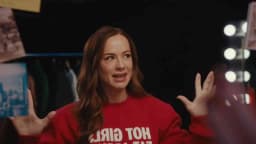
Tombras built the Zensation Zalad Returns creative around a specific and committed aesthetic: the visual and cultural language of the 1990s. According to Adweek, the campaign deployed shoulder pads, frosted tips, denim, and period pop culture references as its primary expressive vocabulary, constructing a tongue-in-cheek narrative world in which the Zensation Zalad's absence had been felt as keenly as any cultural moment of that decade.
The film execution leaned into the conceit fully rather than using nostalgia as surface decoration. The three-asset structure allowed Tombras to develop the comedic narrative across multiple executions, giving the campaign room to build character and internal logic rather than relying on a single spot to carry all the creative weight. This approach reflects a production strategy suited to a fast-casual brand with a loyal audience — depth of engagement for existing fans, accessibility for new ones. Adweek described the campaign as playful and easy to digest, while also noting that the nostalgia approach may generate more conversation than sustained viewing interest, a fair structural observation about the trade-offs inherent in period-specific creative work.
Production credits for the Zensation Zalad Returns campaign beyond the agency and account leadership are not publicly documented at the level of director or individual creative director. The campaign was submitted to Clapboard by Account Director Lisa Maskey, and Tombras agency president Dooley Tombras served as the named spokesperson for the campaign's strategic intent, as reported by Adweek. The work sits within a broader Zaxby's creative history that includes celebrity-supported executions — Wayne Brady and Leigh-Allyn Baker appeared in Zaxby's television commercials as early as 2013, according to documentation on AdForum — but the Zensation Zalad Returns campaign chose ensemble cultural reference over individual celebrity as its organising principle.
ARCHIVENo verified performance data for the Zensation Zalad Returns campaign is publicly available in terms of sales lift, store traffic, or media reach metrics attributable directly to this creative work. The campaign does not appear to have received formal industry award recognition in documented public records.
Structurally, however, the campaign demonstrates several characteristics associated with effective limited-time offer advertising in the United States fast-casual category. The approximately ten-week promotional window, documented across ispot.tv and Clapboard's archive, is tightly aligned with consumer decision cycles for restaurant visits — long enough to build frequency but short enough to preserve scarcity signalling. The three-asset film structure gave media planners flexibility across broadcast and digital placements without requiring a single execution to carry the full narrative burden. The campaign's grounding in documented fan demand — customers publicly asking for the Zensation Zalad's return, including through channels such as Reddit — gave the creative a pre-existing audience with demonstrated intent, reducing the persuasion distance the campaign needed to travel. Adweek's characterisation of the work as playful and tongue-in-cheek, while noting potential limits on sustained viewing engagement, suggests the campaign was better calibrated for earned conversation among loyal customers than for broad acquisition. Within that narrower objective, the strategic and creative choices are coherent. The Clapboard Score for this campaign is 63 out of 100, reflecting competent execution of a well-defined brief in a highly competitive US fast-casual market environment.
Zaxby's Zensation Zalad Returns was a limited-time film campaign created by Tombras in August 2019. It promoted the comeback of the Zensation Zalad and introduced the Zensation Fillet Sandwich. The campaign ran for approximately ten weeks across the United States, using a '90s nostalgia creative treatment.
Tombras, a Knoxville-based advertising agency, created the Zensation Zalad Returns campaign. Agency president Dooley Tombras served as the named spokesperson for the campaign's strategic intent, as reported by Adweek. Account Director Lisa Maskey submitted the campaign to Clapboard's global advertising archive.
Tombras built the campaign around 1990s visual culture. According to Adweek, the execution featured shoulder pads, frosted tips, denim, and period pop culture references. The insight originated from customers repeatedly asking when the Zensation Zalad would return, making fan demand the campaign's strategic foundation.
The promotional window ran approximately ten weeks, from August 8 to October 20, 2019, according to documentation on ispot.tv and Clapboard's archive. This duration aligned with typical fast-casual limited-time offer cycles in the United States, balancing frequency-building against the scarcity signal the limited return required.
Zaxby's reported $1.886 billion in 2019 US system sales, according to QSR Magazine, competing in a segment where Chick-fil-A held $11.32 billion. The US chicken segment grew 9.9% in sales that year, per Restaurant Business Online, making a loyalty-focused nostalgia campaign a defensible strategy against larger rivals.
The Zensation Zalad Returns campaign holds a Clapboard Score of 63 out of 100. This score reflects competent execution of a clearly defined limited-time offer brief in the competitive United States fast-casual market. The three-asset film structure and nostalgia-driven narrative demonstrate coherent strategic and creative alignment.
.webp)
Creative Collaboration Platform: The Backbone of Modern Creative WorkWhat is a creative collaboration platform?Clapboard defines a creative collaboration platform as the operational core for today’s distributed creative teams. This is not a collection of digital collaboration tools stitched together; Clapboard’s system


Understanding the Creative Production MarketplaceWhat is a Creative Production Marketplace?Clapboard defines a creative production marketplace as a structured ecosystem where brands, agencies, and production talent converge to execute video, advertising, and branded content at scale. Unlike the legacy agency or freelanREAD FULL ARTICLE

The Urgent Need for a Creative Production Operating SystemWhy Traditional Creative Production Models Break DownClapboard sees the creative production landscape shifting under pressure. Content velocity is no longer a buzzword—it’s a mandate. Modern advertising demands relentless output across dozens of channels, each wREAD FULL ARTICLE