YouTube's Karate Prank NYC, created by Thinkmodo in April 2018, staged a live martial-arts spectacle on NYC streets to launch the Cobra Kai series on YouTube

YouTube and Thinkmodo Take Cobra Kai to the Streets of New York
YouTube's Karate Prank NYC is a 2018 experiential campaign created by New York agency Thinkmodo to promote the launch of Cobra Kai, a YouTube Premium original series continuing The Karate Kid franchise, by staging a surprise live martial-arts confrontation on the streets of New York City that shocked and delighted unsuspecting passersby.
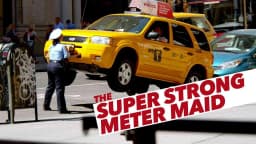
Published in April 2018 in the United States, the activation placed actors in a staged street brawl that appeared to destroy a street lamp, a motorcycle, and a fire hydrant in full public view. The spectacle drew immediate reactions from New Yorkers who had no warning the event was scripted, generating the kind of authentic surprise that no studio production can replicate. The campaign sits squarely within the media and entertainment industry category and was executed as a single, shareable experiential asset designed to travel far beyond the New York sidewalk where it originated.
The strategic purpose was unambiguous. YouTube Premium needed a launch moment for Cobra Kai that would cut through the crowded streaming landscape of 2018 and signal to an audience that grew up with The Karate Kid that the franchise was returning with genuine creative ambition. By taking the campaign into the physical world rather than confining it to a trailer or a social post, YouTube and Thinkmodo created a media event that earned attention rather than purchasing it. The resulting video achieved 14 million views, demonstrating the reach that a well-executed experiential stunt can generate when the creative idea is strong enough to demand sharing. Clapboard Score: 82/100.
Thinkmodo built the Karate Prank NYC strategy on a clear consumer insight. In the United States, audiences had grown deeply sceptical of traditional entertainment advertising by 2018, and a straightforward promotional trailer for a streaming series risked disappearing into a feed already saturated with competing content. U.S. digital-video advertising reached a growing but fiercely contested market, according to eMarketer, with major streaming competitors including Netflix and Amazon Prime Video commanding significant subscriber attention and advertising noise of their own. YouTube Premium was a newer entrant to the premium original content space, and Cobra Kai needed an introduction that felt like an event rather than a commercial.
The experiential medium answered that problem directly. By staging a real-world prank, Thinkmodo guaranteed a reaction that no actor could perform on demand — the genuine shock of a New Yorker watching two men apparently demolish street infrastructure in broad daylight. That authentic human response became the content itself, bypassing the credibility gap that polished advertising typically faces. The creative rationale also exploited the deep nostalgia equity built into The Karate Kid franchise. Ralph Macchio and William Zabka reprising their roles in an unannounced public setting transformed a streaming launch into a cultural moment, connecting a new platform product to decades of audience affection.
In the United States in 2018, global online-video advertising grew at a rate significantly faster than overall digital advertising, according to MAGNA, reflecting audience migration toward video-first consumption. YouTube's decision to use an experiential stunt as the upstream spark for organic video distribution was strategically coherent: the street activation existed to produce a video designed to perform on the very platform it was advertising. The loop between medium and message was intentional and precise.
Michael Krivicka directed, produced, and edited the Karate Prank NYC activation, working alongside James Percelay, who served as co-creative director, co-director, and co-producer on the campaign. Together, Krivicka and Percelay are the founding creative force behind Thinkmodo, and their fingerprints are visible in every structural decision the campaign makes. The stunt required the kind of pre-production precision that experiential work demands above almost any other medium: a street environment cannot be re-shot, and a public reaction cannot be manufactured in post-production.
Actors Steven Frieder and Drew Schrum performed the staged karate confrontation, executing the destruction of the street lamp, motorcycle, and fire hydrant with the physical conviction necessary to generate authentic shock from pedestrians who had no reason to expect a scripted performance. The presence of Ralph Macchio and William Zabka, reprising their roles from The Karate Kid as reported by Bleeding Cool, elevated the stunt from a viral prank into a franchise reveal, giving the video a second layer of value for viewers encountering it after the fact online.
Producer Sam Pezzullo managed the on-ground logistics of the New York City activation, a role that in street-level experiential work carries creative weight equal to any studio production role. Camera operators Nathan Lynch, Andrew Robertson, Carrie Stalk, and Gunsel Pelivan captured the public reactions from multiple angles simultaneously, a technical necessity when the subject of the footage — the spontaneous response of real people — cannot be choreographed or repeated. The editing choices Krivicka made in post reflect an understanding that the emotional rhythm of the prank video is the product: surprise, confusion, delight, and disbelief, sequenced to maximise shareability on the very platform the campaign was built to promote.
No verified third-party performance data for the Karate Prank NYC campaign beyond video view count is publicly available at this time. The prank video generated 14 million views, a figure that establishes the activation as a successful earned-media event by any reasonable standard for an experiential campaign of this type and scale. For a stunt that existed as a single media asset produced in one location on one day in New York City, reaching 14 million viewers represents a substantial amplification of the original investment.
The campaign also received coverage from Adweek, which noted YouTube's accompanying karate-themed interface changes as part of the broader Cobra Kai launch effort, according to Brand Knew. That editorial attention extended the campaign's reach beyond the video itself and into trade and consumer press, reinforcing the earned-media logic that Thinkmodo built the strategy around. In the United States, where streaming competition was intensifying rapidly in 2018, the combination of a viral stunt, celebrity talent, franchise nostalgia, and coordinated platform theming gave YouTube Premium a launch moment with genuine cultural texture.
Structurally, the campaign demonstrates the compounding value of matching medium to message with precision. An experiential activation designed to produce a shareable video for a video platform, promoting a series about physical confrontation, starring the original cast of the film the series continues — every element reinforces every other element. That structural coherence is reflected in the Clapboard editorial assessment, which rates the campaign at 82 out of 100, recognising both the creative ingenuity of the execution and the strategic clarity of the brief it answered.
YouTube's Karate Prank NYC was a 2018 experiential campaign by Thinkmodo promoting the Cobra Kai series on YouTube Premium. The activation staged a surprise karate street fight in New York City, featuring actors appearing to destroy a street lamp, motorcycle, and fire hydrant, generating authentic public reactions that were captured and released as a shareable video.
Thinkmodo created the Karate Prank NYC campaign for YouTube in April 2018. Michael Krivicka served as creative director, director, producer, and editor. James Percelay co-directed and co-produced. Sam Pezzullo produced the on-ground activation in New York City, with camera operators Nathan Lynch, Andrew Robertson, Carrie Stalk, and Gunsel Pelivan capturing the footage.
The Karate Prank NYC video generated 14 million views. That figure represents substantial earned-media amplification for a campaign built around a single experiential activation filmed on one day in New York City, demonstrating the distribution potential of a well-constructed street stunt designed specifically for a video platform audience.
The campaign promoted Cobra Kai, a YouTube Premium original series continuing The Karate Kid franchise. Ralph Macchio and William Zabka reprised their roles from the original films as part of the activation. The series continuation was the creative and strategic anchor for the entire Karate Prank NYC experiential concept.
YouTube chose experiential marketing to cut through a saturated streaming advertising landscape in the United States. In 2018, competitors including Netflix and Amazon Prime Video commanded significant audience attention. A live street stunt generated authentic public reactions and earned media coverage that a conventional trailer or social campaign would not have produced with comparable cultural impact.
The Karate Prank NYC campaign received a Clapboard Score of 82 out of 100. The score reflects the campaign's strong structural coherence — an experiential stunt designed to produce shareable video for a video platform — alongside the creative strength of combining celebrity franchise talent with genuine public surprise in a live New York City environment.
.webp)
Creative Collaboration Platform: The Backbone of Modern Creative WorkWhat is a creative collaboration platform?Clapboard defines a creative collaboration platform as the operational core for today’s distributed creative teams. This is not a collection of digital collaboration tools stitched together; Clapboard’s system


Understanding the Creative Production MarketplaceWhat is a Creative Production Marketplace?Clapboard defines a creative production marketplace as a structured ecosystem where brands, agencies, and production talent converge to execute video, advertising, and branded content at scale. Unlike the legacy agency or freelanREAD FULL ARTICLE

The Urgent Need for a Creative Production Operating SystemWhy Traditional Creative Production Models Break DownClapboard sees the creative production landscape shifting under pressure. Content velocity is no longer a buzzword—it’s a mandate. Modern advertising demands relentless output across dozens of channels, each wREAD FULL ARTICLE