Netflix and whoisthebaldguy launched the Slumberland Dreamworld Hidden Camera Stunt in the United States in November 2022, transporting unsuspecting

How Netflix Turned Slumberland Into a Live Dreamworld Experience
Netflix launched the Slumberland Dreamworld Hidden Camera Stunt in the United States in November 2022, placing unsuspecting participants inside a fully practical, animatronic environment inspired by the streaming film Slumberland to generate organic emotional reactions and drive awareness for the title's debut on the platform.
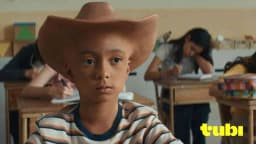
The campaign, created by whoisthebaldguy for Netflix and published on November 21, 2022, according to the Clapboard Ad Archive, operates as an integrated narrative campaign built around a single experiential activation. Participants believed they had volunteered for a Casper bedtime-story sleep study. What followed was an immersive transport into a physical dreamworld drawn directly from the visual language of Slumberland, the family adventure film that premiered on Netflix on November 18, 2022, as reported by Wikipedia. The execution captured genuine, unscripted reactions — tears, disbelief, and wonder — that became the raw material of the campaign's video content.
Slumberland, directed by Francis Lawrence and starring Jason Momoa alongside Marlow Barkley, follows a daring young orphan who journeys through a land of dreams alongside a larger-than-life outlaw in search of a pearl that will grant her greatest wish, per Netflix. The campaign's central question — what if we could transport people into the dreamworld of Slumberland — is answered not through digital production but through physical craft, a strategic choice that aligns the experiential mechanics with the film's fantastical, tactile storytelling. Clapboard rates this campaign 73 out of 100, recognising its creative ambition and emotional effectiveness while noting limited measurable distribution beyond the YouTube activation.
 ARCHIVE
Netflix entered the Slumberland launch in a competitive United States streaming market where original content differentiation had become the primary battleground for subscriber retention. According to Parrot Analytics, Netflix's global demand share for original programming had declined from 55.7% in the first quarter of 2020 to 41.2% by the second quarter of 2022, signalling that the platform could no longer rely on catalogue dominance alone to sustain attention. In the United States specifically, the pressure was acute: per Business Insider, Netflix held approximately 21% of global SVOD competitive share in the third quarter of 2022, ahead of Amazon Prime Video at 19% and Disney Plus at 15%, but the margin was narrowing.
Against that backdrop, a conventional streaming promo — trailer plus billboard — carried diminishing returns. whoisthebaldguy's strategy reframes the promotional brief entirely. Rather than telling audiences that Slumberland is a transporting experience, the campaign demonstrates it, recruiting real people as unwitting proof. The hidden-camera mechanic generates authenticity that paid media cannot replicate: the participant's genuine confusion and emotion functions as a third-party endorsement of the film's emotional promise. This positions Netflix not merely as a content distributor but as an entity capable of engineering wonder in the physical world, an aspiration that competitors including Amazon Prime Video have pursued through large-scale experiential stunts but rarely with this degree of intimate, emotional precision.
The campaign's deployment in the United States timed precisely to the film's November 18, 2022 premiere date, per Wikipedia, compresses the awareness-to-availability window and focuses audience curiosity into immediate streaming action — a structural choice that reflects the platform's ongoing priority of converting promotional attention into same-week viewing behaviour.
Robin Chan directed the Slumberland hidden-camera stunt for Netflix. Chan, founder and director of whoisthebaldguy and co-founder and director of Thinkmodo, stated in a post published on LinkedIn on January 14, 2025: "When I directed this stunt for Netflix's Slumberland, it was the only time I ever cried on set. I wasn't the only one. I saw some crew members wipe tears." That admission is itself a creative data point — a production environment that moves its own crew is one calibrated to move a general audience.
The defining production decision is the complete rejection of digital augmentation. Chan stated explicitly: "Everything was done with practical props, sets, and animatronics. No digital tools were used here." In a media landscape where visual effects pipelines dominate large-scale entertainment marketing, that constraint is not a limitation but a philosophy. Practical construction forces the dreamworld to exist at human scale, in real light, with real textures — conditions that a hidden camera can photograph honestly because there is nothing to hide. The participant's reaction is credible precisely because the environment is credible.
The set design draws directly from the visual world of Slumberland as realised on screen by director Francis Lawrence, whose prior credits include The Hunger Games: Catching Fire and Mockingjay, per Collider. That continuity between the film's production design and the stunt's physical environment is not incidental — it ensures that the emotional tone a viewer encounters in the stunt video maps onto what they will find when they open the film on Netflix. The campaign's single media asset, the YouTube video titled Slumberland Dreamworld Hidden Camera Stunt, accumulated 1,823,535 views, 3,234 likes, and 145 comments, according to the Clapboard Ad Archive, metrics that reflect sustained organic interest in the craft rather than a short-lived viral spike.
The Slumberland Dreamworld Hidden Camera Stunt generated 1,823,535 views, 3,234 likes, and 145 comments on YouTube, according to the Clapboard Ad Archive. Those figures represent organic accumulation on a single asset — no paid amplification data is publicly available to contextualise the video's distribution reach beyond the owned Netflix channel.
No verified third-party performance data linking the stunt directly to Slumberland's streaming viewership numbers is publicly available. Netflix does not routinely publish title-level viewership figures correlated with individual campaign activations, which makes attribution analysis for this campaign structurally incomplete. What the available data does confirm is sustained, long-tail engagement: a view count exceeding 1.8 million on a promotional stunt video — rather than a trailer — indicates that the content functioned as entertainment in its own right, not merely as a pathway to the film.
Structurally, the campaign's effectiveness rests on three reinforcing mechanics. The hidden-camera format generates credibility. The practical production generates shareability — audiences who encounter it understand that no digital trickery explains the reactions they are watching. And the emotional intensity documented by Chan's own account of crew members crying on set suggests a production calibrated to produce moments of genuine human resonance, which is the condition most likely to produce organic sharing behaviour in the United States social media environment. No awards recognition for this campaign is documented in publicly available trade press records, though the Clapboard Score of 73 out of 100 reflects the campaign's meaningful creative ambition and emotional execution against the relatively contained scale of its verified distribution data.
The Netflix Slumberland Dreamworld Hidden Camera Stunt is an integrated campaign created by whoisthebaldguy, published in the United States on November 21, 2022. Participants believed they were in a Casper bedtime-story study, then were transported into a physical dreamworld built from practical sets and animatronics to promote the Netflix film Slumberland.
Robin Chan directed the Slumberland hidden-camera stunt. Chan is founder and director of whoisthebaldguy, the agency that created the campaign for Netflix. Chan later noted publicly that the stunt was the only time he cried on set, and that crew members were visibly moved during production, according to a LinkedIn post dated January 14, 2025.
No digital tools were used in the Slumberland dreamworld stunt. Robin Chan stated explicitly that everything was achieved through practical props, sets, and animatronics. That production choice ensured participant reactions were authentic, because the environment they encountered was physically real rather than augmented or composited in post-production.
The Slumberland Dreamworld Hidden Camera Stunt video accumulated 1,823,535 views, 3,234 likes, and 145 comments on YouTube, according to the Clapboard Ad Archive. Those figures reflect organic engagement on a single asset, indicating the content functioned as standalone entertainment rather than a conventional streaming promo requiring paid media support.
Slumberland stars Jason Momoa and Marlow Barkley and was directed by Francis Lawrence, whose prior credits include The Hunger Games: Catching Fire and Mockingjay, per Collider. The film premiered on Netflix on November 18, 2022, three days before the Dreamworld Hidden Camera Stunt campaign was published in the United States.
The Netflix Slumberland Dreamworld Hidden Camera Stunt received a Clapboard Score of 73 out of 100. The score reflects the campaign's strong creative ambition, emotional resonance, and practical production craft, balanced against the relatively limited verified distribution data available publicly for this integrated media campaign in the United States.
.webp)
Creative Collaboration Platform: The Backbone of Modern Creative WorkWhat is a creative collaboration platform?Clapboard defines a creative collaboration platform as the operational core for today’s distributed creative teams. This is not a collection of digital collaboration tools stitched together; Clapboard’s system


Understanding the Creative Production MarketplaceWhat is a Creative Production Marketplace?Clapboard defines a creative production marketplace as a structured ecosystem where brands, agencies, and production talent converge to execute video, advertising, and branded content at scale. Unlike the legacy agency or freelanREAD FULL ARTICLE

The Urgent Need for a Creative Production Operating SystemWhy Traditional Creative Production Models Break DownClapboard sees the creative production landscape shifting under pressure. Content velocity is no longer a buzzword—it’s a mandate. Modern advertising demands relentless output across dozens of channels, each wREAD FULL ARTICLE