World Health Day's Food for Thought campaign, created by Evolution People in Italy in April 2016, used a single digital film to spark nutrition awareness and

How World Health Day's Food for Thought Turned Nutrition Into a Digital Moment
Food for Thought is a digital public interest campaign created by Evolution People for World Health Day, launched in Italy in April 2016, using a single documentary-style media asset to connect the choices people make about food directly to their long-term health and well-being.
The campaign arrived on April 7, 2016, the date on which the World Health Organization observes World Health Day globally each year. That year, according to Who Int, the WHO's official theme was "Beat Diabetes" — a focus that placed nutrition, dietary habits, and preventable disease at the centre of international health discourse. Evolution People, based in Milan, channelled that global conversation into a specifically Italian digital context, producing a campaign designed to prompt genuine reflection rather than deliver a conventional public service announcement.
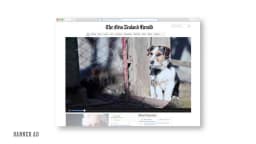
In Italy, the campaign operated through a dedicated digital presence anchored at foodforthought.movie, a platform that enabled direct audience interaction alongside the primary media asset. The strategic decision to concentrate the campaign's creative weight into a single, carefully constructed piece of content reflects a discipline that is increasingly rare in an era of multi-format fragmentation. Rather than spreading its message across numerous executions, Food for Thought committed fully to one vehicle — a move that demanded both creative confidence and executional precision. The Clapboard Score for this campaign is 69 out of 100, reflecting its focused creative approach and measurable digital engagement within the public service category.
 ARCHIVE
Evolution People identified a specific strategic window in Italy's public health calendar. World Health Day, observed annually on April 7, creates a concentrated moment of institutional and media attention around health themes that most nutrition awareness campaigns cannot manufacture independently. By aligning Food for Thought with this date, the agency gave its message structural amplification that purely organic campaigns rarely achieve.
The 2016 WHO theme of "Beat Diabetes" provided direct strategic justification for a campaign centred on healthy eating and nutrition awareness, according to who.int. Diabetes, a condition heavily influenced by dietary behaviour, was at the time a growing public health concern across Europe. The European region of the WHO, as reported by Emro Who Int, has long tracked rising rates of non-communicable diseases linked to poor nutrition, making Italy a contextually relevant market for a campaign of this nature. The thematic connection between the global WHO agenda and Evolution People's creative execution was not incidental — it was the strategic spine of the work.
In the Italian digital public interest space, campaigns of this kind compete less against direct commercial rivals and more against the ambient noise of a crowded content environment. Internationally, comparable nutrition awareness campaigns such as those produced for NHS England and initiatives supported by the European Food Safety Authority have demonstrated that documentary-style storytelling consistently outperforms static informational content in terms of audience retention and emotional engagement. Food for Thought operates within that same creative logic, using the documentary and social experiment format to generate credibility and emotional investment simultaneously, distinguishing it from conventional public service announcements that prioritise information delivery over narrative craft.
Davide Gentile directed and produced Food for Thought, bringing a documentary sensibility to what could have been a straightforward public interest film. The decision to approach the subject through the lens of a social experiment — placing real nutritional choices in front of real people rather than constructing a purely scripted narrative — gave the campaign an authenticity that scripted health communications frequently struggle to achieve.
Digital art direction was handled by Lino Di Maio, whose visual approach shaped the campaign's online presence and ensured that the aesthetic of the film translated coherently into its digital distribution environment. Photography was provided by Silvia Tofani, whose work contributed a visual texture that reinforced the campaign's grounded, observational tone. Web copywriting and data research were led by Chiara Gabriele and Daniele Castrogiovanni, with web development by Francesco Colonna — a full creative and technical stack assembled internally and in collaboration with production partners.
Production of Food for Thought involved four distinct production collaborators: Banjo Eyes Films, Dude, Evolution People itself, and Flaxman Films, according to Clapboard's campaign archive. The involvement of multiple production houses in a single-asset campaign of this scale underlines the ambition behind the execution. Additional credited personnel include Simone Bianchi and Enzo Ciavaglioli, reflecting a production team whose combined expertise spanned both cinematic and digital craft disciplines. The result was a piece of public interest content that wore its educational purpose lightly, prioritising emotional engagement over didactic instruction — a creative choice that separates effective nutrition awareness campaigns from those that inform without connecting.
Food for Thought recorded 154,058 views, 513 likes, and 37 comments, according to Clapboard's campaign archive. For a single-asset digital public interest campaign launched in Italy in April 2016, these figures represent a meaningful organic footprint, particularly given the campaign's reliance on one film rather than a sustained multi-format media investment.
The engagement profile — approximately 0.36% likes-to-views and roughly 0.02% comments-to-views, as recorded in Clapboard's campaign archive — situates Food for Thought within typical ranges for documentary-style public interest content, where passive viewing rather than active interaction is the dominant audience behaviour. The 37 comments are arguably the most telling metric: comment engagement in public health digital content is structurally low, and its presence here indicates that the campaign generated sufficient emotional response to move a portion of its audience from passive consumption to active dialogue.
No verified awards for Food for Thought have been recorded in the Cannes Lions, Effie Awards, The One Show, D&AD, Clio Awards, Webby Awards, or WARC Awards databases. For context, the 2016 Cannes Lions Health and Wellness Grand Prix was awarded to Project Literacy, created by FCB Inferno for Pearson, as reported by publicisgroupe.com — a campaign that similarly used documentary and social purpose framing to achieve international recognition. The structural effectiveness of Food for Thought lies in its single-asset discipline and its precise alignment with World Health Day's global moment, which provided earned institutional relevance that paid media alone cannot replicate.
Food for Thought is a digital public interest campaign created by Evolution People in Italy in April 2016 to mark World Health Day. It used a single documentary-style media asset to raise nutrition awareness and healthy eating habits, reaching over 154,000 views through its dedicated platform at foodforthought.movie.
Evolution People, a Milan-based advertising agency, created Food for Thought for World Health Day 2016. Director and producer Davide Gentile led the creative execution, with digital art direction by Lino Di Maio and photography by Silvia Tofani. Production collaborators included Banjo Eyes Films, Dude, and Flaxman Films.
The WHO theme for World Health Day 2016 was "Beat Diabetes", according to who.int. Food for Thought connected directly to this theme by focusing on nutrition awareness and healthy eating habits, framing dietary choices as central to preventing the non-communicable diseases that the global campaign addressed on April 7, 2016.
Food for Thought recorded 154,058 views, 513 likes, and 37 comments, according to Clapboard's campaign archive. These figures reflect strong organic reach for a single-asset digital public interest campaign in Italy in 2016, with comment engagement indicating the documentary-style film moved a portion of its audience to active dialogue.
No verified awards for Food for Thought have been recorded in the Cannes Lions, Effie Awards, The One Show, D&AD, Clio Awards, Webby Awards, or WARC Awards databases. The campaign's value lies in its measurable public reach and its precise alignment with World Health Day 2016's global nutrition awareness agenda in the Italian market.
.webp)
Creative Collaboration Platform: The Backbone of Modern Creative WorkWhat is a creative collaboration platform?Clapboard defines a creative collaboration platform as the operational core for today’s distributed creative teams. This is not a collection of digital collaboration tools stitched together; Clapboard’s system


Understanding the Creative Production MarketplaceWhat is a Creative Production Marketplace?Clapboard defines a creative production marketplace as a structured ecosystem where brands, agencies, and production talent converge to execute video, advertising, and branded content at scale. Unlike the legacy agency or freelanREAD FULL ARTICLE

The Urgent Need for a Creative Production Operating SystemWhy Traditional Creative Production Models Break DownClapboard sees the creative production landscape shifting under pressure. Content velocity is no longer a buzzword—it’s a mandate. Modern advertising demands relentless output across dozens of channels, each wREAD FULL ARTICLE