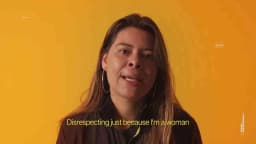
Brastemp Shareding is Whirlpool's 2021 Brazilian campaign by FCB, using a fictitious washing machine to challenge the unequal division of household chores

Brastemp Shareding Turns a Fake Washing Machine Into a Gender Equality Statement
Brastemp Shareding is a May 2021 campaign by Whirlpool's Brastemp brand, created by FCB Brasil, that uses a fictitious washing machine called the Brastemp Shareding Edition to argue that laundry and all household chores belong equally to everyone in the home, not exclusively to women.
Launched in Brazil during May 2021, the campaign carries a single, unambiguous message: household chores are everyone's chores. The creative device is deliberately paradoxical. Brastemp, one of Brazil's most recognised consumer durables brands, announced a new product it had no intention of manufacturing. The Brastemp Shareding Edition washing machine does not exist. Its invention was the point. By framing shared domestic labour as a product feature worthy of a full consumer-electronics launch, FCB Brasil and Brastemp reframed a social injustice as a commercial conversation, one that Brazilians are conditioned to pay attention to.
The campaign was developed in partnership with Think Eva, a consulting firm specialising in gender and diversity strategy in Brazil. Think Eva surfaced the data point that anchors the entire creative argument: women spend, on average, four years of their lives doing laundry alone, according to research commissioned at Brastemp's request and reported by Meio e Mensagem. That figure is not abstract. It represents four years unavailable for career advancement, personal development, rest, or leisure — time that men in Brazil disproportionately retain. According to a 2020 survey by IBGE, Brazil's national statistics institute, women in Brazil spend twice as much time as men on household chores. The Brastemp Shareding campaign exists to make that disparity visible and to use the brand's authority in the house and garden and consumer durables category to move the conversation forward across television and digital media in Brazil.
 ARCHIVE
Brastemp anchored its campaign strategy in verified data about gender inequality in domestic labour in Brazil. The 2020 IBGE survey finding — that Brazilian women spend twice as many hours as men on household chores — gave FCB Brasil and consulting partner Think Eva a precise, defensible foundation for creative development, rather than a general cultural sentiment. Think Eva's additional research, reported by Meio e Mensagem, quantified that disparity into a single lifetime figure: four years spent on laundry. That number gave the campaign a human scale that aggregate statistics rarely achieve.
The strategic logic is layered. Brastemp operates in the Brazilian consumer durables market within a competitive landscape that includes Electrolux, which held approximately fourteen percent value share in core appliances globally in 2021 according to electroluxgroup.com, and Whirlpool Corporation itself, estimated alongside Haier Smart Home and GE Appliances as one of the top two global major-appliance groups in the low-to-mid teens of market share, per Mordor Intelligence. In Brazil specifically, where Brastemp carries decades of brand equity in the electronics, technology, house, and garden categories, the risk of a socially assertive campaign is lower than for a challenger brand and the potential reward — genuine cultural relevance — is proportionally greater. By choosing to lead with a gender equality argument rather than a product specification, Brastemp differentiated itself from competitors focused on feature-driven messaging.
The decision to involve Think Eva, rather than relying solely on the agency's internal insight, signals a strategic commitment to credibility. The campaign is not positioned as Brastemp's opinion on gender equity. It is positioned as Brastemp acting on evidence. That distinction matters to Brazilian consumers increasingly attentive to the difference between purposeful marketing and performative gesture.
The Brastemp Shareding campaign takes the visual language of a consumer electronics product launch and uses it entirely in service of a social argument. The fictitious Brastemp Shareding Edition washing machine is presented with the same seriousness a real product would receive — naming conventions, brand identity treatment, and a film execution that mirrors the codes of appliance advertising in Brazil. The joke, if it can be called that, is entirely structural. The product is fake; the problem it represents is not.
Director Juliana Curi led the film production through Saigon Filmes. Director of photography Licia Jardim Arosteguy da Rosa shot the campaign, with art direction by Carol Ozzi and editing by Daniela Guimarães. Post-production was handled by NASH Production, with colour grading by Adonais Dantas. Sound production was delivered by Canja, with sound direction by Lucas Sfair, as documented by LBB Online. Executive production was overseen by Marcelo Altschuler and Carol Pessini, with Roberto Bellezia serving as production director.
Coverage reported by campaignsoftheworld.com noted that casting choices reinforced the campaign's inclusivity argument. The film featured an elderly couple, a couple including a transgender person, and other pairings chosen to signal that the imperative to share household chores applies across all configurations of domestic life in Brazil — not only to the conventional nuclear family that appliance advertising has historically addressed. Television activations were planned across GNT programming, with the campaign appearing in the context of both Papo de Segunda, a male-hosted discussion programme, and Saia Justa, its female-hosted counterpart, a distribution strategy reported by Meio e Mensagem that placed the conversation deliberately in front of both gendered audiences simultaneously.
No independently verified performance data for the Brastemp Shareding campaign, such as reach figures, brand-lift studies, or sales attribution, is publicly available beyond view and engagement counts associated with the campaign's digital assets. As documented by Clapboard, the campaign's primary film asset recorded one thousand five hundred and nineteen views and three likes, figures that reflect the organic reach of the archived asset rather than the full paid and earned media footprint of the campaign across Brazil's television and digital landscape.
The Brastemp Shareding campaign receives a Clapboard Score of 63 out of 100. That score reflects a campaign whose strategic architecture is coherent and whose social insight — sourced through Think Eva and grounded in IBGE data — is credible and specific. The fictitious product device is genuinely inventive within the consumer durables category, and the decision to distribute the campaign across both male-oriented and female-oriented GNT programming demonstrates a considered approach to reach. Where the score reflects constraint is in the ambition of the executional output relative to the strength of the underlying idea, and in the limited publicly documented evidence of sustained media investment or measurable cultural impact beyond the initial launch period in Brazil.
Structurally, the campaign succeeds in doing what purpose-led advertising in the electronics and technology category rarely achieves: it makes the product category — washing machines — the symbol of the problem rather than the solution. That inversion is the campaign's most durable creative contribution, and it is one that brands in the house and garden and consumer durables space across Brazil and beyond have reason to study.
Brastemp Shareding is a May 2021 campaign by Whirlpool's Brastemp brand, created by FCB Brasil. It uses a fictitious washing machine called the Brastemp Shareding Edition to argue that household chores should be shared equally between men and women in Brazil, drawing on research developed with consulting partner Think Eva.
Brastemp invented the fictitious Shareding Edition washing machine to reframe domestic inequality as a product-launch conversation. The device uses the familiar visual language of a consumer electronics launch to make the point that shared household labour is not yet standard in Brazil, making a social argument through a format audiences are conditioned to engage with.
The campaign drew on two data points. A 2020 IBGE survey found that women in Brazil spend twice as many hours as men on household chores. Research commissioned by Brastemp and developed by Think Eva, reported by Meio e Mensagem, found that women spend an average of four years of their lives doing laundry alone.
Juliana Curi directed the Brastemp Shareding film, produced through Saigon Filmes. The production team included director of photography Licia Jardim Arosteguy da Rosa, art director Carol Ozzi, and editor Daniela Guimarães, with post-production by NASH Production, as documented by LBB Online.
Brastemp Shareding ran across television and digital media in Brazil. Television activations included planned appearances on GNT's Papo de Segunda and Saia Justa — a male-hosted and a female-hosted discussion programme respectively — a distribution strategy reported by Meio e Mensagem designed to reach both gendered audiences simultaneously.
Brastemp Shareding receives a Clapboard Score of 63 out of 100. The score recognises the campaign's strong strategic foundation, credible use of IBGE and Think Eva research, and its inventive use of a fictitious product as a social argument, while noting limited publicly documented evidence of sustained media investment or measurable cultural impact beyond the initial Brazil launch.
.webp)
Creative Collaboration Platform: The Backbone of Modern Creative WorkWhat is a creative collaboration platform?Clapboard defines a creative collaboration platform as the operational core for today’s distributed creative teams. This is not a collection of digital collaboration tools stitched together; Clapboard’s system


Understanding the Creative Production MarketplaceWhat is a Creative Production Marketplace?Clapboard defines a creative production marketplace as a structured ecosystem where brands, agencies, and production talent converge to execute video, advertising, and branded content at scale. Unlike the legacy agency or freelanREAD FULL ARTICLE

The Urgent Need for a Creative Production Operating SystemWhy Traditional Creative Production Models Break DownClapboard sees the creative production landscape shifting under pressure. Content velocity is no longer a buzzword—it’s a mandate. Modern advertising demands relentless output across dozens of channels, each wREAD FULL ARTICLE