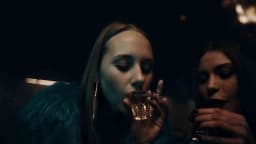
Western Cape Government Turns EMS Stories Into a Human Reunion
Western Cape Government's 'Ode, Reunion' is a 2018 public-interest film campaign, created by FCB Cape Town, that reunites Emergency Medical Services responders with the patients whose lives they saved, transforming an institutional public-service message into an emotionally grounded documentary portrait of human connection in South Africa.
The campaign arrived in December 2018 as part of the Western Cape Government's broader commitment to public-interest communication. Rather than presenting EMS as an abstract government function, 'Ode, Reunion' positions paramedics and emergency responders as individuals whose daily work leaves lasting impressions on the people they serve — impressions that, in most cases, are never acknowledged face to face. The social-experiment structure places real responders and real survivors in the same room, often for the first time since the moment of crisis, and captures what unfolds without dramatisation or scripted dialogue.
Two film assets form the campaign's media footprint, as documented by Clapboard. The geographic market is South Africa, with the Western Cape province — home to one of the country's most developed emergency medical infrastructure networks — serving as the campaign's specific civic context. The objective is dual: to build public appreciation for EMS professionals and to reinforce the Western Cape Government's identity as an administration that sees the human dimension of its own services. In doing so, the campaign performs a function that conventional public-sector advertising rarely achieves — it makes the audience feel the cost and meaning of emergency response rather than simply communicating its existence.
FCB Cape Town grounded 'Ode, Reunion' in a specific and underexplored consumer insight: the people who receive emergency medical care in South Africa rarely have the opportunity to express gratitude to the responders who saved them, and those responders rarely learn the long-term outcome of their interventions.
This asymmetry — between the intensity of the emergency encounter and the abrupt silence that follows it — creates a structural emotional gap that the campaign is designed to close on camera. The social-experiment format exploits that gap deliberately. By engineering a reunion that would not otherwise happen, FCB Cape Town generates authentic emotional content that no amount of scripted advocacy could replicate. The format also sidesteps a persistent credibility problem in public-sector advertising: audiences in South Africa, as in most markets, have grown accustomed to government communications that assert value rather than demonstrate it.
The strategic context matters here. 'Ode, Reunion' was not an isolated commission but part of an established relationship between FCB Cape Town and the Western Cape Government. The agency had previously produced 'It Can Wait' in 2017 for the Western Cape Government's Safely Home road-safety initiative, a campaign that, as reported by Marklives, generated more than 30 million views on Daily Mail Online alone and was subsequently adopted by traffic-law-enforcement agencies in the United Kingdom and the United States. That precedent established documentary-adjacent, emotionally driven film as a proven format for Western Cape Government public-interest work, and 'Ode, Reunion' extends that creative lineage into the EMS space. In a South African advertising market estimated at approximately R30 billion to R40 billion in 2018, according to combined figures from Nielsen and the IAB South Africa cited by The Media Online and the Competition Commission of South Africa, public-sector clients represent a meaningful and visible segment of the media economy.
Director Felix Seuffert, working through production company House Butterfly Films, shapes 'Ode, Reunion' as an observational documentary rather than a constructed advertisement.
The formal choice is significant. Seuffert's approach prioritises duration over montage — allowing the reunion moments to unfold at the pace of real human recognition rather than compressing them into emotionally telegraphed cuts. This restraint is the campaign's primary creative risk and its primary creative asset. Audiences trained on the rhythms of advertising quickly recognise when they are watching something that refuses to perform for them, and that recognition generates a different quality of attention. Chief Creative Officer Mike Barnwell and copywriter Amy Thompson, both at FCB Cape Town, structured the narrative framework that Seuffert then executes with a camera — establishing the premise, selecting the participants, and ensuring that the emotional logic of the reunion is legible without explanatory voiceover or title-card intrusion.
Post-production was handled by New Creation Collective, whose work on the edit preserves the documentary texture that Seuffert established on set. Music was composed and produced by Pressure Cooker House, whose score functions as emotional punctuation rather than emotional instruction — underscoring without overwhelming the scenes it accompanies. The combined craft decisions across production and post-production reflect a coherent aesthetic position: that the most powerful public-service film is one that trusts its subjects to carry the meaning without editorial amplification. In the context of South African public-interest advertising in 2018, where government communications frequently defaulted to declarative formats, 'Ode, Reunion' represents a deliberate and disciplined departure from category convention.
No verified performance data for 'Ode, Reunion' is publicly available. No indexed trade press reviews from Campaign, Ad Age, Adweek, The Drum, or Contagious have been identified, and no verifiable social distribution figures or award citations are on record, as documented by Clapboard.
Clapboard scores 'Ode, Reunion' at 63 out of 100. That score reflects a campaign with a clearly defined emotional strategy and disciplined craft execution, offset by limited evidence of reach amplification or measurable public impact. The structural effectiveness of the film rests on the reunion premise itself: by constructing a situation that is both true and rarely witnessed, FCB Cape Town creates content whose credibility is self-evident rather than argued. For a public-sector client like the Western Cape Government, whose audiences are taxpayers with a direct stake in the quality of EMS provision, this credibility mechanism is strategically appropriate.
What the absence of metrics cannot obscure is the campaign's position within a demonstrably effective creative lineage. The preceding 'It Can Wait' film achieved international distribution and institutional adoption, as reported by Marklives, establishing that FCB Cape Town's documentary approach for Western Cape Government public-interest briefs is capable of generating impact well beyond South Africa's borders. Whether 'Ode, Reunion' achieved comparable reach remains unverified, but its formal and strategic architecture suggests it was built with that ambition in mind.
'Ode, Reunion' is a public-interest film campaign created by FCB Cape Town for the Western Cape Government, published in South Africa in December 2018. It reunites Emergency Medical Services responders with survivors they helped, using a documentary social-experiment format to humanise EMS professionals and build public appreciation for their work.
FCB Cape Town created 'Ode, Reunion' for the Western Cape Government. The campaign was directed by Felix Seuffert through House Butterfly Films, with post-production by New Creation Collective and music by Pressure Cooker House. Chief Creative Officer Mike Barnwell and copywriter Amy Thompson led the creative team at FCB Cape Town.
FCB Cape Town used the social-experiment format to generate authentic emotional content that scripted public-service advertising cannot replicate. The format exploits a real gap: EMS patients rarely thank their responders, and responders rarely learn outcomes. Reuniting them on camera produces credibility that declarative government communications consistently fail to achieve in South Africa.
'Ode, Reunion' extends an established FCB Cape Town and Western Cape Government creative relationship. The agency's 2017 'It Can Wait' road-safety film generated more than 30 million views on Daily Mail Online alone, as reported by Marklives, and was adopted by enforcement agencies in the United Kingdom and United States, establishing documentary film as a proven format for this client.
'Ode, Reunion' receives a Clapboard Score of 63 out of 100. The score recognises the campaign's clear emotional strategy and disciplined craft execution across production and post-production, while reflecting limited publicly verifiable evidence of reach, social distribution, or industry award recognition for this specific South Africa public-interest film from December 2018.
.webp)
Creative Collaboration Platform: The Backbone of Modern Creative WorkWhat is a creative collaboration platform?Clapboard defines a creative collaboration platform as the operational core for today’s distributed creative teams. This is not a collection of digital collaboration tools stitched together; Clapboard’s system


Understanding the Creative Production MarketplaceWhat is a Creative Production Marketplace?Clapboard defines a creative production marketplace as a structured ecosystem where brands, agencies, and production talent converge to execute video, advertising, and branded content at scale. Unlike the legacy agency or freelanREAD FULL ARTICLE

The Urgent Need for a Creative Production Operating SystemWhy Traditional Creative Production Models Break DownClapboard sees the creative production landscape shifting under pressure. Content velocity is no longer a buzzword—it’s a mandate. Modern advertising demands relentless output across dozens of channels, each wREAD FULL ARTICLE