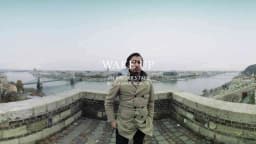
W Hotels and TUX Creative House debut an Orville Peck episode of Hotel Tales, a global hospitality campaign filmed at W Austin and released in 2025.

W Hotels and Orville Peck Rewrite the Rules of Hospitality Storytelling
Hotel Tales is W Hotels' ongoing global brand campaign, produced by TUX Creative House, in which culturally significant guests recount unexpected moments that could only have occurred at a W property, inviting audiences to experience the brand firsthand rather than simply observe it from the outside.
The Orville Peck episode, released in October 2025 across the United States and Canada, is the latest chapter in that series. Peck — the South African-born country singer and songwriter whose signature Lone Ranger-style mask is as much a part of his identity as his voice — recounts the frantic search for that mask after losing it while on tour, and how a W Insider tracked it down and returned it to him on a silver platter. The episode was shot in and around the newly transformed W Austin, grounding the storytelling in a specific, visitable place rather than an abstract luxury ideal.
TUX Creative House, the Montreal-based full-service creative agency, developed Hotel Tales as a global platform for W Hotels beginning in 2024, with a public launch in December of that year. The Orville Peck installment follows previous episodes starring award-winning actor Chloë Sevigny and multidisciplinary artist Miranda Makaroff, each chosen to reset the brand's cultural tone and reaffirm its standing among a discerning creative class. The campaign tagline — stories so unexpected that you just had to be there, followed by the invitation to next time, be there — positions every episode as both a proof point and a prompt to book.
Across the United States and Canada, the campaign ran with paid-media support on TikTok, Instagram, and YouTube. Production extended well beyond a single hero film: the Orville Peck episode was adapted into one 15-second edit, four 6-second edits, four behind-the-scenes videos, ten stills, and four social assets, giving the campaign sustained presence across formats and platforms. Clapboard rates this episode 73 out of 100.
W Hotels competes in the lifestyle-luxury hospitality segment, where differentiation turns on cultural relevance rather than thread-count specifications or suite footage. The global luxury hotel market is a substantial and growing sector: according to Grand View Research, it reached an estimated value well into the hundreds of billions of US dollars in 2025, with projected compound annual growth continuing through the early 2030s. Fortune Business Insights similarly documents robust expansion trajectories for the category across major international markets, including the United States and Canada.
Within North America, the competitive landscape is crowded. Marriott Hotels and Resorts — W Hotels' parent brand — holds meaningful share across the broader upper-upscale and luxury tiers, according to industry analysts at Straits Research, yet the W sub-brand occupies a distinct lane defined by music, fashion, nightlife, and design. Competitors such as Kimpton Hotels and Restaurants and 1 Hotels have invested aggressively in lifestyle storytelling of their own, making the battle for the creative class a genuine creative arms race rather than a positioning exercise on paper.
The insight driving Hotel Tales is precise: luxury travellers in the United States and Canada increasingly distrust polished brand proclamations and respond instead to specific, human, slightly implausible stories that happen to be true. An artist losing his defining accessory and having a hotel employee retrieve it is not a manufactured brand promise — it is a service proof point rendered as entertainment. TUX Creative House identified that W Hotels possesses an archive of exactly these kinds of stories, and that the brand's pre-existing identity around music and cultural association made Orville Peck — boundary-breaking, masked, unmistakable — a natural protagonist rather than a paid endorser performing enthusiasm.
Chelsea Matthews, Creative Director at TUX Creative House, shaped the episode's tone and confirmed its place in the campaign platform. As Matthews noted upon release, bringing the new episode to life with Orville Peck cemented the energy of the Hotel Tales platform. The creative team included Alice Ware as Creative, Emily Wilkinson as Senior Copywriter, and Mariana Serrano as Senior Designer, with Mélissa Tucker-Gagné serving as Head of Strategy, Stacy Gagnidze as Strategy Director, and Nadia Gopaul as Strategist.
On the production side, Jonathan Godinho served as Executive Producer and Shaida Missaghi as Post Producer, with Pierre-Alexandre Bouvier and Micah Hamilton credited as Video Editors. External production was handled by Grand Crew, with Samantha Sheppard serving as External Executive Producer. The episode was shot in and around W Austin, a property that had recently undergone a transformation, making the location itself a character in the storytelling rather than a neutral backdrop.
The hero film runs 47 seconds — long enough to establish stakes and deliver a payoff, short enough to function as social content without demanding the tolerance of a pre-roll audience. That 47-second centrepiece was then engineered into a full content system: one 15-second edit, four 6-second edits, four behind-the-scenes videos, ten stills, and four social assets. The behind-the-scenes material acknowledges the constructed nature of the episode while reinforcing its authenticity — a deliberate creative choice that treats the audience as sophisticated participants rather than passive recipients. The campaign ran across TikTok, Instagram, and YouTube with paid-media amplification in the United States and Canada, ensuring the content system was deployed across each format for which it was purpose-built.
The YouTube asset for the Orville Peck episode recorded approximately 86,518 views, 25 likes, and 3 comments at the time of archival measurement, producing a likes-to-views ratio of roughly 0.03%. That figure is low relative to benchmarks for branded entertainment in the travel and hospitality category, and it suggests the paid-media strategy prioritised reach and impression delivery over organic community engagement on YouTube specifically. The distribution across TikTok and Instagram, where content formats and algorithmic dynamics differ substantially, likely drove a different engagement profile that is not captured in publicly available data.
No verified performance data covering brand lift, booking intent, or campaign-attributed conversions for the Orville Peck episode is publicly available. MediaPost published coverage on October 27 and 28, 2025, identifying Chelsea Matthews as TUX's creative director, describing the paid and social rollout, and confirming the campaign narrative, according to MediaPost — representing the most substantive third-party editorial acknowledgement of the campaign at the time of this writing. No independently authored reviews were identified from Campaign, Ad Age, Adweek, The Drum, or Contagious.
Structurally, the campaign demonstrates strong effectiveness logic. The content system built around a single 47-second film — spanning six-second social cuts, behind-the-scenes material, and static assets — maximises production investment and creates multiple re-entry points into the story across platforms. The choice of Orville Peck as protagonist provides built-in cultural specificity and a genuinely unusual narrative hook. Clapboard rates the episode 73 out of 100, reflecting its creative coherence and platform discipline against the ceiling imposed by limited measurable public engagement signals.
Hotel Tales is W Hotels' ongoing global brand campaign produced by TUX Creative House. The Orville Peck episode, released in October 2025, follows the masked country musician's account of losing his signature mask on tour and having a W Insider return it to him, filmed at W Austin across the United States and Canada markets.
TUX Creative House produced the episode. Creative Director Chelsea Matthews led the project, with Alice Ware as Creative, Emily Wilkinson as Senior Copywriter, and external production handled by Grand Crew. TUX won the W Hotels account on a project basis in 2024 following a formal request-for-proposal process.
The Orville Peck episode was shot in and around W Austin in Texas, United States. The property had recently undergone a transformation, making it a meaningful backdrop for the campaign rather than a generic luxury setting, and grounding the storytelling in a specific, bookable destination.
W Hotels distributed the campaign with paid-media support across TikTok, Instagram, and YouTube in the United States and Canada. The production was adapted into a 47-second hero film, a 15-second edit, four 6-second edits, four behind-the-scenes videos, ten stills, and four social assets to serve each platform's requirements.
Clapboard rates the Hotel Tales Orville Peck episode 73 out of 100. The score reflects the campaign's creative coherence, disciplined content system, and culturally specific casting, balanced against limited publicly measurable engagement signals, particularly a low likes-to-views ratio on YouTube at the time of measurement.
Previous Hotel Tales episodes produced by TUX Creative House starred award-winning actor Chloë Sevigny and multidisciplinary artist Miranda Makaroff. Both instalments were produced before the Orville Peck episode and established the series' approach of casting culturally specific figures whose stories reflect W Hotels' identity around music, fashion, and design.
.webp)
Creative Collaboration Platform: The Backbone of Modern Creative WorkWhat is a creative collaboration platform?Clapboard defines a creative collaboration platform as the operational core for today’s distributed creative teams. This is not a collection of digital collaboration tools stitched together; Clapboard’s system


Understanding the Creative Production MarketplaceWhat is a Creative Production Marketplace?Clapboard defines a creative production marketplace as a structured ecosystem where brands, agencies, and production talent converge to execute video, advertising, and branded content at scale. Unlike the legacy agency or freelanREAD FULL ARTICLE

The Urgent Need for a Creative Production Operating SystemWhy Traditional Creative Production Models Break DownClapboard sees the creative production landscape shifting under pressure. Content velocity is no longer a buzzword—it’s a mandate. Modern advertising demands relentless output across dozens of channels, each wREAD FULL ARTICLE