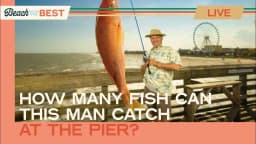
Aruba Tourism Authority's 2018 'Lilian, Samil, Vanessa' films by Concept Farm put real Arubans centre-stage to redefine the island's travel identity in the US

Aruba Tourism Authority Puts Real Islanders at the Heart of Travel
Aruba Tourism Authority's 2018 campaign, produced by Concept Farm, presents three short films — Lilian (Romance), Samil (Culinary), and Vanessa (Culture) — each built around a real Aruban resident whose daily life becomes the centrepiece of an invitation to travel to the island.
The campaign arrived in the United States in September 2018 as a direct evolution of Aruba's long-running "One Happy Island" platform. Rather than relying on aerial beach footage and anonymous sunbathers, the authority chose to anchor each film to a named individual: Lilian, representing romance; Samil, representing culinary experience; and Vanessa, representing cultural depth. The strategic logic was explicit. As reported by The Drum, the objective was to highlight Aruba's people and generate emotional engagement with prospective US visitors, moving decisively away from the generic destination advertising that competitors routinely deploy.
The campaign operated across a fully integrated media mix. According to Concept Farm, the broader Authentic Aruba rollout encompassed digital video, social media, television, print, out-of-home, email and CRM, sales and trade integration, and native content placements with travel media partners. The three films served as the creative engine driving that wider system. Concept Farm had held the role of Aruba Tourism Authority's strategic and creative agency of record since 2012, according to reporting by The Drum, giving the agency six years of accumulated market knowledge before this work launched. In the United States, where competition for Caribbean destination spend is intense, that institutional continuity informed a campaign built on differentiation through authenticity rather than spectacle. The Clapboard Score for this campaign is 63 out of 100.
Aruba Tourism Authority faced a concrete market problem entering 2018. Venezuela's economic crisis had intensified sharply from 2016 onward, causing Venezuelan arrivals to Aruba to fall by approximately 40 percent, according to goingplacesfarandnear.com. Concept Farm was tasked with accelerating growth among US visitors, particularly more affluent travellers, to offset that loss, as documented by goingplacesfarandnear.com.
The broader Caribbean context complicated that task. According to caribbeanhotelandtourism.com, the Caribbean recorded approximately 29.9 million visitors in 2018, representing roughly 2.1 percent of global international arrivals, and the region as a whole declined approximately 2 percent that year due to the residual effects of Hurricanes Irma and Maria, per jaxfaxmagazine.com. Aruba, sitting outside the hurricane belt, held a structural advantage, but communicating that advantage required more than factual reassurance. According to Agents Aruba, Aruba reported 695,718 US visitor arrivals, making the United States its single most important source market.
Concept Farm's strategic response was to reject the visual grammar that competitors such as the Bahamas Tourism Authority and Jamaica Tourist Board had long used — turquoise water, empty beaches, aspirational but impersonal imagery — in favour of stories rooted in specific people. John Speers, Strategy and Client Director at Concept Farm, articulated the campaign's intent as creating emotional engagement through Aruba's residents rather than its scenery, as reported by The Drum. That shift from place to person gave the campaign a differentiating logic that generic destination advertising structurally cannot replicate. By naming Lilian, Samil, and Vanessa, the authority invited US travellers to imagine a relationship with the island rather than merely a transaction with it.
The three films were built on a production methodology that prioritised documentary texture over polished artifice. According to conceptfarm.com, the campaign used three distinct filming approaches: reality-based footage of daily Aruban life, scripted narrative sequences, and material shot by the protagonists themselves using handheld devices. That layered approach meant each film carried an evidential quality — the audience was being shown a life, not a set.
Over 100 Arubans participated in the production, according to conceptfarm.com. Aruban crew members filled roles across production, camera operation, sound, drone operation, and wardrobe, ensuring that the claim of authentic local involvement extended behind the camera as well as in front of it. This was not incidental casting of local extras but a structural commitment to Aruban creative labour at every production tier.
At Concept Farm, creative direction was led by Gregg Wasiak and John Gellos, with account responsibilities held by Jessica Lombardo and Christine Ruppert. Strategy and client leadership sat with John Speers. Ronella Tjin Asjoe-Croes served as Chief Executive Officer of Aruba Tourism Authority during the campaign's development and launch, according to thedrum.com. The creative team's decision to name each film after its protagonist — Lilian, Samil, Vanessa — rather than after a theme or slogan gave the work a biographical intimacy that is unusual in destination advertising. Each film functions as a self-contained portrait while simultaneously serving as evidence for a shared argument: that Aruba's people are as compelling as its landscape. The production's structural commitment to showing real Aruban lives, captured partly by Arubans themselves, gave that argument a credibility that no amount of production polish could manufacture.
The Authentic Aruba campaign earned documented editorial recognition in the United States market within weeks of its September 2018 launch. The Drum published positive coverage on September 26, 2018, in a piece titled "Aruba Tourism Authority has islanders starring in videos playing up 'Authentic Aruba'" by Creative Works Editor Kyle O'Brien. Two weeks later, The Drum selected the Authentic Aruba campaign as its US Creative Work of the Week on October 10, 2018. These are editorially independent recognitions from a publication that covers global advertising and marketing, and they represent a meaningful benchmark for creative quality in a competitive category.
No verified awards from major advertising festivals — Cannes Lions, the Clios, or equivalent — are publicly documented for this specific three-film series, and no independently audited performance metrics such as booking uplift, website traffic increases, or brand tracking shifts are publicly available for the campaign. What the record does establish is that the work was considered sufficiently distinctive by trade press in the United States to merit selection as a regional creative benchmark, which is not an outcome that formulaic destination advertising routinely achieves.
The structural effectiveness of the campaign rests on the coherence between its stated objective and its creative mechanics. If the goal was emotional engagement through named individuals rather than anonymous scenery, the three-film format — each carrying a person's name as its title — delivers that objective at the level of form, not merely content. That alignment between strategy and execution is the foundation of durable campaign effectiveness.
Aruba Tourism Authority's 2018 campaign presents three short films built around real Aruban residents. Created by Concept Farm and published in the United States in September 2018, each film centres on a named islander — Lilian for romance, Samil for culinary experience, and Vanessa for culture — as part of the broader Authentic Aruba platform.
Aruba Tourism Authority needed to differentiate from competitors in the US travel market. According to goingplacesfarandnear.com, Venezuelan arrivals to Aruba fell approximately 40 percent amid Venezuela's economic crisis, pushing the authority to pursue more affluent US visitors through emotionally resonant storytelling rather than generic destination imagery.
Gregg Wasiak and John Gellos served as creative directors at Concept Farm for this campaign. Account responsibilities were held by Jessica Lombardo and Christine Ruppert, while John Speers led strategy and client direction. Ronella Tjin Asjoe-Croes was Chief Executive Officer of Aruba Tourism Authority at the time, according to The Drum.
Over 100 Arubans participated in the production of the three films, according to conceptfarm.com. Their roles spanned production coordination, camera operation, sound recording, drone operation, and wardrobe. The protagonists themselves also contributed footage shot on handheld devices, reinforcing the campaign's commitment to authentic local participation at every level.
No verified awards from major advertising festivals are publicly documented for the three-film series. However, The Drum named the Authentic Aruba campaign its US Creative Work of the Week on October 10, 2018, and published editorial coverage on September 26, 2018, representing independent trade-press recognition of the campaign's creative distinction.
Concept Farm deployed the Authentic Aruba campaign across digital video, social media, television, print, out-of-home, email and CRM, sales and trade integration, and native content with travel media partners, according to conceptfarm.com. The three protagonist-led films served as the creative core driving that fully integrated channel strategy across the United States market.
.webp)
Creative Collaboration Platform: The Backbone of Modern Creative WorkWhat is a creative collaboration platform?Clapboard defines a creative collaboration platform as the operational core for today’s distributed creative teams. This is not a collection of digital collaboration tools stitched together; Clapboard’s system


Understanding the Creative Production MarketplaceWhat is a Creative Production Marketplace?Clapboard defines a creative production marketplace as a structured ecosystem where brands, agencies, and production talent converge to execute video, advertising, and branded content at scale. Unlike the legacy agency or freelanREAD FULL ARTICLE

The Urgent Need for a Creative Production Operating SystemWhy Traditional Creative Production Models Break DownClapboard sees the creative production landscape shifting under pressure. Content velocity is no longer a buzzword—it’s a mandate. Modern advertising demands relentless output across dozens of channels, each wREAD FULL ARTICLE