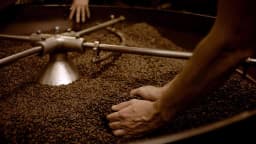
Aruba Tourism Authority and Grey Brazil launched the Aruba Image Bank in June 2015, a digital campaign that repositioned Caribbean beaches for Brazilian

Aruba Image Bank Reframes Caribbean Beaches for Brazilian Travellers
Aruba Image Bank is a digital campaign created by Grey Brazil for the Aruba Tourism Authority, published in June 2015, targeting Brazilian travellers with a curated repository of Caribbean beach imagery designed to lower the perceived distance between Brazil and Aruba as a leisure destination.
The campaign operates on a straightforward premise. Aruba, a small island in the southern Caribbean, sits closer to South America than most Caribbean destinations, yet Brazilian travel consideration for the island lagged behind its geographic proximity and natural appeal. Grey Brazil addressed this gap by constructing a digital asset — an image bank — that placed authentic, high-quality visual content directly into the hands of Brazilian consumers and travel industry intermediaries. The mechanism turned passive awareness into active engagement by giving audiences imagery they could use, share, and associate personally with the destination.
In Brazil, 2015 represented a critical inflection point for outbound leisure travel. South American arrivals to the Caribbean grew by an impressive rate that year, with Brazil, Venezuela, and Argentina identified as the principal markets driving that growth, according to caribbeanhotelandtourism.com. Aruba Image Bank was positioned precisely to capture Brazilian intent at a moment when Caribbean beaches were registering heightened relevance across the region. The campaign appeared across digital media and comprised a single primary media asset, reflecting a disciplined, content-led approach rather than a broad-reach, multi-format push. Its Clapboard Score of 67 out of 100 reflects solid creative and strategic coherence alongside the absence of publicly verified performance data to confirm measurable outcomes. The campaign was submitted to Clapboard.com approximately ten years ago and remains one of the more structurally interesting travel and leisure executions produced for Aruba in the Brazilian market during that period.
South American arrivals to the Caribbean grew significantly in 2015, with Brazil emerging as one of the three principal source markets, according to caribbeanhotelandtourism.com. This trajectory gave Aruba Tourism Authority a clear strategic rationale for directing resources toward Brazilian digital audiences rather than spreading investment across diffuse regional channels.
Aruba's competitive position in the Caribbean is shaped by proximity and product. The island sits roughly 1,600 kilometres from the Brazilian coast — considerably closer than other sought-after Caribbean destinations such as the Bahamas or Jamaica — yet it competed for Brazilian attention against more immediately recognisable leisure markets including domestic beach destinations and regional alternatives in the Spanish-speaking Caribbean. The strategic insight underpinning Aruba Image Bank was that visual familiarity drives destination consideration. If Brazilian consumers could see Aruba's Caribbean beaches clearly, repeatedly, and in formats that felt personally relevant, the gap between awareness and booking intent would narrow.
The Caribbean as a whole received approximately 28.7 million international tourist trips in 2015, representing a seven percent year-on-year increase, according to caribbeanhotelandtourism.com. Within that larger movement, Aruba recorded approximately 1.22 million visitor arrivals that year, according to Gobierno Aw, confirming the island as a material player in a highly competitive regional market. Grey Brazil's choice of a digital medium reflected the Brazilian media landscape of 2015, where internet penetration and social sharing behaviour made image-driven content an efficient vehicle for travel inspiration. By framing the campaign as an image bank rather than conventional advertising, Grey shifted Aruba from a brand that speaks at consumers to a resource that travels with them, an approach well suited to the leisure and transport category where aspiration precedes purchase by weeks or months.
Photographer Juan Salvarredy shot the imagery at the centre of Aruba Image Bank, bringing a visual sensibility to Caribbean beaches that was intended to feel immediate and inhabitable rather than distant and aspirational in the conventional tourism-brochure sense.
The creative team was led by Chief Creative Officer Rodrigo Jatene, with Federico Russi serving as both Creative Director and Copywriter. Art direction was handled by Lucas Heck and Felipe Leite, a pairing that ensured the visual language of the image bank was consistent across every asset. Post-Production Supervisor Diego Beyró oversaw the finishing process, with post-production and finishing completed by gatoestudio.com. Sound production was handled by Technologica Áudio Online, indicating that the campaign extended beyond still imagery into at least some motion or audio-accompanied format.
The decision to anchor the entire campaign in a single primary media asset is notable. Rather than fragmenting creative energy across multiple executions, the team concentrated craft into one coherent digital experience. This choice reflects a content-platform mindset that was gaining ground in Brazilian digital advertising around 2015, where depth of engagement with a single well-constructed asset was increasingly valued over the reach of many lightweight executions. The image bank format also carries an inherent shareability mechanic: content that can be freely accessed and distributed by users extends the campaign's footprint without additional media spend. For a destination like Aruba competing for Brazilian leisure travellers against better-resourced or more immediately familiar competitors, this structural efficiency represents a meaningful creative decision. The campaign was recognised as a finalist at the 2015 Latin American International Advertising Awards in the travel category, as reported by latinspots.com, and was shortlisted at the 2015 Cannes Lions in the territory marketing and communication category, according to lareclame.fr.
No verified performance data for Aruba Image Bank is publicly available. No campaign-specific sales lift, booking increase, conversion result, brand-tracking shift, reach figure, or ROI metric has been documented in publicly accessible sources.
What the structural evidence does confirm is that the campaign earned independent industry recognition. It was shortlisted at the 2015 Cannes Lions in the territory marketing and communication category, according to lareclame.fr, and listed as a finalist at the 2015 Latin American International Advertising Awards in the travel category, as reported by latinspots.com. These shortlistings are externally verifiable indicators that the campaign was assessed by professional juries as meeting a standard of creative and strategic merit in its category.
Structurally, the campaign's effectiveness argument rests on timing and mechanism. The Caribbean was recording strong growth in South American arrivals in 2015, according to caribbeanhotelandtourism.com, and Aruba itself logged approximately 1.22 million visitor arrivals that year, according to gobierno.aw. Placing a high-quality, freely accessible image bank into the Brazilian digital environment during this period of expanding travel interest was a logical and low-friction way to convert ambient curiosity into active consideration. The Clapboard Score of 67 out of 100 reflects the campaign's genuine creative coherence and strategic clarity, offset by the absence of measurable outcome data and the modest scale of a single-asset execution. It is a focused, well-crafted piece of destination marketing that understood its audience and its moment, even if its downstream commercial impact remains unverified.
Aruba Image Bank is a digital campaign created by Grey Brazil for the Aruba Tourism Authority, published in June 2015. It provided Brazilian audiences with a curated repository of Caribbean beach imagery, designed to build destination familiarity and reduce the perceived distance between Brazil and Aruba as a leisure destination.
Grey Brazil created Aruba Image Bank for the Aruba Tourism Authority in 2015. Chief Creative Officer Rodrigo Jatene led the team, with Federico Russi as Creative Director and Copywriter, Lucas Heck and Felipe Leite as Art Directors, Juan Salvarredy as Photographer, and gatoestudio.com handling post-production and finishing.
Aruba Image Bank earned two independent recognitions. It was shortlisted at the 2015 Cannes Lions in the territory marketing and communication category, according to lareclame.fr, and listed as a finalist at the 2015 Latin American International Advertising Awards in the travel category, as reported by latinspots.com. No Grand Prix or Lion was awarded.
South American arrivals to the Caribbean grew substantially in 2015, with Brazil identified as one of three principal source markets, according to caribbeanhotelandtourism.com. Brazil's expanding outbound leisure travel and high digital engagement made it a logical priority for Aruba Tourism Authority seeking to convert Brazilian interest into Caribbean beach bookings.
Aruba Image Bank received a Clapboard Score of 67 out of 100. The score reflects the campaign's creative coherence, strategic clarity, and industry shortlist recognition, balanced against the absence of publicly verified performance metrics and the focused single-asset execution format produced for the Brazilian market in 2015.
.webp)
Creative Collaboration Platform: The Backbone of Modern Creative WorkWhat is a creative collaboration platform?Clapboard defines a creative collaboration platform as the operational core for today’s distributed creative teams. This is not a collection of digital collaboration tools stitched together; Clapboard’s system


Understanding the Creative Production MarketplaceWhat is a Creative Production Marketplace?Clapboard defines a creative production marketplace as a structured ecosystem where brands, agencies, and production talent converge to execute video, advertising, and branded content at scale. Unlike the legacy agency or freelanREAD FULL ARTICLE

The Urgent Need for a Creative Production Operating SystemWhy Traditional Creative Production Models Break DownClapboard sees the creative production landscape shifting under pressure. Content velocity is no longer a buzzword—it’s a mandate. Modern advertising demands relentless output across dozens of channels, each wREAD FULL ARTICLE