 ARCHIVE
Live Billboard - Viasat Nature | Clapboard Ad Archive
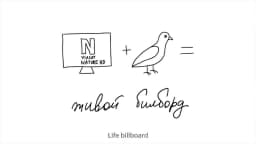
Viasat Nature’s Live Billboard campaign, conceived by agency Soda for the Russian market in 2018...
Vinge Puts a New Employee at the Executive Table
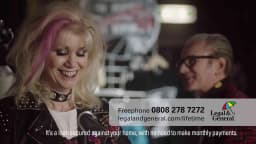
"The Seat" is a 2018 employer-brand film created for Swedish business law firm Vinge by ANR BBDO, Stockholm, in which the newest employee is given a literal seat at the firm's executive-committee meetings, translating an unconventional internal policy into a public declaration about company culture and individual influence.
Published in Sweden in November 2018, the campaign centres on a single, arresting premise: Vinge does not simply tell new hires they matter — it reserves a chair for them in the room where strategic decisions are made. The film brings this policy to life through a narrative featuring Vinge's then-CEO and managing partner Maria-Pia Hope alongside a character named Gustave, an eccentric French artist whose outsider perspective dramatises the value Vinge places on fresh thinking. The production was handled by New Land, and three physical copies of the seat were manufactured for use in actual management-group meetings, underscoring that the initiative was a genuine organisational commitment rather than an advertising construct.
The campaign's geographic market is Sweden, and it speaks directly to the competitive dynamics of the Swedish professional services sector, where law firms must distinguish themselves to attract top legal talent. Vinge positions itself as a firm that offers more than prestigious casework — it offers the individual an authentic stake in how the organisation thinks and grows. With 18 Vinge employees appearing on screen, the film deliberately resists the polish of conventional legal-sector advertising, choosing candour and specificity over corporate abstraction. The Seat earned a Clapboard Score of 71 out of 100, reflecting its structural clarity and the genuine rarity of its central mechanism as an employer-brand device.
Vinge operates in a concentrated and competitive segment of the Swedish professional services industry. According to Advokatsamfundet Se, Swedish law firms reported SEK 20.2 billion in turnover in 2018, excluding VAT, with the 25 largest firms collectively accounting for approximately half of that total. In a market where the revenue pool is dominated by a small number of major players, differentiation on talent becomes as strategically critical as differentiation on service. Firms such as Mannheimer Swartling and Linklaters' Swedish operations compete for the same narrow pipeline of high-calibre legal professionals, making employer perception a genuine competitive asset.
The insight driving "The Seat" is both simple and structurally sound: candidates choosing between comparable firms will respond to evidence of real individual influence rather than to abstract claims about culture. Kristian Sjöholm, Head of Marketing and Communications at Vinge, stated that one communication objective of the campaign was to create an emotional connection to the firm, as reported by Leadcompetence Se. That emotional connection is engineered here through specificity — a physical object, a named policy, a real CEO — rather than through aspiration or rhetoric. Maria-Pia Hope articulated the philosophy directly, stating in November 2018, per Vinge Se, that the firm believes in the individual and the individual's ability to make a difference. The campaign translates that belief into a mechanism visible to anyone considering whether to join the firm.
In Sweden, where professional-services talent markets are both geographically compact and professionally networked, a campaign that generates conversation within the legal community carries disproportionate reach relative to its media spend. "The Seat" is designed to circulate among precisely the audience it intends to recruit.
Art director Gabriel Blidö and copywriter Philip Westman at ANR BBDO, Stockholm, built the creative around a single physical object — the seat itself — allowing the chair to carry symbolic weight without explanatory voiceover or conventional advertising rhetoric. The choice to ground the film's concept in a tangible, manufacturable artefact rather than a feeling or a promise is the campaign's most disciplined creative decision.
Production company New Land executed the film with a cast of 18 actual Vinge employees, a deliberate production choice that sacrifices performative polish for institutional authenticity. The lead performers are Maria-Pia Hope, Vinge's CEO and managing partner at the time, and a fictional character named Gustave — described as an eccentric French artist — whose presence introduces a note of wit and the unexpected into what might otherwise read as a straightforward corporate communication. The contrast between Gustave's unconventional sensibility and the formal context of an executive committee meeting dramatises the campaign's core argument: that Vinge genuinely welcomes perspectives that do not conform to legal-sector norms.
The decision to fabricate three physical copies of the seat for use in real management-group meetings is a production detail that doubles as editorial proof. It closes the gap between the film's narrative and the firm's actual practice, ensuring that the advertising claim is verifiable rather than aspirational. As reported by adsoftheworld.com, this practice of seating the newest employee at executive meetings was subsequently adopted as a standing policy, with the initiative formally documented in Vinge's sustainability reporting. The film operates, therefore, not merely as a piece of creative work but as the public articulation of an organisational decision already made.
No verified performance data for "The Seat" campaign is publicly available in terms of recruitment uplift, view counts, or measurable shifts in employer-brand perception. What the public record does confirm, as documented by vinge.se and adsoftheworld.com, is that the campaign gave rise to a successor film: "The Piano," published in January 2020 by ANR BBDO Nordics, which trade coverage explicitly identifies as a follow-up to "The Seat," with both campaigns oriented toward strengthening Vinge's employer brand. The existence and intent of that successor is itself a meaningful signal — organisations do not commission follow-up work in the same creative lineage unless the original has demonstrated value, internally or externally.
Structurally, "The Seat" is effective for three reasons that do not require metrics to establish. First, its central mechanism — a physical seat at real meetings — is independently verifiable, which removes the credibility burden that burdens most employer-brand claims. Second, the use of actual employees and the serving CEO as on-screen talent creates a level of institutional commitment to the campaign's promise that is difficult for competitors to replicate without making the same operational change. Third, the campaign's unconventional aesthetic positions Vinge outside the visual grammar of Swedish professional services advertising, increasing memorability among the legally trained audience it targets.
"The Seat" holds a Clapboard Score of 71 out of 100, reflecting its conceptual integrity and the genuine rarity of its execution model within the business law category.
"The Seat" is a 2018 employer-brand film in which Vinge gives its newest employee a literal seat at executive-committee meetings. Created by ANR BBDO, Stockholm, the film communicates Vinge's commitment to individual influence within the firm and was backed by a real, ongoing organisational policy.
ANR BBDO, Stockholm created "The Seat" for Vinge. Art director Gabriel Blidö and copywriter Philip Westman led the creative work. Production was handled by New Land. The campaign featured 18 actual Vinge employees, including then-CEO Maria-Pia Hope, alongside a fictional character named Gustave.
The seat is a real policy. Three physical copies of the chair were made for use in actual Vinge management-group meetings. According to vinge.se and adsoftheworld.com, the practice of seating the newest employee at executive meetings was adopted as a standing organisational commitment, documented in Vinge's sustainability reporting.
"The Seat" anchors Vinge's talent attraction strategy in a demonstrable act rather than an abstract claim. In Sweden's competitive legal market, where firms such as Mannheimer Swartling compete for the same talent, the campaign establishes Vinge as a firm that offers genuine individual influence — a distinction reinforced by the 2020 follow-up campaign "The Piano."
"The Seat" holds a Clapboard Score of 71 out of 100. The score reflects the campaign's conceptual integrity, the verifiable nature of its central mechanism, and the rarity of its execution model within Swedish business law advertising — balanced against the absence of publicly documented performance metrics.
Vinge and ANR BBDO Nordics released "The Piano" in January 2020 as a direct follow-up to "The Seat." Trade coverage reported by vinge.se identifies both campaigns as part of a sustained employer-brand effort, confirming that "The Seat" established a creative lineage the firm continued to develop.
.webp)
Creative Collaboration Platform: The Backbone of Modern Creative WorkWhat is a creative collaboration platform?Clapboard defines a creative collaboration platform as the operational core for today’s distributed creative teams. This is not a collection of digital collaboration tools stitched together; Clapboard’s system


Understanding the Creative Production MarketplaceWhat is a Creative Production Marketplace?Clapboard defines a creative production marketplace as a structured ecosystem where brands, agencies, and production talent converge to execute video, advertising, and branded content at scale. Unlike the legacy agency or freelanREAD FULL ARTICLE

The Urgent Need for a Creative Production Operating SystemWhy Traditional Creative Production Models Break DownClapboard sees the creative production landscape shifting under pressure. Content velocity is no longer a buzzword—it’s a mandate. Modern advertising demands relentless output across dozens of channels, each wREAD FULL ARTICLE