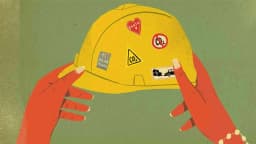
Union of the Baltic Cities Safe Cities Commission launched Physical Security at Home in Latvia in March 2017 — three wordless animated films built to transcend

How the Union of the Baltic Cities Made Home Safety Speak Without Words
Physical Security at Home is a three-part animated film series produced in Latvia in March 2017 for the Union of the Baltic Cities Safe Cities Commission, designed to communicate household safety behaviours without spoken dialogue so that audiences across the Baltic Sea Region's diverse language communities could understand it equally.
The Union of the Baltic Cities Safe Cities Commission represents a network spanning approximately 100 cities across the Baltic Sea Region, according to Clapboard. That geographic and linguistic breadth shaped every creative decision on this campaign. Rather than produce separate language versions or rely on subtitles, the commission and its production partner opted for a format that required no translation at all: short, wordless animated films in which visual storytelling carries the entire safety message. The campaign was published in Latvia and falls within the Public Interest and Public Service category, with the film medium serving as the sole channel across its three episodes.
Episode 3, which addresses physical security specifically, sits within Season 1 of the series and is part of a cohesive set of three media assets documented by Clapboard and worldvideoads.com. The campaign's framing as a documentary-style social experiment in animated form gives it an observational quality, presenting recognisable domestic scenarios and demonstrating how residents can improve physical security at home. Each episode functions as a standalone piece while contributing to the broader educational arc of the series. In Latvia, where public communication must often bridge Latvian, Russian, and other language communities, the wordless approach carries particular practical value. The Clapboard Score for Physical Security at Home is 63 out of 100, reflecting solid craft and a distinctive strategic premise within a category not known for creative ambition.
 ARCHIVE
The Union of the Baltic Cities Safe Cities Commission operates across a multilingual region where no single language serves all audiences. In Latvia alone, the population includes substantial Latvian-speaking and Russian-speaking communities, a linguistic reality that makes single-language public service communication structurally inefficient. The wordless animation format directly solves this problem by removing language as a variable altogether, ensuring that physical security messaging reaches every household regardless of the viewer's mother tongue.
Public service advertising in the Baltic region faces a structural challenge that commercial advertisers rarely encounter at the same scale: the need to communicate clearly across national and linguistic borders without the budget or infrastructure to produce localised variants. According to ubc.net, the Union of the Baltic Cities is a network of approximately 100 cities across the Baltic Sea Region, encompassing municipalities in Latvia, Lithuania, Estonia, Poland, Germany, Sweden, Finland, and beyond. That reach means a single creative execution must function in vastly different cultural and linguistic contexts simultaneously. The wordless animation approach, documented by Clapboard and worldvideoads.com, is a direct response to that constraint, transforming a budgetary and logistical limitation into a creative distinction.
Within the Public Service category, campaigns addressing safety at home compete for attention against government-issued safety advisories, commercial security product advertising from brands such as Yale and Verisure, and an expanding volume of digital content on household safety. The animated social experiment format differentiates Physical Security at Home from both the clinical visual language typical of government advisories and the product-led messaging of commercial security brands. By presenting safety behaviours in a recognisable domestic setting through the observational register of a documentary, the series invites engagement rather than instructing compliance, a distinction that matters in an environment where audiences are habituated to tuning out prescriptive public safety messaging.
Sense Media, based in Liepāja, Latvia, produced the Physical Security at Home series, bringing together a small and clearly defined creative team to execute a campaign that relies entirely on visual and sonic storytelling.
Creative directors Mikus Austers and Egils Šusts led the project, with art direction and illustration handled by Mārtiņš Feodosovs, according to Clapboard and worldvideoads.com. Sound design was the responsibility of Ģirts Feldmanis, whose role takes on heightened significance in a wordless format. When dialogue is absent, sound design is not a supporting element but a primary narrative tool. Ambient sounds, the creak of a door, the click of a lock, the texture of silence in an unsecured room, carry the emotional and informational weight that spoken language would otherwise bear. Feldmanis's contribution is therefore structural rather than decorative.
The illustration style adopted by Feodosovs suits the cross-cultural ambition of the campaign. Animation allows the production team to design characters and domestic environments that are culturally neutral enough to feel familiar across the Baltic Sea Region's varied housing stock and domestic aesthetics, while remaining specific enough to feel grounded rather than abstract. The social experiment register that runs through the series, presenting ordinary household scenarios and observing what happens when physical security measures are or are not in place, gives the animation a quasi-documentary quality that distinguishes it from the flat didacticism common in public interest animation. The three-episode structure, with Episode 3 addressing physical security directly, allows the series to build audience familiarity across instalments, rewarding repeat viewers while remaining accessible to those encountering a single episode in isolation. Production was completed in Latvia and published in March 2017, as confirmed by Clapboard.
No verified performance data for Physical Security at Home is publicly available. No independent reviews or attributed audience metrics have been located in Campaign, Ad Age, Adweek, The Drum, or Contagious, as confirmed by Clapboard's research. No attributable social media reaction data has been documented. The campaign's impact must therefore be assessed through structural and strategic analysis rather than reported outcomes.
The wordless format is the campaign's most consequential structural decision. By removing spoken dialogue, the films achieve distribution-readiness across the full membership of the Union of the Baltic Cities without post-production localisation, a meaningful efficiency for a non-commercial commission operating across approximately 100 cities, according to ubc.net. Each of the three animated films functions as a self-contained educational unit, which supports fragmented distribution across different municipal channels, community platforms, and digital environments in Latvia and across the broader Baltic Sea Region.
The three-episode format also provides the commission with a reusable content architecture. Season 1's structure implies the possibility of future seasons, giving the Safe Cities Commission a scalable creative framework for addressing additional home safety themes over time. For a public interest body whose mandate spans a linguistically and culturally diverse region, that scalability has practical value that extends beyond the immediate campaign cycle. The Clapboard Score of 63 out of 100 reflects a campaign that executes its core premise with competence and genuine strategic logic, held back primarily by the absence of measurable impact data and the limited public visibility the project achieved outside the commission's immediate network.
Physical Security at Home is a three-part animated film series produced in Latvia in March 2017 for the Union of the Baltic Cities Safe Cities Commission. Created by Sense Media in Liepāja, the series uses wordless animation to communicate household safety behaviours across the multilingual Baltic Sea Region without requiring language localisation.
The commission chose wordless animation to serve approximately 100 member cities across the Baltic Sea Region, according to ubc.net and Clapboard. Removing spoken dialogue eliminates the need for separate language versions, allowing a single creative execution to communicate physical security messages clearly to Latvian, Russian, and other language communities simultaneously.
Sense Media, based in Liepāja, Latvia, produced the series. Creative directors Mikus Austers and Egils Šusts led the project. Art direction and illustration were handled by Mārtiņš Feodosovs, and sound design was completed by Ģirts Feldmanis, according to Clapboard and worldvideoads.com.
Episode 3 addresses physical security at home directly, forming part of Season 1 of the three-film series published in Latvia in March 2017. It presents recognisable domestic scenarios in an observational, documentary-style register, demonstrating practical steps residents can take to improve household physical security without using spoken dialogue.
The Physical Security at Home campaign receives a Clapboard Score of 63 out of 100. The score reflects solid creative craft and a strategically coherent wordless format, while acknowledging the campaign's limited public visibility and the absence of verified performance or audience impact data in the public domain.
.webp)
Creative Collaboration Platform: The Backbone of Modern Creative WorkWhat is a creative collaboration platform?Clapboard defines a creative collaboration platform as the operational core for today’s distributed creative teams. This is not a collection of digital collaboration tools stitched together; Clapboard’s system


Understanding the Creative Production MarketplaceWhat is a Creative Production Marketplace?Clapboard defines a creative production marketplace as a structured ecosystem where brands, agencies, and production talent converge to execute video, advertising, and branded content at scale. Unlike the legacy agency or freelanREAD FULL ARTICLE

The Urgent Need for a Creative Production Operating SystemWhy Traditional Creative Production Models Break DownClapboard sees the creative production landscape shifting under pressure. Content velocity is no longer a buzzword—it’s a mandate. Modern advertising demands relentless output across dozens of channels, each wREAD FULL ARTICLE