 ARCHIVE
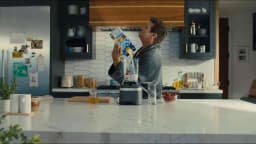
Poppi Bets on Super Bowl LVIII to Reframe Soda for a Health Generation
How Poppi's Super Bowl LVIII Commercial Turned Prebiotic Soda Into a Cultural Statement Poppi's...
How Uber Eats Made Helen the Face of Almost, Almost Anything
Uber Eats launched "Helen," a three-film advertising campaign created by TBWA\Chiat\Day and published in the United States in January 2024, starring Helen Mirren as a food-delivery enthusiast whose every craving Uber Eats can satisfy — even if it cannot fix her football team's play calls, quiet her mind, or summon a locksmith.
The campaign operates as a direct extension of Uber Eats' long-running "Get Almost, Almost Anything" platform, a creative territory the brand had maintained for approximately four years before its eventual replacement, according to reporting by mediapost.com and bandt.com.au. Each of the three executions follows the same structural logic: Helen identifies a genuine, delivery-eligible need — beers and cheeseballs for gameday, groceries and a moment of calm, late-night burgers and tater tots — and Uber Eats delivers it. The punchline in every film is the one thing the platform candidly cannot provide, a device that transforms a service limitation into a charm offensive. The tagline "Get almost, almost anything" is not merely a legal hedge; it functions as the comedic engine of the entire campaign.
In the United States, the campaign arrived timed to NFL season enthusiasm, anchoring Uber Eats to one of the most commercially significant viewing occasions in American culture. Helen Mirren's presence carries particular strategic weight: she is globally recognisable, radiates wit and authority, and brings a self-deprecating register that the campaign's humour depends on. The choice to build three distinct executions around a single character named Helen — rather than producing one standalone spot — signals a platform-thinking ambition, turning the character into a recurring brand property rather than a one-time celebrity endorsement.
Uber Eats operates in a fiercely contested US food and grocery delivery market. DoorDash holds the largest share of the US food delivery segment, while Instacart dominates same-day grocery delivery for many American households — two competitive pressures that push Uber Eats to defend both its restaurant and grocery delivery propositions simultaneously. The "Helen" campaign addresses this dual-front competitive reality by emphasising breadth of catalogue rather than speed or price, reinforcing the brand's "almost, almost anything" positioning as a differentiator rather than a disclaimer.
The strategic rationale draws on a well-documented insight: celebrity-led campaigns in the food delivery category are disproportionately effective at driving top-of-mind awareness during high-consumption occasions. Uber Eats had already proven the formula in 2022, when Jennifer Aniston, Lil Nas X, and Elton John appeared in earlier "Get Almost, Almost Anything" executions, as noted by campaignbrief.com. Helen Mirren represents a deliberate pivot toward an older, more affluent consumer segment — an audience with strong purchasing power and high willingness to pay for convenience — without alienating the platform's existing younger user base.
The global online food delivery market was valued at approximately $380.4 billion in 2024, according to Grand View Research, with projections of $618.4 billion by 2030. In the United States specifically, the delivery services category continues to grow as consumer habits formed during and after the pandemic consolidate into durable behaviour, per deliverect.com. Against that backdrop, Uber Eats' investment in brand-building creative — rather than purely promotional, discount-led advertising — reflects a maturing market strategy focused on preference over price competition. The "Helen" campaign exemplifies that shift.
The "Helen" campaign comprises three individual films, each constructed around the same comedic architecture: a recognisable domestic scenario, a genuine delivery need, and one conspicuously undeliverable request that Helen Mirren delivers with wry exasperation. The execution relies almost entirely on Mirren's performance — her timing, her ability to project both glamour and relatability, and her willingness to play the straight role in an absurdist scenario. That restraint is a creative choice. The films do not over-explain the joke or lean on visual spectacle; they trust the talent and the writing to carry the moment.
The first execution places Helen in a football-watching context, ordering beers and cheeseballs for gameday while lamenting that Uber Eats cannot improve her team's play-calling decisions. The second sees her requesting groceries alongside an impossible ask for "a quiet mind." The third positions her as a late-night snacker who needs burgers and tater tots but is also locked out — a locksmith, Uber Eats cannot supply. Each film reinforces the same brand truth from a different angle, building cumulative familiarity with the Helen character and the platform's honest self-awareness about its own scope.
Production credits for the "Helen" campaign are not publicly documented beyond the confirmed agency attribution to TBWA\Chiat\Day. What is evident from the films themselves is a production sensibility that prioritises performance over production complexity — clean, well-lit settings that keep focus on Mirren rather than on elaborate set design or post-production effects. The campaign was published across Uber Eats' owned digital channels, including YouTube, where the "Helen loves football" execution accumulated over 20,000 views, as documented in the video metadata reviewed by Clapboard.
No verified third-party performance data specific to the "Helen" campaign — including paid media reach, sales lift, or brand tracking results — is publicly available. No award listings for "Helen" have been identified across Cannes Lions, the Effie Awards, the One Show, D&AD, the Clio Awards, or the Webby Awards, based on research conducted by Clapboard.
What the available evidence does confirm is that the YouTube execution "Helen loves football" recorded approximately 20,529 views and 84 likes at the time of documentation, figures drawn from the video's own metadata. These numbers indicate a modest organic footprint for a campaign from a brand of Uber Eats' scale, suggesting the films functioned primarily as paid media assets rather than organic viral content — a common pattern for celebrity-led brand campaigns in the food delivery category.
It is worth noting that a separate, documented Uber Eats campaign on the same "Get Almost, Almost Anything" platform — distinct from "Helen" — generated a 193% engagement increase and double-digit year-over-year sales improvements, according to a case study published by warc.com. That result speaks to the platform's proven effectiveness as a creative territory, even if those specific figures cannot be attributed to the "Helen" executions directly.
Structurally, "Helen" demonstrates strong creative coherence. The three-film architecture builds character equity across exposures, the humour is brand-integrated rather than decorative, and Helen Mirren's casting extends the campaign's demographic reach without compromising creative consistency. Clapboard rates this campaign 61 out of 100, reflecting solid strategic and executional craft offset by limited evidence of measurable impact at scale.
The Uber Eats "Helen" campaign is a three-film advertising series created by TBWA\Chiat\Day and published in the United States in January 2024. It stars Helen Mirren as a consumer whose every food delivery need Uber Eats meets — while humorously acknowledging the one thing each scenario requires that the platform cannot provide.
TBWA\Chiat\Day created the "Helen" campaign for Uber Eats. The agency is the confirmed creative partner on record for this United States film campaign, published in January 2024. TBWA\Chiat\Day had previously worked with Uber Eats on earlier executions within the same "Get Almost, Almost Anything" platform.
The tagline is "Get almost, almost anything on Uber Eats." It anchors each of the three Helen films and functions as both a brand promise and a comedic device, acknowledging service limits while reinforcing the platform's breadth. The tagline ran across the "Get Almost, Almost Anything" platform in more than 17 international markets, per mediapost.com.
Jennifer Aniston, Lil Nas X, and Elton John all appeared in earlier executions of Uber Eats' "Get Almost, Almost Anything" platform in 2022, according to campaignbrief.com. Helen Mirren joined the platform in 2024, extending the campaign's celebrity-led creative strategy into a new demographic register for the United States market.
No award listings for the Uber Eats "Helen" campaign have been identified. Research conducted by Clapboard found no recognised entries across Cannes Lions, the Effie Awards, the One Show, D&AD, the Clio Awards, or the Webby Awards. The campaign received a Clapboard Score of 61 out of 100, reflecting solid craft with limited documented impact.
"Helen" extends a creative platform Uber Eats maintained for approximately four years, according to mediapost.com. In the United States, it positions Uber Eats against competitors including DoorDash and Instacart by emphasising catalogue breadth and brand personality over price. The three-film structure reflects a brand-building investment designed to build lasting consumer preference.
.webp)
Creative Collaboration Platform: The Backbone of Modern Creative WorkWhat is a creative collaboration platform?Clapboard defines a creative collaboration platform as the operational core for today’s distributed creative teams. This is not a collection of digital collaboration tools stitched together; Clapboard’s system


Understanding the Creative Production MarketplaceWhat is a Creative Production Marketplace?Clapboard defines a creative production marketplace as a structured ecosystem where brands, agencies, and production talent converge to execute video, advertising, and branded content at scale. Unlike the legacy agency or freelanREAD FULL ARTICLE

The Urgent Need for a Creative Production Operating SystemWhy Traditional Creative Production Models Break DownClapboard sees the creative production landscape shifting under pressure. Content velocity is no longer a buzzword—it’s a mandate. Modern advertising demands relentless output across dozens of channels, each wREAD FULL ARTICLE