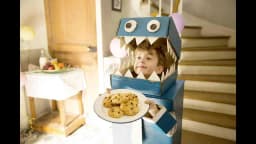
Uber Eats and Coca-Cola partnered with Romance agency in France to deliver free family-cooked Christmas meals to essential workers on duty on Christmas Eve

Uber Eats and Coca-Cola Bring Christmas Home to France's Essential Workers
'Christmas Feels Like Home' — known in France as 'Noël comme à la maison' — is a December 2018 co-branded campaign created by Romance agency for Uber Eats and Coca-Cola European Partners France, in which relatives of essential workers cooked Christmas meals that Uber Eats delivered free of charge to workers' workplaces on Christmas Eve, with a bottle of Coca-Cola included in every delivery.
The campaign launched in France on 7 December 2018, according to snacking.fr, with a registration window closing on 15 December 2018 and the core activation taking place on 24 December 2018. Its target audience was deliberately specific: medical workers, caregivers, security staff, hotel workers, and firefighters — the people most likely to spend Christmas Eve on shift rather than at a family table. By addressing that precise human circumstance, Romance gave both brands a platform that transcended conventional seasonal advertising and positioned Uber Eats as infrastructure for emotional connection rather than mere convenience.
The campaign expressed itself primarily through film, a single media asset that told the story of a night watchman receiving his family's home-cooked Christmas meal at work, as documented by adsoftheworld.com. In France, where the concept of the family meal carries deep cultural weight, that narrative choice was pointed and purposeful. Coca-Cola's long-standing association with Christmas iconography provided a ready-made emotional register, while Uber Eats supplied the logistical and technological credibility to make the gesture feel real rather than symbolic. Together the two brands co-authored a moment rather than merely co-signed an advertisement. The campaign received a Clapboard Score of 60 out of 100, reflecting a concept with genuine emotional resonance that nonetheless left questions about scale, reach, and measurable cultural impact.
Romance agency built the campaign's strategy on a single consumer truth: a meaningful segment of the French workforce has no choice but to work on Christmas Eve. That insight reframed Uber Eats not as a substitute for cooking but as a mechanism for preserving the ritual of the family meal across physical distance, turning a logistical service into an act of care.
In France, online food delivery was an intensely contested category by late 2018. Uber Eats competed directly against Deliveroo and Just Eat, both of which were aggressively expanding their French market presence at the time. Differentiating on emotional territory — rather than speed, price, or selection — gave Romance a way to elevate Uber Eats above the tactical noise of promotional campaigns that dominated the sector. According to horizont.net, the campaign was covered positively by trade press as an emotionally driven co-promotion, a framing that suggests the strategic positioning landed credibly with industry observers.
The decision to partner with Coca-Cola European Partners France was itself strategically significant. Coca-Cola's global 'Taste the Feeling' platform, launched in 2016 as part of its 'One Brand' strategy according to canny-creative.com, had already established a template for linking the brand to intimate, everyday emotional moments. 'Christmas Feels Like Home' extended that sensibility into a hyperlocal French activation with a concrete social dimension. Distribution ran across social media, in-app promotions, and broader digital activity, as reported by horizont.net, keeping the campaign within channels where both brands already had established audiences and where the film could travel organically among people who recognised the workers being celebrated.
Romance agency shaped the entire campaign around a single film. The creative team included Alexandre Hervé and Vincent Boursaud as creative directors, with Virgile Lassalle and Sébastien de Milleville contributing to the creative development alongside Sarah Holgado, Romain Roux, and Julien Guetta, as documented by clapboard.com. That team built the narrative around a night watchman — an archetype chosen for its quiet universality — receiving his family's home-cooked Christmas meal delivered to his post by Uber Eats.
The choice of a single film asset was deliberate. Rather than fragmenting the emotional argument across multiple formats, Romance concentrated investment into one piece of storytelling capable of producing the kind of sustained empathic response that social sharing requires. The night-watchman scenario avoided the sentimentality trap that afflicts much Christmas advertising by grounding the emotion in a specific professional reality rather than a generic domestic fantasy. The presence of a Coca-Cola bottle in each delivery was woven into the film as a natural detail rather than a branded interruption, consistent with Coca-Cola's long-established visual language around the holiday season.
The campaign's mechanics — real families cooking real meals, delivered by the actual Uber Eats platform — meant the film was not purely fictional. It documented a genuine activation, which gave the creative work a layer of authenticity that purely narrative Christmas campaigns cannot manufacture. According to snacking.fr, the campaign was announced on 7 December 2018 with registration open until 15 December, giving the film a functional role: it was the primary communication driving sign-ups from the families of eligible workers, making creative effectiveness and operational success directly interdependent.

No verified performance data for 'Christmas Feels Like Home' is publicly available in terms of meals delivered, sign-up volumes, social reach, or earned media impressions. Trade coverage of the campaign was limited, with horizont.net — in a piece by journalist Tim Theobald published on 10 December 2018 — representing the most substantive documented press response. That article framed the campaign positively as an emotionally driven co-promotion, but no quantitative outcomes were reported.
Structurally, the campaign's effectiveness rests on the alignment between its mechanism and its message. The gesture of delivering a family-cooked meal was inherently shareable, and the registration window of 7 to 15 December created a natural earned-media cycle in which eligible workers and their families became participants rather than passive audiences. Grégoire Sénéchal, Senior Manager Digital E-Commerce and Innovation at Coca-Cola European Partners France, was identified as a key stakeholder in the activation, according to horizont.net, suggesting meaningful brand investment at a senior level rather than a peripheral content experiment.
The Clapboard Score of 60 out of 100 reflects a campaign that succeeds on conceptual clarity and emotional architecture but leaves room for stronger creative ambition and broader cultural penetration. The partnership logic is sound, the insight is precise, and the execution is coherent. What the campaign does not demonstrate — at least in the publicly available record — is the kind of measurable scale or cultural impact that would elevate it from a well-conceived seasonal activation to a benchmark piece of purpose-driven advertising in the French market.
'Christmas Feels Like Home' was a December 2018 campaign created by Romance agency in France. Uber Eats delivered free Christmas meals cooked by workers' relatives to their workplaces on Christmas Eve, with a Coca-Cola bottle included. The campaign targeted medical workers, caregivers, security staff, hotel workers, and firefighters on duty during the holiday.
Romance, a French creative agency, developed 'Noël comme à la maison' for Uber Eats and Coca-Cola European Partners France. The creative team included Alexandre Hervé, Vincent Boursaud, Virgile Lassalle, Sébastien de Milleville, Sarah Holgado, Romain Roux, and Julien Guetta, as documented by clapboard.com.
Families of eligible essential workers registered between 7 and 15 December 2018. On Christmas Eve, Uber Eats delivered the home-cooked meals to workers' places of employment across France, with each delivery including a Coca-Cola bottle. The activation was supported by a film, social media, and in-app promotions, according to horizont.net.
Alexandre Hervé and Vincent Boursaud served as creative directors on the campaign for Romance agency, according to clapboard.com. They led a team that also included Virgile Lassalle, Sébastien de Milleville, Sarah Holgado, Romain Roux, and Julien Guetta on a campaign built around a single film asset.
'Christmas Feels Like Home' received a Clapboard Score of 60 out of 100. The score reflects a campaign with genuine emotional clarity and a well-aligned brand partnership, while indicating room for stronger creative ambition and the kind of measurable cultural impact that distinguishes benchmark seasonal advertising in the French market.
The 2018 French activation was not a documented continuation of an earlier platform, according to adsoftheworld.com. Coca-Cola's closest preceding global framework was 'Taste the Feeling', launched in 2016 as part of the brand's 'One Brand' strategy, per canny-creative.com. 'Christmas Feels Like Home' was a standalone co-branded partnership with Uber Eats.
.webp)
Creative Collaboration Platform: The Backbone of Modern Creative WorkWhat is a creative collaboration platform?Clapboard defines a creative collaboration platform as the operational core for today’s distributed creative teams. This is not a collection of digital collaboration tools stitched together; Clapboard’s system


Understanding the Creative Production MarketplaceWhat is a Creative Production Marketplace?Clapboard defines a creative production marketplace as a structured ecosystem where brands, agencies, and production talent converge to execute video, advertising, and branded content at scale. Unlike the legacy agency or freelanREAD FULL ARTICLE

The Urgent Need for a Creative Production Operating SystemWhy Traditional Creative Production Models Break DownClapboard sees the creative production landscape shifting under pressure. Content velocity is no longer a buzzword—it’s a mandate. Modern advertising demands relentless output across dozens of channels, each wREAD FULL ARTICLE