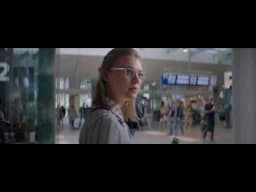
Uber's 'Boxes' campaign, created by Forsman & Bodenfors in 2017, used cardboard boxes and 200 Bangkok extras to make ridesharing's city-unclogging purpose

Uber Boxes Turns Bangkok Traffic Into a Brand Purpose Statement
Uber's 'Boxes' is a 2017 brand-purpose film created by Swedish agency Forsman & Bodenfors, published in November 2017 and filmed on the streets of Bangkok, in which approximately 200 extras carry cardboard boxes to represent cars, humorously exposing the absurdity of urban congestion across Asia's largest cities and positioning ridesharing as a practical path toward less-clogged streets.
The campaign marks a significant departure for the brand. 'Boxes' is described as Uber's first-ever brand-purpose campaign, meaning it is the first time the company stepped back from product-level messaging to articulate a broader civic argument: that private-car dependency is a collective problem, and that ridesharing complements public transit rather than competing with it. The film does not lead with app features, pricing, or celebrity endorsements. It leads with an image — a city overrun by cardboard boxes — and lets the visual metaphor do the persuading.
In Sweden, where Forsman & Bodenfors operates and where the campaign was published, the work represents a mature brand-building approach increasingly favoured by technology companies seeking cultural legitimacy beyond growth metrics. The geographic anchor of the creative, however, is Southeast Asia. Bangkok was chosen as the production location, and the campaign's strategic ambition extends across nine major Asian cities where Uber was actively expanding. The film directed viewers to unlockingcities.com, as reported by adstasher.com, signalling that 'Boxes' was conceived as the centrepiece of a wider platform rather than a standalone execution. The soundtrack — 'The Bare Necessities' from Disney's 1967 animated film The Jungle Book — gives the film a disarming warmth that offsets its pointed social commentary. Clapboard Score: 72/100.
Uber commissioned research covering nine major Asian cities to underpin the 'Boxes' campaign. According to adstasher.com and linkedin.com, that research found drivers in those cities spent an average of 52 minutes per day stuck in traffic and a further 26 minutes searching for parking — a combined daily cost of nearly an hour and a half per driver attributable to private-car use. This data gave Forsman & Bodenfors a concrete, human-scale argument to anchor the film's broader purpose claim.
The strategic logic is clear. Rather than positioning Uber against taxis or competing ride-hailing platforms directly, the campaign repositions the entire category. The real competitor in 'Boxes' is the private car and the congested urban systems it produces. In the Asian markets targeted, competitors such as Grab and, at the time, Go-Jek were also expanding rapidly, making straightforward product differentiation difficult. By elevating the conversation to urban liveability, Uber sought ground that no feature comparison could easily contest.
The global ride-hailing market was estimated at approximately 36 billion US dollars in 2017, according to data cited by cbinsights.com and statista.com, with projections from Goldman Sachs suggesting growth toward 285 billion US dollars by 2030. In that context, a brand-purpose campaign anchored in genuine research rather than aspiration represented a calculated effort to build long-term trust in markets where Uber was still establishing itself. In Sweden, where Forsman & Bodenfors has built a reputation for culturally resonant, idea-led advertising, this kind of strategic ambition is consistent with the agency's broader body of work.
Adam Berg directed 'Boxes' for Uber and Forsman & Bodenfors, as documented by linkedin.com and selfstorming.com. Berg's direction transforms what could have been a dry infographic into a kinetic, street-level spectacle. The film was shot on location in Bangkok, deploying approximately 200 extras carrying cardboard boxes through real urban environments, as confirmed by adsoftheworld.com.
The cardboard box is the campaign's central creative device. Each box stands in for a private car, and as the film progresses and the streets fill with box-carrying pedestrians, the absurdity of car-centric city planning becomes visceral rather than rhetorical. The metaphor works precisely because it is physical and playful rather than data-driven or preachy. Shooting on Bangkok's actual streets — rather than a controlled set — adds documentary texture that reinforces the campaign's argument about real cities and real congestion.
The soundtrack choice is equally deliberate. 'The Bare Necessities,' from Disney's 1967 The Jungle Book, carries an implicit message: the simplest way of getting around might be the most liberating. The song's familiar, optimistic tone gives the film emotional accessibility without softening its critique. Together, Berg's direction, the street-cast scale of the production, and the licensed Disney audio create a piece of work that operates simultaneously as entertainment, social commentary, and brand positioning. In Sweden, Forsman & Bodenfors has consistently deployed this blend of humour and substance across campaigns for major international clients, and 'Boxes' sits comfortably within that creative tradition.
No verified third-party performance data for 'Boxes' — such as view counts, earned media valuations, or brand-lift measurements — is publicly available in the trade press sources reviewed, including Campaign, Ad Age, Adweek, The Drum, and Contagious, as noted in research compiled for this analysis.
Structurally, however, the campaign was built for measurable reach. The film directed audiences to a dedicated platform, unlockingcities.com, according to adstasher.com, which suggests Uber and Forsman & Bodenfors intended to convert attention into active engagement rather than passive viewing. The Thai market launch was documented on November 7, 2017, per Brandinside Asia, indicating a coordinated regional rollout rather than a single-market release. The use of a recognisable Disney soundtrack from The Jungle Book, a globally familiar property, would have materially supported shareability on social platforms — a standard distribution mechanic for purpose-led brand films in 2017.
Uber's broader commercial context at the time of the campaign's release is relevant. According to data cited by scribd.com, Uber reported gross bookings of approximately 8.7 billion US dollars in Q2 2017 and adjusted net revenue of approximately 1.75 billion US dollars for the same period — both roughly double the prior-year levels. In that environment, a brand-purpose investment of this kind reads as an effort to build cultural equity in Asian expansion markets at a moment when the company's commercial fundamentals were accelerating. The Clapboard Score of 72/100 reflects a campaign with strong creative and strategic coherence that nonetheless lacks independently verified performance documentation.
Uber's 'Boxes' is a 2017 brand-purpose film created by Forsman & Bodenfors, published in Sweden in November 2017. It was Uber's first brand-purpose campaign, using cardboard boxes to represent cars and highlight urban congestion across major Asian cities, positioning ridesharing as a complement to public transit rather than a luxury product.
Adam Berg directed the Uber 'Boxes' film, as documented by linkedin.com and selfstorming.com. Berg shot the campaign on location in Bangkok with approximately 200 extras carrying cardboard boxes through real city streets, giving the film documentary texture that reinforces its argument about private-car congestion in major Asian urban centres.
'The Bare Necessities,' from Disney's 1967 The Jungle Book, was chosen for Uber's 'Boxes' campaign as documented by adsoftheworld.com. The familiar, optimistic song signals that simpler, shared transport is liberating, giving the film emotional warmth that offsets its pointed critique of car-dependent cities without undermining the social commentary.
Uber commissioned research across nine major Asian cities for the 'Boxes' campaign. According to adstasher.com and linkedin.com, the research found drivers spent an average of 52 minutes daily in traffic and 26 minutes searching for parking, providing a concrete human-scale data foundation for Forsman & Bodenfors to build the campaign's brand-purpose argument.
The 'Boxes' campaign was published in Sweden in November 2017, created by Forsman & Bodenfors for Uber. The Thai market launch occurred on November 7, 2017, per brandinside.asia, indicating a coordinated regional rollout. The campaign directed audiences to a dedicated platform, unlockingcities.com, reported by adstasher.com, extending its reach beyond the film itself.
Uber's 'Boxes' campaign by Forsman & Bodenfors earns a Clapboard Score of 72 out of 100. The score reflects strong creative and strategic coherence — a distinctive visual metaphor, purposeful soundtrack, and research-backed positioning — alongside the absence of independently verified public performance data confirming the campaign's measurable commercial or cultural impact.
.webp)
Creative Collaboration Platform: The Backbone of Modern Creative WorkWhat is a creative collaboration platform?Clapboard defines a creative collaboration platform as the operational core for today’s distributed creative teams. This is not a collection of digital collaboration tools stitched together; Clapboard’s system


Understanding the Creative Production MarketplaceWhat is a Creative Production Marketplace?Clapboard defines a creative production marketplace as a structured ecosystem where brands, agencies, and production talent converge to execute video, advertising, and branded content at scale. Unlike the legacy agency or freelanREAD FULL ARTICLE

The Urgent Need for a Creative Production Operating SystemWhy Traditional Creative Production Models Break DownClapboard sees the creative production landscape shifting under pressure. Content velocity is no longer a buzzword—it’s a mandate. Modern advertising demands relentless output across dozens of channels, each wREAD FULL ARTICLE