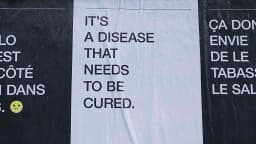
Uber's 2015 Safe Breathalyzer campaign, created by Rethink in Canada, placed a custom kiosk outside Toronto nightlife venues to connect impaired drivers with

How Uber and Rethink Turned a Breathalyzer Kiosk Into a Road Safety Statement
Uber's Safe Breathalyzer campaign is a 2015 ambient activation created by Canadian agency Rethink, in which a custom breathalyzer kiosk was placed outside Toronto nightlife venues, allowing users to test their blood-alcohol level and request a free Uber ride home if they exceeded the legal limit.
Launched in April 2015 in Canada, the campaign operates at the intersection of public safety and ride-hailing utility. Rather than broadcasting a message about responsible drinking, Uber and Rethink constructed a physical intervention — a curbside kiosk designed and fabricated by Toronto studio Stacklab — that converted a moment of vulnerability into a frictionless service encounter. Users blew into a disposable straw for six seconds, received a blood-alcohol reading on an integrated tablet, and were connected to the Uber app if their reading indicated impairment. New Canadian users could also redeem one free ride, capped at twenty-five dollars, using the promotional code UberSafe2015, valid through December 30, 2015, as documented by Clapboard.
The campaign's geographic focus on Toronto, Canada's largest city and one of its most active nightlife markets, gave the activation immediate cultural relevance. Ian Black, General Manager of Uber Toronto, articulated the dual purpose directly, stating the campaign aimed to ensure a safe, reliable and affordable ride home is available to everybody, especially late at night when drunk driving is most common and can be avoided, as reported by Adweek. The kiosk did not merely advertise Uber's service — it demonstrated it at the precise moment a consumer needed it most. This strategic alignment of brand behaviour with brand message earned the campaign a Clapboard Score of 72 out of 100, reflecting strong conceptual clarity and production commitment within a single-asset, single-market execution.
Rethink positioned the Uber Safe Breathalyzer campaign around a single, defensible consumer insight: the most dangerous moment for impaired driving occurs after leaving a late-night venue, before any sober decision is made. By placing the breathalyzer kiosk at exactly that threshold — outside the door, on the street — the agency collapsed the distance between awareness and action to zero.
In Canada, impaired driving remains a leading criminal cause of death and injury on public roads, a fact consistently cited by Transport Canada in its road safety reporting. The campaign entered this public health context not as a government-style warning but as a brand-funded utility, a distinction that sharpened its cultural cut-through considerably. Uber's approach also carried a competitive subtext. In the Canadian ride-hailing market of 2015, traditional taxi services and emerging competitors were all making accessibility arguments. By owning the safety narrative with a physical, testable device, Uber differentiated itself on behaviour rather than price or coverage. Lyft, which held approximately forty percent market share in San Francisco and forty-five percent in Austin during early 2015 according to data cited by the Los Angeles Times, had not yet launched in Canada, leaving Uber with meaningful first-mover room to shape local brand perception.
Globally, Uber's revenue grew from approximately four hundred million dollars in 2014 to between one point seven and two billion dollars in 2015, according to Business of Apps, reflecting rapid international expansion that made local brand-building exercises in anchor markets like Canada strategically significant. The Safe Breathalyzer campaign served that local agenda precisely: it generated earned media well beyond the Toronto activation footprint while reinforcing Uber's positioning as a safety-oriented alternative to impaired driving, rather than simply a cheaper alternative to a cab.
The Uber Safe Breathalyzer campaign's physical form is its most distinctive creative decision. Rethink chose ambient media — a single, purpose-built street kiosk — over digital or broadcast channels, forcing the idea to function as both message and mechanism simultaneously.
Creative direction on the campaign was led by Aaron Starkman, Dré Labre, Chris Staples, and Ian Grais at Rethink, with copywriting by Francesco Grandi and art direction by Simon Au, as documented by Clapboard and confirmed by Communication Arts. The kiosk itself was designed and fabricated by Stacklab, a Toronto-based design and fabrication studio, whose involvement brought industrial rigour to what could easily have remained a conceptual sketch. The device incorporated a disposable straw mechanism, an integrated tablet running Uber's app interface, and a blood-alcohol reading system capable of returning results within seconds of a six-second breath sample. Software engineering for the installation was led by Brent Marshall, as noted in Rethink's production credits cited by Clapboard.
Visually and functionally, the kiosk was designed to be instantly legible at night, in conditions where its target users — people leaving bars and clubs in Toronto — would be operating with reduced cognitive clarity. The Uber branding was present but not dominant; the breathalyzer mechanic led the interaction, with the brand reveal arriving as a natural consequence of the safety moment rather than its premise. Adweek, which covered the activation on April 8, 2015, described the concept as a very cool campaign and highlighted the simplicity of the user journey as a core strength. That editorial framing — a trade press endorsement of the experience design rather than the production values — reflects how effectively Rethink integrated craft with strategic intent across a single media asset.
The Uber Safe Breathalyzer campaign earned a Bronze Cyber Lion at the Cannes Lions International Festival of Creativity in 2015, awarded jointly to Rethink and Uber, confirming industry recognition of the activation's creative and technical ambition. The campaign also appeared as a finalist in the Shorty Awards technology section, as reported by the Shorty Awards, extending its awards footprint beyond advertising into adjacent creative disciplines.
On YouTube, the campaign video generated more than one hundred and sixty-four thousand views, according to data cited by Communication Arts, a meaningful figure for a single-market ambient activation with no paid media support behind the video itself. Uber stated publicly that it was thrilled with the kiosk's early response, as reported by Kiosk Marketplace, though no specific numerical uptake figures were released. Coverage of the Toronto activation appeared across Engadget, Road and Track, Kiosk Marketplace, Rooster Post, and The Spirits Business within days of the April 2015 launch, demonstrating the campaign's capacity to generate earned media across automotive, technology, and lifestyle verticals simultaneously.
No verified conversion data — ride bookings attributable to the kiosk, promotional code redemption rates, or incremental user acquisition figures in Canada — is publicly available. What the documented record does confirm is structural effectiveness: a zero-paid-media ambient installation in one Canadian city produced international press coverage, two festival awards, and sustained YouTube viewership over a multi-year period. For a campaign built around a single physical asset, that distribution of impact is unusual and reflects the strength of the underlying idea. The Clapboard Score of 72 out of 100 acknowledges both the conceptual precision of the execution and the inherent scale ceiling of a single-kiosk, single-city activation.
The Uber Safe Breathalyzer was a 2015 ambient campaign by Rethink for Uber in Canada. A custom kiosk placed outside Toronto nightlife venues let users test their blood-alcohol level and request a free Uber ride home if over the legal limit. The activation launched in April 2015 and earned a Cannes Bronze Cyber Lion.
Rethink, a Canadian advertising agency, created the Uber Safe Breathalyzer campaign. Creative directors Aaron Starkman, Dré Labre, Chris Staples, and Ian Grais led the work, with copywriter Francesco Grandi and art director Simon Au. Toronto studio Stacklab designed and fabricated the physical kiosk used in the Toronto activation.
The campaign ran in Toronto, Canada, launching in April 2015. The breathalyzer kiosk was placed outside nightlife venues in the city. Coverage of the Toronto activation was published by Adweek, Engadget, and Road and Track in early April 2015, confirming the campaign's Canadian launch window as documented by Clapboard.
The Uber Safe Breathalyzer campaign won a Bronze Cyber Lion at the 2015 Cannes Lions International Festival of Creativity, awarded to Rethink and Uber. It also appeared as a finalist in the Shorty Awards technology section. The campaign's YouTube video received more than one hundred and sixty-four thousand views, according to Communication Arts.
Users blew into a disposable straw for six seconds and received a blood-alcohol reading on an integrated tablet. If the reading exceeded the legal limit, the kiosk connected them to the Uber app for a free ride home. New Canadian users could also redeem one free ride capped at twenty-five dollars using the code UberSafe2015.
Uber launched the Safe Breathalyzer campaign in Canada to establish its safety credentials in a key market where it was building its user base. Ian Black, Uber Toronto's General Manager, stated the goal was ensuring a safe, reliable, and affordable ride home was available late at night, as reported by Adweek, connecting the brand directly to impaired-driving prevention.
.webp)
Creative Collaboration Platform: The Backbone of Modern Creative WorkWhat is a creative collaboration platform?Clapboard defines a creative collaboration platform as the operational core for today’s distributed creative teams. This is not a collection of digital collaboration tools stitched together; Clapboard’s system


Understanding the Creative Production MarketplaceWhat is a Creative Production Marketplace?Clapboard defines a creative production marketplace as a structured ecosystem where brands, agencies, and production talent converge to execute video, advertising, and branded content at scale. Unlike the legacy agency or freelanREAD FULL ARTICLE

The Urgent Need for a Creative Production Operating SystemWhy Traditional Creative Production Models Break DownClapboard sees the creative production landscape shifting under pressure. Content velocity is no longer a buzzword—it’s a mandate. Modern advertising demands relentless output across dozens of channels, each wREAD FULL ARTICLE