The Humane League's #McGhoster campaign by Don't Panic used brand-jacking and a viral petition to pressure McDonald's over chicken-welfare commitments in the

The Humane League McGhoster Campaign That Haunted McDonald's
The Humane League's #McGhoster — The Party's Over is a 2019 public interest campaign, created by London agency Don't Panic, that used brand-jacking creative tactics in the United Kingdom to pressure McDonald's into signing the Better Chicken Commitment by directing audiences to a petition at McGhoster.com.
The campaign launched on 19 June 2019, as reported by The Drum, making it Don't Panic's first creative work for The Humane League following the agency's appointment as creative partner that same month. The central conceit borrowed the modern dating term "ghosting" and applied it to corporate accountability: McDonald's, the campaign argued, was ghosting its own animal-welfare responsibilities by cultivating a warm, family-friendly "I'm Lovin' It" persona while profiting from the inhumane treatment of chickens. A fictionalised "McDonald's Mansion" — a party now deserted and abandoned — served as the campaign's visual metaphor, presenting the brand as having walked out on commitments it had never properly made.
The campaign operated across multiple channels simultaneously in the United Kingdom. A short film anchored the work, accompanied by brand-jacking out-of-home posters, advertising vans deployed in key locations, and a coordinated social media push. All touchpoints directed audiences to McGhoster.com, where a public petition demanded McDonald's sign the Better Chicken Commitment — a set of minimum standards for broiler chicken welfare — and its North American equivalent. According to The Drum, the petition had already gathered 17,279 signatures toward a 70,000-signature goal at the time of the campaign's public launch on 19 June 2019. The Clapboard Score for #McGhoster stands at 67 out of 100, reflecting a campaign whose structural ambition and cultural fluency are acknowledged even where verifiable long-form performance data remains limited.
The Humane League pursues corporate accountability through coordinated multi-channel pressure on major food brands. Its strategic toolkit, as documented by Animal Charity Evaluators, combines public advertising, protests, shareholder engagement, petitions, and sustained media relations — precisely the framework deployed in #McGhoster. Animal Charity Evaluators also reported that The Humane League secured 35 animal-welfare commitments in a single six-month reporting period: eight in the United States, 22 in Japan, and five in other markets, illustrating the organisation's global reach even when a campaign is geographically anchored, as #McGhoster was, in the United Kingdom.
Don't Panic's creative strategy centred on brand-jacking — the deliberate appropriation of a target brand's visual identity and cultural associations to reframe its public image. By mirroring McDonald's own aesthetic codes and then subverting them, the campaign placed the fast-food giant inside a narrative it could not easily dismiss or ignore. This approach carries measurable strategic value in a media environment where animal-welfare organisations compete for attention against brands whose advertising budgets dwarf their own. Competitors in the corporate-accountability advocacy space, such as Compassion in World Farming — which also campaigns on broiler chicken standards in the United Kingdom — tend to rely on direct petition mechanics and press partnerships; Don't Panic's brand-jacking execution gave The Humane League a distinctly commercial-creative vocabulary that cut through differently.
The United Kingdom fast-food market provides fertile ground for this kind of pressure. World Animal Protection has documented ongoing concerns about broiler chicken welfare standards across UK supply chains, giving The Humane League's specific targeting of McDonald's clear contextual legitimacy in the domestic market.
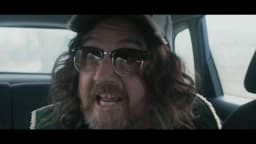
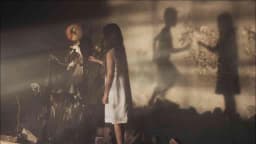
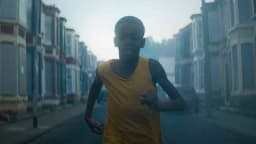
The McGhoster film is the campaign's centrepiece creative asset. It was directed by Matias Rygh and Mathias Eriksen and produced by Object and Animal, as reported by LBBonline. The shoot took place in Thailand over a single day — a logistical constraint that required the production to deliver a complete visual world within an extremely compressed schedule.
The film's art direction leaned into the McDonald's Mansion conceit with deliberate fidelity to the brand's colour palette and iconography before allowing decay and abandonment to take hold visually. This tension between familiar brand warmth and the horror of an empty, ghosted space gave the film its tonal authority. The brand-jacking approach extended beyond the film itself: out-of-home posters, advertising vans, and social posts all replicated and subverted McDonald's visual language in a coordinated system, as documented by Ads of the World, so that no single touchpoint could function in isolation from the others.
Senior Creative George McCallum of Don't Panic articulated the campaign's underlying logic directly, as quoted by LBBonline: "Despite the fact that McDonald's have cultivated a friendly and wholesome 'I'm Lovin' It' persona, they've been profiting from the inhumane treatment of chickens. We've set out to not only inform the public of this sobering fact, but to also let McDonald's know that it can't go on. It's time for McDonald's to stop ghosting their responsibilities and sign the Better Chicken Commitment." The creative team at Don't Panic included Joe Wade, Mark Whiteway, Jane Marshall, Rick Dodds, George McCallum, Saxony Goodwin, and Alice Dowdall, whose combined craft shaped a campaign that translated a complex corporate-accountability argument into immediately legible popular culture.
No independently verified post-campaign performance data for #McGhoster is publicly available beyond the petition figure reported at launch. According to The Drum, senior reporter Imogen Watson documented 17,279 signatures against a 70,000-signature goal at the point of the campaign's 19 June 2019 publication — a figure that represents organic traction gathered before the campaign's paid and earned media reach had fully compounded.
Structurally, the campaign's effectiveness case rests on several observable design choices. The brand-jacking creative system gave The Humane League earned media potential that a conventional advocacy campaign rarely achieves: by mimicking and subverting McDonald's own visual identity, the work generated inherent newsworthiness and invited direct comparison between the charity's claims and the brand's public positioning. The multi-format deployment — film, out-of-home, advertising vans, and social — created a surround-sound effect in the United Kingdom that reinforced the petition mechanic at every touchpoint. The Humane League's broader corporate-accountability record, as documented by Animal Charity Evaluators, demonstrates that this kind of coordinated pressure — of which #McGhoster was a single execution — does produce measurable institutional responses over time. The Clapboard Score of 67 out of 100 reflects a campaign that executes its strategic logic with confidence and creative rigour while leaving room for deeper documented impact to emerge.
#McGhoster — The Party's Over is a 2019 UK public interest campaign by The Humane League, created by Don't Panic, that used brand-jacking creative tactics to pressure McDonald's into signing the Better Chicken Commitment. It launched on 19 June 2019, directing audiences to a petition at McGhoster.com, as reported by The Drum.
Don't Panic created the McGhoster campaign for The Humane League in the United Kingdom. The film was directed by Matias Rygh and Mathias Eriksen and produced by Object and Animal, as reported by LBBonline. The Don't Panic creative team included George McCallum, Joe Wade, Mark Whiteway, Jane Marshall, Rick Dodds, Saxony Goodwin, and Alice Dowdall.
The McGhoster petition asked McDonald's to sign the Better Chicken Commitment and its North American equivalent. According to The Drum, the petition had 17,279 signatures toward a 70,000-signature goal at the time of the campaign's launch on 19 June 2019 in the United Kingdom.
Brand-jacking, as used in #McGhoster, means deliberately replicating a target brand's visual identity and cultural codes to reframe its public image. Don't Panic mirrored McDonald's aesthetic — colour palette, iconography — then subverted it with a party-abandoned narrative, as documented by Ads of the World, to argue McDonald's was ghosting chicken-welfare responsibilities.
The McGhoster film was shot in Thailand over a single day, according to LBBonline. It was produced by Object and Animal and directed by Matias Rygh and Mathias Eriksen. Despite the compressed one-day shoot, the film anchored a full multi-format campaign that also included out-of-home posters, advertising vans, and coordinated social posts across the United Kingdom.
The Humane League pursues corporate accountability through advertising, protests, shareholder engagement, petitions, and media relations. Animal Charity Evaluators documented the organisation securing 35 animal-welfare commitments in a single six-month period. #McGhoster applied this multi-channel approach specifically to McDonald's chicken-welfare policies in the United Kingdom, marking Don't Panic's first work for the organisation.
.webp)
Creative Collaboration Platform: The Backbone of Modern Creative WorkWhat is a creative collaboration platform?Clapboard defines a creative collaboration platform as the operational core for today’s distributed creative teams. This is not a collection of digital collaboration tools stitched together; Clapboard’s system


Understanding the Creative Production MarketplaceWhat is a Creative Production Marketplace?Clapboard defines a creative production marketplace as a structured ecosystem where brands, agencies, and production talent converge to execute video, advertising, and branded content at scale. Unlike the legacy agency or freelanREAD FULL ARTICLE

The Urgent Need for a Creative Production Operating SystemWhy Traditional Creative Production Models Break DownClapboard sees the creative production landscape shifting under pressure. Content velocity is no longer a buzzword—it’s a mandate. Modern advertising demands relentless output across dozens of channels, each wREAD FULL ARTICLE