DCT Abu Dhabi's 'Be Moved in a Thousand Ways' campaign uses EEG brainwave technology and 35 global advocates to position Saadiyat Cultural District on the

How Abu Dhabi Turned Brainwaves Into a Global Cultural Invitation
The Department of Culture and Tourism – Abu Dhabi launched 'Be Moved in a Thousand Ways' in July 2024 — a global campaign created with Serviceplan Middle East that uses neural-data technology to invite audiences worldwide to connect with Saadiyat Cultural District's vision of culture as a universal force, coinciding with the announcement that the district's construction will be complete by the end of 2025.
The campaign operates across a broad strategic canvas. DCT Abu Dhabi built its message around a simple but resonant premise: that culture elevates people from every walk of life, not only those already embedded in the arts. To make that premise tangible, the campaign features 35 advocates drawn from art, architecture, museums, and popular culture — among them Oprah Winfrey, Idris Elba, Lord Norman Foster, Mona El Shazly, and Lang Lang, as reported by campaignme.com. Each was selected for their capacity to reach a genuinely diverse global audience, and the selection was informed by data spanning 29 markets, according to DCT Abu Dhabi.
In the United Arab Emirates, the campaign arrived at a culturally charged moment. Saadiyat Cultural District is set to become one of the most concentrated gatherings of world-class museums anywhere — housing institutions including the Louvre Abu Dhabi and the forthcoming Guggenheim Abu Dhabi. 'Be Moved in a Thousand Ways' is the campaign charged with signalling that arrival to the world. A brand manifesto, narrated collectively by more than 65 creators and thinkers according to campaignme.com, anchors the film and extends the campaign's democratic cultural argument far beyond any single voice. Clapboard rates this campaign 79 out of 100, recognising its structural ambition, technological originality, and the scale of its global reach.
DCT Abu Dhabi designed 'Be Moved in a Thousand Ways' to solve a specific positioning challenge. Saadiyat Cultural District needed to register not merely as a construction project nearing completion, but as a living idea — a destination with intellectual and emotional relevance for global travellers who had no prior connection to Abu Dhabi's cultural ambitions.
The strategic foundation rests on audience breadth. Rather than speaking narrowly to arts enthusiasts, the campaign treats culture as a universal access point, a proposition informed by research drawn from 29 markets according to DCT Abu Dhabi. That scope matters commercially. Global international tourism reached approximately 1.4 billion overnight arrivals in 2024, representing an increase of around eleven percent over 2023, according to UN Tourism. International tourism receipts were estimated at approximately 1.6 trillion US dollars in 2024, according to UN Tourism, placing the broader travel economy in an expansionist phase precisely as Abu Dhabi's most ambitious cultural infrastructure moves toward completion.
In the United Arab Emirates, the competitive landscape is well-defined. Dubai's tourism machine — built on spectacle, retail, and event-driven visitation — has long dominated regional mindshare. Saudi Arabia's Vision 2030 cultural programme, including the Diriyah project, represents an emerging rival for the same internationally mobile, culturally curious traveller that Saadiyat Cultural District is targeting. Against this context, DCT Abu Dhabi's decision to lead with intellectual depth rather than visual spectacle alone is a deliberate act of differentiation. Andy Wyeth, Managing Director at Serviceplan Cologne, articulated the rationale directly, stating — as reported by campaignme.com — that with more than seven world-famous museums including the Louvre and Guggenheim, the opening called for an equally grand idea, and that Neural Murals invites audiences into the minds of creators. That framing positions Saadiyat Cultural District not as a destination to visit but as an experience to inhabit.
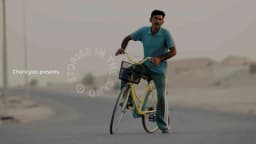
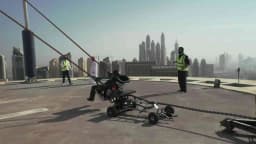
The campaign's creative execution is built around a genuinely novel technical process. Working with generative artist Ferdi Alıcı at Ouchhh Studios, the production team equipped each of the 35 advocates with a wireless EEG headset, with sensors attached to the forehead, while filming them responding to questions about the impact of culture on human life.
A pre-trained Auto Encoder recorded five distinct brainwave signals, capturing each participant's brain activity and state of mind in real time, according to DCT Abu Dhabi. That raw neural data was then transformed into dynamic abstract artworks — projected as immersive data murals onto giant LED screens within the studio environment. The result is a campaign film in which the visuals are not designed by a human hand in the conventional sense but generated directly from the documented inner states of the people on screen. The connection between subject and image is literal rather than metaphorical, which gives the work an evidential quality unusual in cultural tourism advertising.
Production was handled by Déjà vu, with PR and communications managed by Memac Ogilvy UAE, as reported by Dct Gov Ae and campaignme.com. The brand manifesto layer — narrated by more than 65 creators and thinkers — was woven across the film to build a collective voice that no single spokesperson could provide alone, per campaignme.com. The choice to treat neural data as both raw material and finished artwork reflects the broader intellectual argument of the campaign: that the internal experience of culture is as worthy of representation as its external monuments. In a category where destination campaigns frequently default to landscape cinematography and aspirational lifestyle footage, the Neural Murals methodology gives 'Be Moved in a Thousand Ways' a material distinctiveness that is difficult to replicate.
No independently verified third-party performance metrics for 'Be Moved in a Thousand Ways' are publicly available at the time of writing. What can be assessed is the structural effectiveness of the campaign's design and its strategic fit with the moment it entered.
The campaign launched in July 2024 in the United Arab Emirates, timed to coincide with the announcement that Saadiyat Cultural District's construction would be complete by the end of 2025, as reported by dct.gov.ae. That timing converts the campaign into both an awareness vehicle and a credibility signal — it is not promoting a hypothetical destination but an imminent one. The 29-market data foundation, the involvement of globally recognised figures including Oprah Winfrey and Idris Elba as reported by campaignme.com, and the technical originality of the EEG-driven Neural Murals process each serve to amplify earned media potential, particularly in arts, culture, and technology press.
The global context supports the campaign's commercial ambition. The World Bank reported that global tourism grew seven percent year-on-year in the third quarter of 2024, with approximately 447 million international tourists recorded during that quarter, according to Documents1 Worldbank. In this environment, a campaign with genuine editorial novelty — neural data as art, advocates as instruments — carries a structural advantage in generating coverage beyond paid placements. The Clapboard Score of 79 out of 100 reflects the campaign's strength across creative innovation and strategic clarity, with its primary area for further development being the measurement of long-term destination preference shift among its 29-market audience base.
'Be Moved in a Thousand Ways' is a global campaign launched in July 2024 by the Department of Culture and Tourism – Abu Dhabi to promote Saadiyat Cultural District. Created with Serviceplan Middle East, it uses EEG brainwave technology to transform the neural data of 35 cultural advocates into immersive generative artworks, per DCT Abu Dhabi.
The campaign features 35 globally recognised figures from art, architecture, and popular culture. Advocates include Oprah Winfrey, Idris Elba, Lord Norman Foster, Mona El Shazly, and Lang Lang, as reported by campaignme.com. Each was selected for their ability to engage a diverse global audience across the 29 markets informing the campaign's strategy.
Serviceplan Middle East and Ouchhh Studios used wireless EEG headsets to record five brainwave signals from each advocate in real time, according to DCT Abu Dhabi. A pre-trained Auto Encoder processed this data into dynamic abstract artworks projected as data murals on large immersive LED screens, with generative artist Ferdi Alıcı leading the process.
DCT Abu Dhabi launched the campaign in 2024 to coincide with the announcement that Saadiyat Cultural District's construction would be complete by the end of 2025, as reported by dct.gov.ae. The timing positions the United Arab Emirates as an imminent global cultural destination, building international awareness ahead of the district's opening.
Clapboard rates 'Be Moved in a Thousand Ways' 79 out of 100. The score reflects strong creative innovation through the Neural Murals process and clear strategic intent across a 29-market audience base. The primary area for development identified is the measurement of long-term destination preference shift among international travellers targeted by the campaign.
The campaign differentiates Abu Dhabi from Dubai's spectacle-led tourism model and Saudi Arabia's emerging Vision 2030 cultural projects by leading with intellectual depth. Saadiyat Cultural District's concentration of world-class museums, including the Louvre Abu Dhabi and forthcoming Guggenheim Abu Dhabi, anchors a positioning built on cultural substance rather than event-driven visitation.
.webp)
Creative Collaboration Platform: The Backbone of Modern Creative WorkWhat is a creative collaboration platform?Clapboard defines a creative collaboration platform as the operational core for today’s distributed creative teams. This is not a collection of digital collaboration tools stitched together; Clapboard’s system


Understanding the Creative Production MarketplaceWhat is a Creative Production Marketplace?Clapboard defines a creative production marketplace as a structured ecosystem where brands, agencies, and production talent converge to execute video, advertising, and branded content at scale. Unlike the legacy agency or freelanREAD FULL ARTICLE

The Urgent Need for a Creative Production Operating SystemWhy Traditional Creative Production Models Break DownClapboard sees the creative production landscape shifting under pressure. Content velocity is no longer a buzzword—it’s a mandate. Modern advertising demands relentless output across dozens of channels, each wREAD FULL ARTICLE