 ARCHIVE
The Body Shop Challenges Beauty Norms in Malaysia With Unnatural Beauty
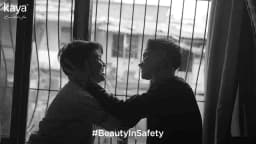
The Body Shop launched "Unnatural beauty, Good girl, Speak up" in Malaysia in May 2014, a digital campaign created by Grey Kuala Lumpur that challenged artificial beauty standards, gendered behavioural expectations, and cultural pressure on women to remain silent — using social commentary rather than product-led messaging across three media assets.
The campaign operates within the retail services sector and targets the Malaysian market directly, positioning The Body Shop not as a cosmetics vendor but as a values-driven brand with a point of view on how beauty culture shapes women's lives. Each of the three digital assets addresses a distinct dimension of that pressure: the first interrogates "unnatural beauty" as an imposed standard, the second subverts the "good girl" archetype enforced by social convention, and the third issues a direct call to action — "speak up" — turning passive consumers into potential advocates. Together, the trio forms a coherent argument rather than a product showcase, which is structurally unusual for retail-category digital advertising in any market.
In Malaysia, where The Body Shop operates as an established ethical beauty retailer, the campaign speaks to a generation of digitally active consumers navigating competing pressures around appearance, femininity, and self-expression. Grey, the global advertising network behind the execution, brought this campaign to life through its Kuala Lumpur office, bringing together a cross-functional creative team whose work reflects the agency's tradition of purpose-led communication. The Clapboard Score for "Unnatural beauty, Good girl, Speak up" is 64 out of 100, reflecting the campaign's strong strategic intent and creative coherence against the absence of publicly verified performance data.
ARCHIVEThe Body Shop built its brand identity on ethical positioning long before cause-led marketing became mainstream. In the Malaysian market, that heritage gave the 2014 campaign a credible platform from which to challenge beauty norms — a move that required strategic confidence in a category where most advertising still defaults to aspiration and transformation imagery.
The strategic rationale behind "Unnatural beauty, Good girl, Speak up" rests on a consumer insight that is specific to the cultural context of Malaysia in 2014: women face compounded pressure not only to meet aesthetic standards but to conform to behavioural ideals of deference and silence. By naming these pressures explicitly across three digital assets, Grey Kuala Lumpur repositioned The Body Shop as a brand that sees its customer as a whole person rather than a surface to be improved. This approach distinguishes The Body Shop from competitors such as L'Oréal and Maybelline, both of which maintained product-benefit-led messaging as their primary register in the Malaysian market at the time, with little of the social-commentary framing that characterises this campaign.
The digital medium chosen for the campaign is strategically significant. According to Digiday, digital media consumption in Southeast Asian markets grew rapidly in the early 2010s, making digital channels an increasingly effective vehicle for reaching younger, values-sensitive audiences. In Malaysia specifically, The Body Shop's choice to deploy three discrete digital assets rather than a single broadcast execution allows for sequential engagement — each piece capable of circulating independently while reinforcing the campaign's central argument. The planner on record, Lubna Khan, shaped a brief that placed cultural critique at the centre of the brief rather than at its margins.
David Sin served as Executive Creative Director on "Unnatural beauty, Good girl, Speak up," with Creative Directors Ramanjit Singh Gulati and Andrew Fong leading the visual and conceptual development of the three-asset campaign.
The copywriting team — Ramanjit Singh Gulati, Nadia McDonald, and Jessica Wong — structured each of the three pieces around a headline that functions as both provocation and invitation. "Unnatural beauty" names the artifice embedded in conventional beauty standards. "Good girl" identifies the behavioural cage that accompanies those standards. "Speak up" converts the preceding critique into active instruction. The progression is deliberate: diagnosis, then definition, then directive. This rhetorical architecture gives the campaign intellectual coherence that is rare in retail-category digital advertising, where the pressure to demonstrate product utility typically overrides strategic ambition.
Production was handled by Reservoir Films, with Alison Yong serving as producer and Sulaiman Abu Bakar as agency producer. The digital execution across three assets demands visual and tonal consistency to function as a unified campaign rather than three separate executions. The creative team achieved this through a consistent voice — direct, unadorned, declarative — that mirrors the spoken quality of the headlines themselves. The Body Shop's established visual identity, rooted in natural textures and unretouched aesthetics, provided a visual grammar that reinforces the campaign's rejection of artificial standards without requiring the work to illustrate that rejection literally. The result is a campaign whose creative economy — doing more with less — is one of its most defensible qualities from a craft perspective.
No verified performance data for "Unnatural beauty, Good girl, Speak up" is publicly available. No sales lift figures, brand tracking results, digital engagement metrics, or independent effectiveness studies have been published in connection with this campaign. The campaign holds no recorded entries or wins at Cannes Lions, the Effies, D&AD, The One Show, the Clios, the Webby Awards, or WARC Awards, as confirmed by available records. A 2014 D&AD entry found in public records concerns a separate The Body Shop concept described as "Re-establish the beauty pioneers," according to dandad.org, and is not attributable to this campaign.
Structurally, the campaign demonstrates several qualities associated with effective values-led advertising in retail services contexts. The three-asset architecture provides multiple entry points for audience engagement without diluting the central message. The decision to deploy via digital channels in Malaysia aligns with where the brand's target audience — younger, digitally active women — was spending attention in 2014, as growth patterns in Southeast Asian digital media documented by Digiday suggest. The campaign's rejection of product-led messaging in favour of social commentary carries reputational risk but also reputational upside: if the audience receives the work as authentic, it deepens brand trust in ways that promotional advertising cannot replicate. The Body Shop's long history of values-based communication, documented across its brand heritage materials at Thebodyshop Com My, lends this campaign credibility that a newer brand could not have claimed. Whether that structural effectiveness translated into measurable commercial outcomes in the Malaysian market remains undocumented.
"Unnatural beauty, Good girl, Speak up" is a digital campaign The Body Shop launched in Malaysia in May 2014, created by Grey Kuala Lumpur. It comprises three media assets that challenge artificial beauty standards, gendered behavioural expectations, and cultural pressure on women to remain silent, using social commentary rather than product messaging.
Grey Kuala Lumpur created the campaign. The team included Executive Creative Director David Sin, Creative Directors Ramanjit Singh Gulati and Andrew Fong, copywriters Ramanjit Singh Gulati, Nadia McDonald, and Jessica Wong, planner Lubna Khan, and producer Alison Yong, with production handled by Reservoir Films.
The campaign positions The Body Shop in Malaysia as a values-driven retailer rather than a conventional beauty brand. By addressing beauty norms and the "good girl" archetype directly, Grey Kuala Lumpur shifted the brand's register from product aspiration to cultural critique — a distinction that separates The Body Shop from competitors such as L'Oréal and Maybelline in the Malaysian market.
No awards are on record for this campaign. Available records confirm no wins or entries at Cannes Lions, D&AD, The One Show, the Effies, the Clios, the Webby Awards, or WARC Awards. A separate 2014 D&AD entry for The Body Shop, documented at dandad.org, relates to a different concept entirely.
Digital channels allowed The Body Shop to reach younger, values-sensitive Malaysian women where their attention was increasingly concentrated in 2014. Three discrete digital assets also enabled sequential engagement, with each piece capable of circulating independently while reinforcing the campaign's unified argument about beauty standards and self-expression.
The Clapboard Score for "Unnatural beauty, Good girl, Speak up" is 64 out of 100. The score reflects the campaign's strong strategic intent and creative coherence — particularly its three-asset rhetorical structure — set against the absence of publicly verified performance or engagement data from the Malaysian market.
.webp)
Creative Collaboration Platform: The Backbone of Modern Creative WorkWhat is a creative collaboration platform?Clapboard defines a creative collaboration platform as the operational core for today’s distributed creative teams. This is not a collection of digital collaboration tools stitched together; Clapboard’s system


Understanding the Creative Production MarketplaceWhat is a Creative Production Marketplace?Clapboard defines a creative production marketplace as a structured ecosystem where brands, agencies, and production talent converge to execute video, advertising, and branded content at scale. Unlike the legacy agency or freelanREAD FULL ARTICLE

The Urgent Need for a Creative Production Operating SystemWhy Traditional Creative Production Models Break DownClapboard sees the creative production landscape shifting under pressure. Content velocity is no longer a buzzword—it’s a mandate. Modern advertising demands relentless output across dozens of channels, each wREAD FULL ARTICLE