Thalys and Rosapark's Scents of the City installed 752 fragrance tubes in a Brussels art gallery in 2017, making a sensory argument for high-speed rail travel.

Thalys Turns Urban Fragrance Into a Case for Cross-Border Rail Travel
Thalys launched Scents of the City in May 2017, a sensory experiential campaign created by Paris-based agency Rosapark that suspended 752 fragrance-filled tubes in a Brussels art gallery, representing 16 distinct scents drawn from four cities on the Thalys high-speed rail network: Paris, Amsterdam, Brussels, and Cologne.
The installation functioned as a temporary pop-up environment rather than a conventional advertisement. Visitors entered a Brussels gallery between 12 and 14 May 2017, according to Adweek, and moved beneath a chandelier-like structure of colour-coded tubes hung from the ceiling. Large wall maps identified each scent by city and location, turning a leisure visit into an implicit journey across four European capitals. The fragrances were chosen for their cultural specificity and emotional charge. Among the sixteen, as documented by Clapboard, were "A Real French Breakfast" — the aroma of a buttered tartine in a Parisian café — "Latexxx" — the latex odour from Amsterdam's Sex Museum — and "Moments after Mass" — a blended scent evoking Cologne Cathedral.
The Brussels activation was the centrepiece of a broader campaign sequence. A soft launch had taken place in Paris earlier in 2017, and a film extension followed an adventurer travelling between the four cities, airing in France, Belgium, the Netherlands, and Germany during the second half of May 2017, as noted by Clapboard. The campaign was created for the French and broader continental European market, with Thalys operating as the primary high-speed rail operator connecting Paris to Amsterdam, Brussels, and Cologne. The objective was to reassociate those cities with pleasure, curiosity, and sensory richness — a strategic necessity, as Rosapark's own creative leadership acknowledged, given the media coverage those destinations had received in the preceding two years.
Thalys faced a specific reputational challenge in 2017 that no conventional rail advertising could address through imagery alone. Jean-François Sacco, Co-founder and Executive Creative Director at Rosapark, stated plainly in Adweek in May 2017: "The images used in news reports about Thalys cities in 2015, 2016, particularly Brussels and Paris, were hardly positive — terrorism, violence." The strategic task was not to increase awareness of the rail service but to rehabilitate the emotional associations attached to the cities it served.
The choice of olfaction as the primary medium was not arbitrary. Sacco elaborated in the same Adweek interview: "Scents reminds us of places we've been." Memory research broadly supports this premise; smell is the sense most directly connected to autobiographical memory and emotional response, making fragrance a structurally sound vehicle for a campaign designed to trigger positive destination recall rather than rational purchase arguments. Branding in Asia, which covered the campaign on 31 May 2017, framed it explicitly as an extension of Thalys's earlier "Sounds of the City" work, positioning Scents of the City within a longer sensory brand platform rather than as an isolated activation.
In the French rail market, the competitive context was significant. Thalys operated in a landscape that included both Eurostar, connecting London to the continent, and SNCF's TGV network, which dominated domestic French high-speed travel. By anchoring its campaign to the international, multi-city character of its network — four capitals, four cultures, sixteen distinct scents — Thalys claimed creative territory that neither competitor could occupy with the same geographic specificity. According to the Autorité de Régulation des Transports, passenger-kilometres in France grew approximately seven per cent in 2017, indicating a market in active recovery and expansion, which made the moment strategically well-chosen for an experience-led push.
Rosapark constructed the Scents of the City installation around a deceptively simple physical principle: suspension. The 752 tubes, each containing one of sixteen fragrances, hung from the ceiling of a Brussels art gallery in a formation described by Clapboard as resembling a chandelier. The visual effect transformed an olfactory exercise into a sculptural object, giving the installation the presence of a gallery artwork and justifying its placement in an art space rather than a transit hub or retail environment.
The creative direction was led by Jean-François Sacco, who served as Executive Creative Director at Rosapark alongside co-founders Jean-Patrick Chiquiar and Gilles Fichteberg, as documented by Clapboard. The fragrance selection process was the campaign's most labour-intensive creative act. Each scent was required to be simultaneously recognisable, city-specific, and emotionally evocative without being clichéd. The resulting palette ranged from the domestic and comforting — a buttered tartine — to the provocative and unexpected — the latex of Amsterdam's Sex Museum — to the sacred and atmospheric — the interior of Cologne Cathedral after mass. This tonal range was deliberate, reflecting an understanding that sensory richness, not uniformity, creates the impression of genuine place.
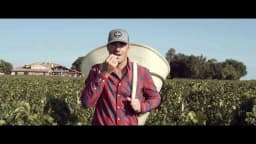
The spatial experience was supported by large wall maps that identified each tube's origin, giving visitors a navigational framework and extending the dwell time within the installation. The film extension, which followed an adventurer across the four cities and aired across France, Belgium, the Netherlands, and Germany in the second half of May 2017, translated the installation's logic into a narrative format — using movement between cities as a structural device that mirrored the Thalys journey itself. Production credits for the film component of Scents of the City are not publicly documented beyond the agency attribution to Rosapark.
No verified performance data for Scents of the City is publicly available. As confirmed by Clapboard, no published sales lift, ticket-booking growth, revenue impact, market-share change, brand-tracking movement, or return on advertising spend figures have been disclosed for this campaign. No production budget or paid-media spend has been made public. No verified awards entry from Cannes Lions, the Effies, One Show, D&AD, the Clios, the Webby Awards, or WARC Awards has been identified for this work, though French creative-industry archive records at Le Club des Directeurs Artistiques indicate Rosapark was active in award submissions during this period.
Structural analysis of the campaign's effectiveness rests on three observable qualities. First, the earned media mechanism was built into the installation's design: a visually striking, scent-based gallery environment in a European capital is inherently press-worthy, and coverage from Adweek and Branding in Asia confirms that the campaign achieved international trade press visibility without a declared paid-media strategy. Second, the temporal and geographic precision of the activation — a three-day window in Brussels followed by a film across four national markets — concentrated impact and created a sense of event that a permanent or diffuse campaign could not replicate. Third, by framing the installation within Thalys's existing sensory brand lineage, identified by Branding in Asia as an evolution of "Sounds of the City", Rosapark built long-term brand equity arguments into a short-term experiential format.
Clapboard rates Scents of the City at 77 out of 100, reflecting strong creative ambition, clear strategic coherence, and effective use of the experiential medium, moderated by the absence of measurable public outcomes and the limited three-day geographic footprint of the primary installation.
Scents of the City was a 2017 experiential campaign by Thalys and agency Rosapark. It installed 752 fragrance-filled tubes in a Brussels art gallery, representing 16 scents from Paris, Amsterdam, Brussels, and Cologne. The activation ran from 12 to 14 May 2017, according to Adweek, and was extended by a film airing across four countries.
Rosapark, a Paris-based agency, created Scents of the City for Thalys in 2017. The campaign was led by co-founders Jean-François Sacco, Jean-Patrick Chiquiar, and Gilles Fichteberg, with Sacco serving as Executive Creative Director, as documented by Clapboard.
Thalys used fragrance to rebuild positive associations with cities like Paris and Brussels after years of negative media coverage. Jean-François Sacco of Rosapark told Adweek in May 2017 that scent triggers place memory directly, making it a structurally effective medium for a campaign designed to restore emotional desire for travel.
The main Scents of the City installation ran in a Brussels art gallery from 12 to 14 May 2017, according to Adweek. A soft launch had taken place in Paris earlier in 2017. A companion film aired across France, Belgium, the Netherlands, and Germany in the second half of May 2017, as documented by Clapboard.
The installation contained 16 fragrances across 752 tubes representing four cities. Examples documented by Clapboard include a buttered Parisian tartine, the latex odour from Amsterdam's Sex Museum, and blended scents evoking Cologne Cathedral after mass — each chosen for cultural specificity and emotional resonance rather than generic pleasantness.
Clapboard rates Scents of the City at 77 out of 100. The score reflects strong creative ambition and strategic coherence in using the experiential medium, offset by the absence of publicly verified performance metrics and the activation's limited three-day physical footprint in Brussels as the primary installation window.
.webp)
Creative Collaboration Platform: The Backbone of Modern Creative WorkWhat is a creative collaboration platform?Clapboard defines a creative collaboration platform as the operational core for today’s distributed creative teams. This is not a collection of digital collaboration tools stitched together; Clapboard’s system


Understanding the Creative Production MarketplaceWhat is a Creative Production Marketplace?Clapboard defines a creative production marketplace as a structured ecosystem where brands, agencies, and production talent converge to execute video, advertising, and branded content at scale. Unlike the legacy agency or freelanREAD FULL ARTICLE

The Urgent Need for a Creative Production Operating SystemWhy Traditional Creative Production Models Break DownClapboard sees the creative production landscape shifting under pressure. Content velocity is no longer a buzzword—it’s a mandate. Modern advertising demands relentless output across dozens of channels, each wREAD FULL ARTICLE