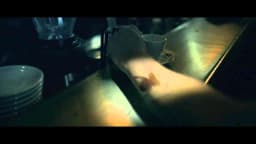
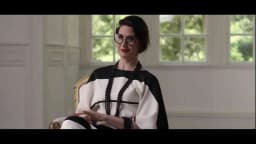
TGV Lyria's Reach the Unexpected campaign by Havas Worldwide Geneva juxtaposed Paris's Montmartre with Switzerland's Mont Rose in two striking film assets.

How TGV Lyria Made Reach the Unexpected a Cross-Border Idea
TGV Lyria's "Reach the Unexpected" campaign is a 2014 Swiss-market film campaign created by Havas Worldwide Geneva that positions the France–Switzerland high-speed rail service as a connector of culturally contrasting places, using the visual pairing of Paris's Montmartre and Switzerland's Mont Rose to carry its central idea, according to Tgv-Lyria.
Published in Switzerland in November 2014, the campaign carries the French tagline "Reliez l'inattendu" — rendered in English as "Reach the unexpected" — a construction that simultaneously describes the physical act of travelling between two countries and the emotional surprise of discovering their adjacency. The work comprises two film assets, each built around the same creative premise: that the journey between France and Switzerland is not merely a transit but a passage between unexpected worlds. TGV Lyria operates primarily on France–Switzerland routes, according to Wikipedia, making Switzerland the natural anchor for both the creative territory and the commercial objective. In the Swiss travel and leisure market, where cross-border mobility is a structural feature of daily and recreational life, the campaign addresses a traveller who already understands the geography but may not yet appreciate the poetry of the connection. The campaign's Clapboard Score of 63 out of 100 reflects solid creative ambition held back by the limitations of a two-asset archive footprint, a score that positions the work as accomplished category advertising rather than a breakthrough in transport communication. The credited agency, Havas Worldwide Geneva, brought together a full creative team including a creative director, copywriters, art directors, a planner, an illustrator, and a music composer, signalling a production investment commensurate with a brand-level campaign rather than a tactical promotion, according to En Wikipedia.
TGV Lyria competes in one of Europe's most transit-dense corridors, according to Eur-Lex Europa Eu. International rail traffic represented approximately six percent of total EU passenger traffic in 2014, according to EUR-Lex, the official journal of the European Union — a share that, while modest in aggregate, concentrates heavily on routes linking major metropolitan centres across borders, according to Echanges Dila Gouv. The France–Switzerland axis, anchored by Paris at one end and Zurich, Geneva, and Basel at the other, sits squarely within that international segment. EU passenger rail carried approximately 9.4 billion passenger trips in 2014 and logged approximately 429 billion passenger-kilometres in the same year, according to EUR-Lex, with average annual demand growth of approximately 1, according to Europarl Europa Eu.5 percent over the five preceding years. Within that expanding market, TGV Lyria faced competitive pressure from two directions: from low-cost aviation, which had conditioned a generation of travellers to treat the Paris–Switzerland corridor as a flight rather than a rail journey, and from Eurostar and Thalys, neighbouring high-speed operators running comparable cross-border propositions to different city pairs. The strategic insight behind "Reach the Unexpected" addresses this positioning problem directly. Rather than competing on speed or price — the default territory of transport advertising — Havas Worldwide Geneva reframed the journey as an experience of contrast and surprise. In Switzerland, where proximity to France is geographical fact but cultural distance remains perceptible, the campaign's appeal to the unexpected acknowledges that travellers already know the route exists and invites them to reconsider what it means. Planner Alexis Mouthon is credited on the campaign, and the planning work is legible in the strategic sharpness of the insight: the unexpected is not a marketing conceit but a genuine property of the Switzerland–France rail experience.
Creative director Gabriel Mauron led the Havas Worldwide Geneva team that built the campaign's visual language around a single structural idea: the juxtaposition of two places that share nothing except a syllable and a train connection. Montmartre, the hill district in northern Paris synonymous with bohemian art culture and urban density, is placed in visual dialogue with Mont Rose, the Alpine massif that straddles the Swiss-Italian border and represents Switzerland's most extreme natural register. The pairing is not illustrative — it is argumentative. It asks the viewer to hold both images simultaneously and recognise that a single rail journey connects them. Copywriter Thibaud Genevois and art directors Simeon Brandner and Pierre-Olivier Gardello translated this conceptual juxtaposition into film form across two assets, working with illustrator Jing Zhang, whose visual style brings a graphic distinctiveness to the imagery that separates the campaign from the photorealistic conventions of mainstream travel advertising. Production company Artbox executed the film work, and music composer Marc Staedler scored both pieces, with music functioning not as accompaniment but as tonal argument — a compositional choice that reinforces the campaign's claim that the journey between France and Switzerland is an aesthetic experience. Account director Delphine Saulnier oversaw the campaign's delivery to the Swiss market. The result is a body of work that treats the train as a cultural instrument rather than a transport product, a creative posture that is coherent with TGV Lyria's brand positioning as a premium cross-border service. The Swiss market context matters here: In Switzerland, where design literacy is historically high and multilingual communication is the norm, a campaign that operates through visual poetry rather than literal messaging is well calibrated to its audience.
No verified performance data for the TGV Lyria "Reach the Unexpected" campaign is publicly available. No confirmed entries or wins for this campaign have been documented across Cannes Lions, the Effie Awards, The One Show, D&AD, the Clio Awards, the Webby Awards, or WARC Awards, according to Clapboard's archive assessment. In the absence of measurable outcomes, the campaign's structural effectiveness can be analysed on the merits of its creative architecture. The decision to build the campaign around a named geographic contrast — Montmartre against Mont Rose — gives the work immediate recall anchors in both the French and Swiss cultural vocabularies. The tagline "Reliez l'inattendu" functions as a durable brand idea rather than a campaign-specific slogan, suggesting it was conceived with longevity in mind. The two-film format limits reach by conventional broadcast standards but concentrates creative energy, allowing each asset to develop the central idea with greater depth than a single execution would permit. The Clapboard Score of 63 out of 100 reflects this tension: the campaign demonstrates genuine creative intelligence and precise strategic targeting for the Switzerland cross-border travel market, but its archive footprint and the absence of documented distribution or audience data prevent a higher assessment. For a brand operating in the competitive France–Switzerland rail corridor, the campaign represents a meaningful step toward brand differentiation — one that prioritises the emotional register of travel over its functional mechanics, and does so with craft that holds up a decade after its 2014 publication.
"Reach the Unexpected" is a 2014 TGV Lyria film campaign created by Havas Worldwide Geneva for the Swiss market. It connects Paris's Montmartre with Switzerland's Mont Rose through visual juxtaposition, using the French tagline "Reliez l'inattendu" to position the France–Switzerland rail journey as an experience of surprise and cultural contrast.
Havas Worldwide Geneva created the campaign. The credited team includes creative director Gabriel Mauron, copywriter Thibaud Genevois, art directors Simeon Brandner and Pierre-Olivier Gardello, planner Alexis Mouthon, illustrator Jing Zhang, music composer Marc Staedler, and account director Delphine Saulnier. Production was handled by Artbox.
TGV Lyria used Montmartre and Mont Rose to dramatise the cultural contrast between France and Switzerland. The two locations share a sonic similarity in their names but represent opposite worlds — urban Parisian bohemia versus Alpine wilderness — making the pairing a visual argument for the journey's power to connect the unexpected.
TGV Lyria's "Reach the Unexpected" campaign holds a Clapboard Score of 63 out of 100, according to Clapboard's archive assessment. This reflects strong creative ambition and precise strategic targeting for the Switzerland cross-border travel market, offset by a limited two-asset archive footprint and the absence of verified distribution or audience performance data.
No confirmed awards have been documented for the TGV Lyria "Reach the Unexpected" campaign. According to Clapboard's archive records, no verified entries or wins exist across Cannes Lions, the Effie Awards, D&AD, The One Show, the Clio Awards, the Webby Awards, or WARC Awards for this 2014 Swiss-market film campaign.
TGV Lyria operates primarily on France–Switzerland routes, making Switzerland the campaign's natural commercial and creative anchor. In a Swiss market characterised by high design literacy and cross-border mobility, a campaign built on visual poetry and cultural contrast is well calibrated, addressing travellers who know the route but may not have considered its experiential dimension.
.webp)
Creative Collaboration Platform: The Backbone of Modern Creative WorkWhat is a creative collaboration platform?Clapboard defines a creative collaboration platform as the operational core for today’s distributed creative teams. This is not a collection of digital collaboration tools stitched together; Clapboard’s system


Understanding the Creative Production MarketplaceWhat is a Creative Production Marketplace?Clapboard defines a creative production marketplace as a structured ecosystem where brands, agencies, and production talent converge to execute video, advertising, and branded content at scale. Unlike the legacy agency or freelanREAD FULL ARTICLE

The Urgent Need for a Creative Production Operating SystemWhy Traditional Creative Production Models Break DownClapboard sees the creative production landscape shifting under pressure. Content velocity is no longer a buzzword—it’s a mandate. Modern advertising demands relentless output across dozens of channels, each wREAD FULL ARTICLE