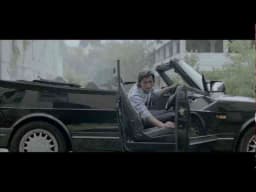
KLM launched Bluey and the Flower Parade in the Netherlands in April 2015, marking the airline's first animated short film created for children and families.

How KLM Brought the Dutch Flower Parade to Life Through Children's Animation
KLM launched Bluey and the Flower Parade in the Netherlands in April 2015 as a four-minute animated short film featuring the airline's child-friendly mascot Bluey navigating a Dutch flower parade, marking KLM's first animated film designed specifically for children and families.
The campaign centred on a single film asset published online, with a YouTube upload dated April 9, 2015, as noted by Clapboard Ad Archive. The narrative places Bluey in the town of Zundert, the setting of a real Dutch flower parade, where the story unfolds around a lost paper airplane, competition anxiety, and Bluey's efforts to help. The film format gave KLM a vehicle to introduce its mascot as a storytelling protagonist rather than a promotional device, extending the brand into family entertainment territory. According to Clapboard Ad Archive, the film accumulated more than 927,000 online views, though the measurement period, platform methodology, and paid-versus-organic split for those views are not identified. The campaign also connected to an activation allowing viewers to order a special Bluey-themed meal, though participation numbers and activation dates for that element are not publicly available, per Clapboard Ad Archive. In the Netherlands, KLM positioned the campaign within the transport and travel leisure category, using a distinctly Dutch cultural landmark — the flower parade — as both setting and emotional anchor. The choice of Zundert's flower parade grounds the story in recognisable local heritage while giving international audiences a window into Dutch culture through the eyes of a child-friendly character. Clapboard Ad Archive assigned the campaign a score of 73 out of 100, reflecting its creative ambition and cultural specificity within a category not typically associated with animated storytelling for children.
KLM identified children and families as an underserved emotional audience within airline communications in 2015. Traditional network carriers in the Netherlands and across Europe had long directed brand messaging at business travellers and adult leisure passengers, leaving the family segment without dedicated creative investment. KLM's decision to produce an animated short film represented a deliberate shift toward a broader emotional platform, one that recognised families as travel decision-makers and sought to build affinity with younger audiences before they became independent travellers themselves.
The strategic context in 2015 was competitive. According to News Klm, KLM's pre-2015 brand positioning centred on Journeys of Inspiration, a platform developed in partnership with DDB Netherlands and shaped by a brand overhaul handled by Landor Associates, which emphasised the emotional value of the journey rather than treating air travel as a purely functional service. Bluey and the Flower Parade extended that emotional rationale into children's animation, a format none of KLM's immediate competitors had adopted at a comparable scale in the Dutch market. Carriers such as British Airways and easyJet were investing in audience-targeted digital content during the same period, but neither had produced an animated mascot-led short film aimed at Dutch children. In the Netherlands and across the broader European travel market, ultra-low-cost carriers represented the fastest-growing competitive segment in 2015, according to PwC, intensifying pressure on network airlines like KLM to differentiate on emotional value rather than price. By anchoring the film in the Dutch flower parade — a cultural event with deep local resonance — KLM reinforced its identity as a national carrier with roots in Dutch life, a positioning no low-cost competitor could credibly replicate.
KLM constructed a four-minute animated narrative around Bluey, the airline's established child-friendly mascot, casting the character as the emotional protagonist of a story set against the backdrop of the Zundert flower parade in the Netherlands. The choice to build the story around a lost paper airplane and competition anxiety gave the film a universal childhood emotional register while keeping the setting distinctly Dutch. Production credits for Bluey and the Flower Parade are not publicly documented, and the agency behind the campaign has not been disclosed. The film was published in April 2015 and uploaded to YouTube on April 9 of that year, as recorded by Clapboard Ad Archive.
The animation style served a dual purpose. It allowed KLM to present the Zundert flower parade — a visually spectacular real-world event — through a stylised lens that made the setting accessible and appealing to young viewers unfamiliar with the tradition. At the same time, the animated format insulated the film from the production constraints of live action, enabling creative control over pacing, character expression, and the visual rhythm of the parade itself. The decision to build the story around Bluey's attempts to help resolve a problem, rather than around KLM's services directly, reflects a content-first approach to brand storytelling. The mascot functioned as a surrogate for the airline's values — helpfulness, optimism, a connection to Dutch identity — without requiring the film to deliver a conventional sales message. The companion activation, which allowed viewers to order a Bluey-themed meal, extended the creative world into a tangible product experience, connecting the animated narrative to the physical reality of travelling with KLM in the Netherlands.
No verified third-party performance data for Bluey and the Flower Parade is publicly available beyond view counts recorded in the Clapboard Ad Archive. According to Clapboard Ad Archive, the film accumulated more than 927,000 online views, a substantial figure for a branded animated short in the Netherlands in 2015, particularly within a transport category not accustomed to children's content formats. The measurement period, platform breakdown, and the split between paid distribution and organic discovery are not identified, which limits direct comparison with benchmarked campaign performance data.
Structurally, the campaign demonstrates several effectiveness indicators. A four-minute runtime is significantly longer than the standard pre-roll or social video format of the period, suggesting that viewers who engaged with the film did so with meaningful dwell time rather than passive exposure. The companion meal-ordering activation created a direct response mechanism attached to an awareness-led piece of content, bridging brand storytelling and commercial conversion in a single campaign architecture. The use of an established mascot — Bluey — as narrative protagonist reduced the creative risk of the extended format by giving audiences a familiar entry point. In the Netherlands, where KLM carries the weight of national carrier identity, grounding the film in the Zundert flower parade added a layer of cultural credibility that reinforced rather than disrupted existing brand equity. Clapboard Ad Archive assigned the campaign a score of 73 out of 100, recognising its creative distinctiveness, cultural specificity, and its status as KLM's first animated short designed for children, while reflecting the absence of publicly verifiable outcome data against which full effectiveness can be assessed.
Bluey and the Flower Parade is a four-minute animated short film created by KLM and published in the Netherlands in April 2015. It features KLM's child-friendly mascot Bluey navigating the Zundert flower parade. According to Clapboard Ad Archive, it was KLM's first animated film designed specifically for children and families.
Bluey is KLM's established child-friendly mascot and serves as the narrative protagonist of the 2015 animated film. In the story, Bluey encounters a lost paper airplane and competition anxiety at the Dutch flower parade, functioning as a surrogate for KLM's values of helpfulness and optimism rather than as a direct promotional vehicle.
The flower parade in the KLM Bluey film is set in Zundert, in the Netherlands. Zundert hosts a real and well-known Dutch flower parade, and KLM used this culturally specific setting to ground the animated story in recognisable Dutch heritage, reinforcing its identity as the Netherlands' national carrier.
According to Clapboard Ad Archive, the KLM Bluey and the Flower Parade film accumulated more than 927,000 online views. The measurement period, platform breakdown, and split between paid and organic distribution are not publicly identified, which limits direct benchmarking against comparable branded content campaigns from 2015.
KLM connected the Bluey and the Flower Parade film to an activation allowing viewers to order a special Bluey-themed meal, extending the animated story into a tangible product experience. According to Clapboard Ad Archive, participation numbers and activation dates for the meal-ordering element are not publicly available.
Clapboard Ad Archive assigned the KLM Bluey and the Flower Parade campaign a score of 73 out of 100. The score reflects the campaign's creative distinctiveness and cultural specificity within the Netherlands transport category, while accounting for the absence of publicly verifiable outcome data against which full effectiveness can be measured.
.webp)
Creative Collaboration Platform: The Backbone of Modern Creative WorkWhat is a creative collaboration platform?Clapboard defines a creative collaboration platform as the operational core for today’s distributed creative teams. This is not a collection of digital collaboration tools stitched together; Clapboard’s system


Understanding the Creative Production MarketplaceWhat is a Creative Production Marketplace?Clapboard defines a creative production marketplace as a structured ecosystem where brands, agencies, and production talent converge to execute video, advertising, and branded content at scale. Unlike the legacy agency or freelanREAD FULL ARTICLE

The Urgent Need for a Creative Production Operating SystemWhy Traditional Creative Production Models Break DownClapboard sees the creative production landscape shifting under pressure. Content velocity is no longer a buzzword—it’s a mandate. Modern advertising demands relentless output across dozens of channels, each wREAD FULL ARTICLE